How to Find Real Mattress Coupon Codes That Actually Work

Last Updated: October 30, 2026

Quick Summary

To find real mattress coupon codes, start with the retailer’s own homepage banners, promotional pop-ups, and newsletter sign-ups, since those codes are least likely to be dead. Then verify each code by tracing its source, reading the terms page, testing it in a cart without paying, and checking its expiration date against the current promotion cycle.

  • A code that worked last month can stop working once a brand rotates its promotions.
  • Enter the code in the promo field and confirm the discount reduces your total before paying.
  • A code showing applied but not changing the discount line is usually excluded from your model, not fake.
  • Use a dedicated email address for retail sign-ups and never enter a card number to unlock a code.
  • Most brands run one promotion at a time, and a second code silently cancels the first.

Table of Contents

Why Most Mattress Coupon Codes You Find Are Dead or Fake

Most mattress coupon codes floating around the web are expired, restricted to a single model, or simply invented to get a click. That’s the uncomfortable truth, and it is worth knowing before you start hunting for a discount. A code that worked last month can stop working once a brand rotates its promotions. Below, we’ll show you exactly how to separate a live code from a dead one, so you stop wasting checkout attempts.

Where to Find Verified Mattress Coupons From Real Sources

Start with the source that controls the discount: the retailer itself. Brands publish their own current deals on their homepage banners, promotional pop-ups, and newsletter sign-ups.

Here’s where to look, in order of trust:

  • The brand’s own site: homepage promos and email sign-up offers

  • Newsletter and text sign-up: brands routinely send a first-order code to new subscribers

A code’s value depends largely on where it comes from. See a concrete example of a real source on the Avocado Mattress Promo Code Coupon page. For a central hub of current, verified coupon codes you can actually use, browse Coupons.

How to Use a Mattress Coupon Code at Checkout

Using a code correctly matters as much as finding one. Enter the code in the promo field on the cart or checkout page, apply it, and confirm the discount actually reduces your total before you pay.
Step-by-step guide for applying mattress coupon codes during the online checkout process on a laptop

Step-by-Step Code Entry and What to Check Before You Pay

  1. Add the exact mattress and size you want to your cart
  2. Find the promo or coupon field at checkout
  3. Paste the code exactly, with no extra spaces
  4. Click apply and watch the order total change
  5. Read the order summary before paying
  6. Confirm free shipping and any bundle items are still included

Watch out: some codes only apply to accessories or a floor model, so the total won’t move even though the code is technically valid. Check the discount line item, not just an “applied” message.

How to Verify a Coupon Before You Trust It

Verification is a two-minute habit that saves wasted checkout attempts. A legitimate code has a clear source, a visible expiration date, and stated terms. Compare against a verified brand page like the Nectar Mattress Coupon Code page to see what a legitimate offer looks like. If any of those are missing, treat it as unverified until you test it. Here is a repeatable process for checking a code.

The four-point verification test

Run every code through these four checks before you enter payment information:

  1. Trace the source. Can you reach the code from the retailer’s own homepage, cart page, or a dated coupon hub? If the only path is a forum post or an aggregator with no “last verified” date, it is unverified. A real code has an owner who wants it to convert.
  2. Read the terms page, not the banner. Look for the offer’s expiration date, the models and sizes it covers, whether it excludes clearance or floor models, and whether it requires a minimum purchase. Retailers often publish these terms on a promotions or coupon-terms page.
  3. Test in a cart without paying. Add the exact mattress and size you want, apply the code, and watch the order summary. A code that shows “applied” but does not change the discount line is usually excluded from your model, not fake, just inapplicable.
  4. Check the clock. Compare the code’s stated expiration to today’s date and to the retailer’s current promotion cycle. A code recycled from a prior holiday weekend will often fail silently at checkout.
Pro Tip
Test codes in a private browser window with only the item you actually want in the cart. Some retailers apply the best available promotion automatically, and a stale code can override a live sale, making a working discount look broken.

How to tell a dead code from an excluded one

These are different problems with different fixes. A dead code has expired or been retired; re-entering it will never work, and you should move to the retailer’s current homepage offer. An excluded code is live but does not apply to your cart, usually because of model, size, clearance status, or a minimum purchase. Before you abandon a code, check whether swapping to a qualifying model or adding an accessory crosses the threshold.

Privacy and safe sign-up practices

Email and SMS sign-up offers are among the most reliable first-order codes, but they are also where questionable coupon sites harvest data. Use a dedicated email address for retail sign-ups, and never enter a card number to “unlock” a code, legitimate retailers apply discounts at checkout, not behind a payment wall.

A verified mattress coupon is one you can trace to the retailer, read the terms for, and test at checkout. Anything you can’t trace is a guess.

Warning Signs of a Fake or Misleading Mattress Discount Code

Fake codes follow predictable patterns. They promise an “up to” percentage that only applies to a clearance model, or they hide a membership requirement in fine print. The giveaway is usually the gap between the headline and the terms.

Red flags to watch for:

  • No expiration date anywhere on the page
  • “Up to” language with no clear qualifying model
  • A code that requires a paid membership or app download you didn’t expect

If a deal looks too generous and the terms are vague, it probably is. Move to a source you can verify.

Newsletter Sign Up →

Mattress Coupon Code Not Working? Here’s What to Do

A mattress coupon code not working is usually a terms problem, not a fake code. Before you give up, check four things: whether the code expired, whether it excludes your chosen model or size, whether it’s for a different retailer, and whether you’ve mistyped it.

If it still fails, try these fixes:

  • Switch to the brand’s current homepage offer
  • Sign up for the newsletter to trigger a first-order code
  • Check whether the deal requires a bundle or a minimum purchase

A common mistake is stacking a dead code with a live sale. Most brands run one promotion at a time, and the second code silently cancels the first.

The Best Time to Buy a Mattress for the Biggest Savings

The best time to buy a mattress is during major holiday sales and model-clearance windows, when brands discount to move inventory. Holiday weekends and end-of-season clearances are often when markdowns are deepest.

Plan around these windows:

  • Major holiday weekends, when brands run their biggest promotions
  • End-of-season clearance, when older models are marked down
  • New-model launches, when the prior version drops in price
  • Newsletter and SMS sign-up offers, available year-round

Timing your purchase around a real sale often beats hunting for a code at full price. For deeper guidance on timing and savings strategy, see the ultimate-guide archive.

Stacking Codes, Exclusions, and Comparing the True Final Cost

Stacking rarely works the way shoppers hope. Many retailers allow only one discount code per order, and some exclude clearance items, floor models, or bundle pricing from further discounts. The real question isn’t the code percentage, it’s the final total after shipping, setup, taxes, returns, and exclusions are counted. Use Mattress Comparisons to see popular brands side by side and judge the real final cost.

What usually stacks, and what almost never does

A common pattern across mattress retailers:

  • One percentage or dollar-off code per order. A second code typically replaces the first rather than adding to it.
  • Sale prices and coupon codes usually do not combine. If the item is already marked down, the code field may accept the code but apply zero discount.
  • Bundle pricing is often excluded. A free-base or free-pillows bundle frequently cannot be combined with a separate code.
  • Financing promotions are separate. A 0% financing offer is usually an alternative to a discount, not an add-on.
Watch Out
A code that “applies” but does not change your total is the most common stacking trap. Always confirm the discount line item, not just the applied message.

How to identify exclusions before checkout

Read the promotion terms linked from the banner or cart page and look for four phrases: the expiration date, the qualifying models or sizes, the minimum purchase, and the list of excluded items (clearance, floor models, bundles, adjustable bases). If the terms are not linked, ask the retailer’s support chat for the active promo and its exclusions before you pay. That single question often surfaces a better current offer than the code you were chasing.

Comparing the true final cost

Headline savings mislead because they ignore the costs that surround the mattress. Build a simple final-cost estimate for each candidate:

Final cost = mattress price after discount + delivery fee + setup or old-mattress removal fee + sales tax − value of included accessories you would actually buy.

Then weigh the return and trial terms, since a restocking fee or return-shipping charge can erase a discount. A smaller percentage off a mattress with free shipping, free returns, and a trial period can beat a bigger code on a model that charges for delivery or setup.

Scenario Headline Offer Watch For True Cost Impact
Big percentage code High % off Excludes your size or model Discount may not apply
Bundle deal Free pillows or base Higher base price Savings depend on need
Free shipping code Waived delivery fee Minimum purchase required Check the threshold
Newsletter code First-order discount One-time use only Best on a full-price model
Financing offer 0% for a set term Replaces the discount Compare total paid over the term

Judge the true final cost at checkout, not the banner.

Frequently Asked Questions

How can I tell if a mattress coupon code is legitimate?

Check the code against the retailer’s own site first, not just a third-party listing. A real mattress coupon code will apply cleanly at checkout and show the discount in your cart total before you pay. Look for an expiration date, stated terms, and whether it excludes sale items. If a code asks for payment upfront, promises an unrealistic percentage off, or comes from a random text message, treat it as a red flag and skip it.

Can you combine mattress coupon codes with sale prices?

Usually not on the same item, but it depends on the retailer’s offer terms. Many online mattress brands exclude already-discounted mattresses, floor models, and clearance items from promo codes. Before you buy, read the fine print on the code and test it in your cart to see if the discount stacks. Sometimes a bundle deal, like a free pillow or box spring with purchase, saves you more than a percentage-off mattress coupon code would.

Why is my mattress coupon code not working?

The most common reasons a mattress coupon code not working are an expired date, a minimum purchase requirement you haven’t met, or a restriction that excludes the mattress size or model in your cart. Check for typos and extra spaces, confirm the code applies to your specific retailer, and try a different browser or clear your cart. If it still fails, contact the retailer’s customer service and ask whether the offer is still live.

What is the best time to buy a mattress for the biggest discount?

Holiday weekends can bring promotions, especially around major US holidays. New model releases also push older inventory into clearance, which can beat a standard percentage-off code. Signing up for a retailer’s email list or text alerts often unlocks a members-only offer you won’t find on a coupon directory. Compare the total purchase cost, including shipping and returns, before you commit.


Why Mattress Reviews Are Often Unreliable: A 2026 Guide

Table of Contents

Last Updated: October 21, 2026

Why Mattress Reviews Conflict So Much

Mattress reviews are often unreliable because they mix three different things: one person’s physical comfort, a paid recommendation, and a short testing window.

That conflict shows up fast. One site calls a bed “medium-firm.” Another calls the same bed “soft.” Both writers slept on it. Both are describing the truth as their body registered it.

At Real Mattress Reviews, we’ve watched this play out for nearly a decade of owning a mattress store and building a library of over 300 video reviews. The pattern is consistent.

Below, we’ll show you exactly why that happens, how money shapes recommendations, and how to read a review without getting fooled.

But first, here’s what most guides get wrong: they treat a bad review as a bad product. Usually it’s just a bad match.

Comfort Is Personal, So Reviews Disagree

Comfort is not a product spec. It is a physical reaction between your body and a surface, and it changes with weight, height, and sleep position.

Two shoppers can lie on the same bed for ten minutes and walk away with opposite opinions. Neither is lying. That is the whole problem with treating mattress reviews as a scoreboard.

Firmness, Support, and Body Weight

A bed rated “medium” by a 130-pound reviewer will feel much softer to someone at 230 pounds. More weight presses deeper into the foam or springs.

So the same mattress can feel supportive to one sleeper and sagging to another. Firmness labels are a starting point, not a fact.

Sleep Position Changes the Verdict

Side sleepers need give at the shoulder and hip. Back and stomach sleepers usually want a flatter, firmer surface.

A bed that earns raves from side sleepers can wreck a stomach sleeper’s lower back. Same mattress. Different body mechanics.

That is why contradictory opinions are normal, not suspicious.

How Affiliate Commissions Shape Recommendations

Here is the part most shoppers never see. Many review sites earn money when you click a link and buy. That does not automatically make a review fake, but it does shape which beds get covered and how warmly.

The mechanism is simple. A review site joins a retailer’s or brand’s affiliate program, gets a unique tracked link, and earns a commission, commonly a percentage of the sale price, when a reader clicks that link and completes a purchase within a set window.

That structure creates three quieter incentives that matter more than any single biased sentence:

  • Selection bias. A site is more likely to review beds that pay a commission than beds that pay nothing. Over a year, the catalog of reviews drifts toward whatever monetizes, and the beds that pay nothing simply never get covered. That skews the whole picture without a single dishonest word.
  • Ranking bias. When two beds are close, the one with the higher commission or the better-converting checkout tends to land higher in a “best of” list. The ranking looks editorial; the tiebreaker is economic.
  • Tone bias. Weak beds get soft language, “not for everyone,” “takes some getting used to”, instead of a clear “skip this.” A negative verdict kills the click, so the incentive is to keep every option buyable.

Watch for these signals:

  • A site recommends nearly every bed it reviews
  • Every review ends with a discount code
  • Weak beds get soft language instead of a clear “skip this”
  • The same handful of brands appear everywhere
  • “Best of” lists where every entry has a buy link but none has a “don’t buy” note

A common mistake is assuming a commission means a lie. That is why the Federal Trade Commission’s guidance on endorsements and reviews requires material connections, including affiliate relationships, to be disclosed clearly and conspicuously.

Watch Out
If a site has never published a negative verdict, treat its recommendations as advertising. A reviewer who likes everything is not reviewing. They are selling.

What separates a disclosed commercial relationship from a fabricated review is evidence. A site that states its affiliate ties, explains how it picks products, and still publishes clear negatives is doing the honest version of a paid model. A site that hides the ties, reviews only what pays, and never says “skip this” is not. Judge the pattern, not the presence of a commission.

How to Spot Fake Mattress Reviews

Fake mattress reviews follow patterns. You can learn them in about five minutes and screen out most junk before it wastes your time. But “fake” covers several different problems, and they need different responses.

It helps to separate three things that get lumped together:

  • Fabricated reviews. Reviews written by someone who never bought or slept on the bed, planted by a seller, a marketing agency, or a competitor.
  • Incentivized reviews. Real buyers who were given a discount, a free product, or a gift card in exchange for a review. These can be genuine, but the incentive tilts them positive, and the Federal Trade Commission’s guidance on endorsements and reviews requires the connection to be disclosed.
  • Biased-but-real reviews. Honest buyers whose enthusiasm on day one, or whose body type, makes the review unrepresentative for you. These are not fake, but they mislead if you treat them as universal.

Look for these red flags:

Newsletter Sign Up →

  • Reviews posted in bursts on the same day
  • Five-star praise with no detail about sleep, body type, or time owned
  • Identical phrasing across different “reviewers”
  • No verified purchase badge on a retail listing
  • Complaints that mention the same failure, over and over
  • A wall of five-star ratings with almost no two- or three-star reviews
  • Reviewer profiles that only ever review mattresses, or only ever review one brand
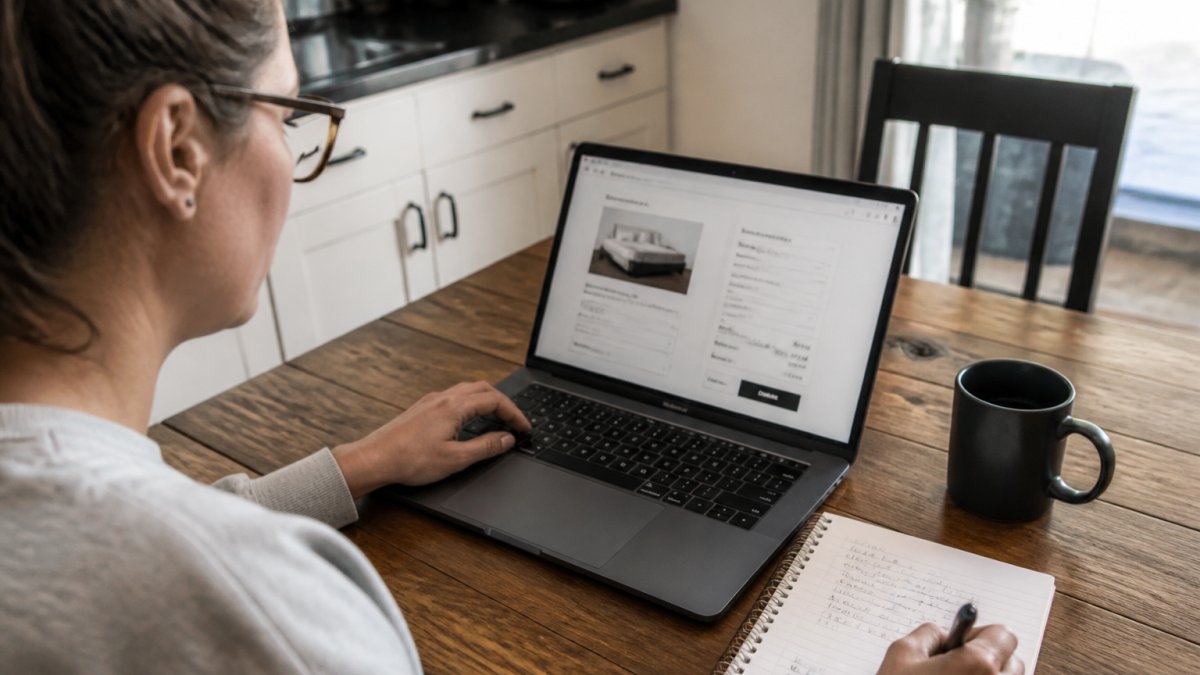
A person sitting at a kitchen table with a laptop open to a review page, notebook and pen beside them, squinting skeptically at the screen in natural daylight

Platforms help, but only partly. Verified-purchase badges confirm a transaction happened, not that the review is honest or representative.

A repeatable way to check a review before you trust it:

  1. Confirm the source. Is it a verified purchase, a firsthand test, or an editorial summary? Each can establish different things, and none establishes everything.
  2. Check the disclosure. Look for a clear statement of affiliate, sponsor, or free-product ties, not a footer disclaimer you have to hunt for.
  3. Match the reviewer to you. Height, weight, sleep position, and temperature sensitivity should be close to yours before the verdict transfers.
  4. Check the timeline. A review posted on day three describes the break-in, not the bed. Look for a 30-day or 90-day update.
  5. Read the negatives first. The two-star reviews tell you what breaks, who it breaks for, and how the company responds.
  6. Look for a pattern, not a single review. One suspicious review is noise; a cluster of same-day, same-phrasing, detail-free praise is a signal.

Genuine negative feedback is a good sign. A reviewer who names a real flaw is usually telling the truth.

Pro Tip
Read the two-star reviews first. They tell you what breaks, who it breaks for, and how the company responds. The five-star reviews mostly tell you the buyer was excited on day one.
Key Takeaway
Treat a review as evidence, not a verdict. Verified purchases prove a transaction; long-term updates prove durability; disclosed ties prove honesty about money. No single signal proves a bed is right for your body, only a match on weight, position, and test length gets you close.

What Unbiased Mattress Reviews Actually Look Like

Unbiased mattress reviews share a few traits. They name the tester’s height, weight, and sleep position. They say how long the bed was tested. They admit what they did not like.

They also separate three things that get blurred together:

  • How the bed felt on night one
  • How it felt after the break-in period
  • How it held up months later

A review that skips the last two is a first-impression video, not a durability test.

We built our video library around that gap. Nearly a decade of running a mattress store taught us which questions come back again and again: back pain, sleeping hot, and couples who want different things from one bed.

Good reviews answer those questions directly. They do not just say “we loved it.”

The Mattress Review Testing Period Problem

Most mattress review testing periods are measured in days. Real ownership is measured in years. That mismatch is the single biggest reason reviews mislead.

Here is what a short test misses:

  • Foam softening after the first few weeks
  • Sagging where you actually sleep
  • How the cover holds up after washing
  • Whether the edge support fades

A mattress review testing period of a week tells you about the break-in, not the bed. The Consumer Product Safety Commission tracks mattress-related complaints, and most of them are not about night one. They are about what happened later.

Judge a review by how long the tester slept on the bed, not by how good the video looks. A 90-day update beats a 3-day first look every time.

A Mattress Review Checklist for Smarter Shopping

Use this mattress review checklist before you trust any recommendation. It takes a few minutes and saves you from a bad return.

Check What Good Looks Like Why It Matters
Tester details Height, weight, sleep position listed Tells you if the tester matches your body
Test length 30 days or more Captures break-in and early sagging
Disclosure Affiliate and sponsor ties stated Shows whether money shaped the verdict
Negatives Specific flaws named Proves the reviewer actually tested it
Return policy Trial and warranty explained Protects you if the bed fails
Verified purchases Badge shown on retail reviews Filters out planted reviews
Updates Follow-up after months Reveals durability, not just first impressions

A structured way to compare reviews for different sleepers:

  • Match the tester’s weight to yours within about 30 pounds
  • Match the tester’s sleep position to yours
  • Confirm the review is at least 30 days old
  • Check whether the reviewer disclosed payment
  • Read the return policy and warranty before you buy
  • Look for a long-term update on the same bed

If a review fails three or more of these, move on.

Frequently Asked Questions

Are there any truly unbiased mattress reviews?

Fully unbiased mattress reviews are rare, because most review sites earn money through affiliate commissions when you buy through their links. That does not make every review worthless, but it means you should look for disclosure statements, testing details, and whether the reviewer mentions drawbacks. A review that names specific flaws and explains who the mattress is not for is more credible than one that praises everything. Compare several sources, including customer reviews on retailer sites, before deciding.

How can you tell if a mattress review is trustworthy?

Check for a clear testing period, a named reviewer with stated body weight and sleep position, and disclosure of affiliate relationships. Look for verified purchase badges on customer reviews and watch for suspicious patterns like a burst of five-star ratings in a short window. A trustworthy review explains how the mattress performed after weeks of use, not just on day one, and it tells you what the return policy actually covers if the mattress does not work out.

How long should someone test a mattress before reviewing it?

Most sleep experts suggest sleeping on a new mattress for at least 30 nights before judging it, since your body needs time to adjust. Many online brands offer trial periods of 100 nights or more, and reviews written after only one or two nights tend to reflect first impressions rather than real performance. When you read a mattress review, check whether the reviewer states how long they slept on it. Reviews with a stated testing period of 30 days or more carry more weight.

How do affiliate links affect mattress reviews?

Affiliate links pay the reviewer a commission when you buy through them, which creates a financial incentive to recommend higher-priced or higher-commission mattresses. This does not automatically make a review dishonest, but it means you should check whether the site discloses those relationships and whether it recommends options across price points. A review site that only ever praises expensive brands, or never mentions budget alternatives, is worth questioning before you trust its ratings.


Mattress shopping gets a lot easier once you stop trusting star ratings and start checking who is behind them. That is the work we do at Real Mattress Reviews. We draw on nearly 10 years of mattress store ownership, a library of over 300 video reviews, and exclusive coupon codes to help you compare beds by body type, sleep temperature, and budget. Sign up for our newsletter and get reviews built for the way you actually sleep.

How to Choose a Mattress for Hot Sleepers: 2026 Guide

Table of Contents

Last Updated: October 18, 2026

Start With Why You Overheat: Mattress Heat vs. Other Causes

Before you shop for a mattress for hot sleepers, rule out what a new bed can’t fix: room temperature, bedding, pajamas, and a partner’s body heat.

Mattress-related heat builds where your body meets the sleep surface, from trapped air and heat retention in dense materials.

Other causes show different patterns. A warm room, heavy comforter, or synthetic sheets raise your temperature everywhere, not just at contact points.

Signs Your Mattress Is the Heat Source

Watch for these signals:

  • You flip the pillow and kick off covers within the first hour
  • The mattress feels warm to the touch when you get in
  • You sleep cooler on hotel beds

If most fit, the mattress is trapping heat. If not, look at the room first.

Mattress Materials for Hot Sleepers: What Traps Heat and What Breathes

Material choice matters more than any cooling marketing claim.

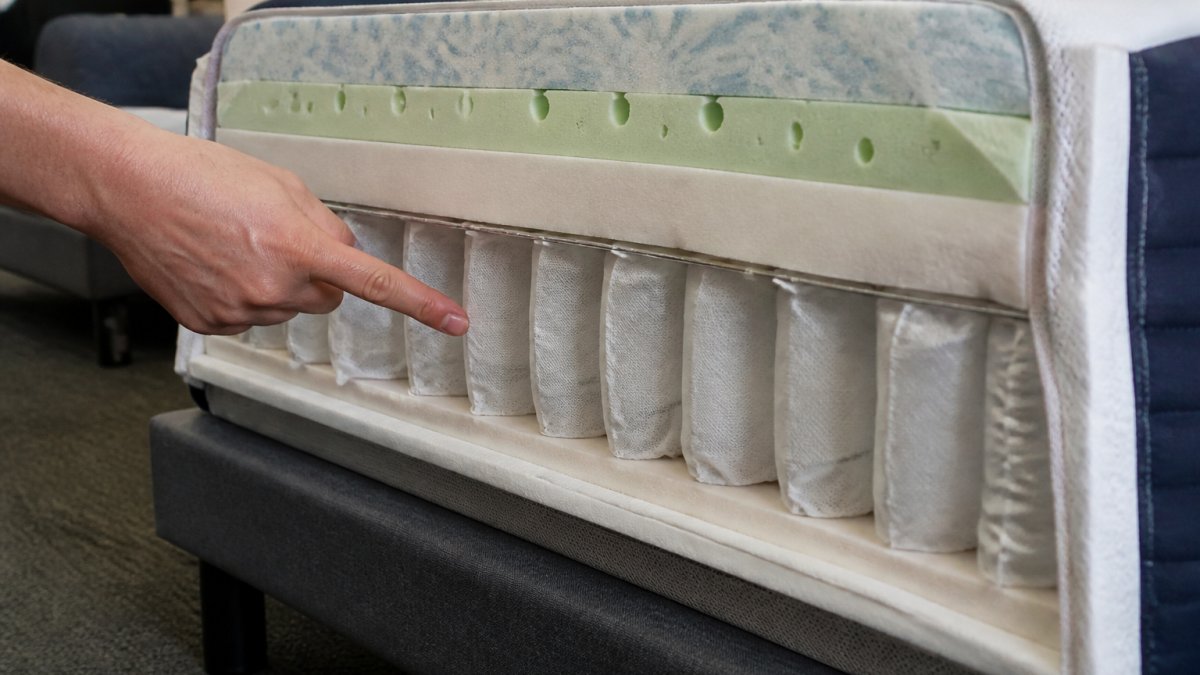
Diagram of mattress for hot sleepers showing airflow through coil and foam layers

Memory foam is the biggest heat retainer.

Polyfoam is lighter and more open than memory foam, though cheap high-density polyfoam can still run warm.

Latex foam has an open-cell structure that lets air move, sleeping notably cooler than memory foam.

Coil systems are the strongest cooling asset in any bed.

Foam, Latex, and Coil Systems Compared

Material Heat Retention Breathability Feel
Memory foam High Low Contouring, slow response
Gel memory foam Medium-high Low-medium Contouring with slight cooling
Polyfoam Medium Medium Balanced
Latex foam Low-medium High Bouncy, responsive
Coil / hybrid Low High Supportive, airflow-rich

The pattern is simple: the more open the structure, the cooler you sleep.

Cooling Mattress Features That Actually Make a Difference

Cooling mattress features vary widely. The difference usually comes down to whether a feature moves heat away from your body or merely feels cool for the first few minutes.

The Three Mechanisms That Actually Cool a Bed

Legitimate cooling features work through one of three mechanisms:

  1. Airflow. A coil support core, ventilated base, or open-cell foam lets air move through the bed, carrying heat away. It’s the most durable mechanism because it doesn’t wear out.
  2. Moisture movement. Moisture-wicking covers and sheets pull sweat away so it can evaporate, changing how you feel even without lowering mattress temperature.
  3. Heat absorption and release. Phase-change materials absorb heat as you warm the surface and release it as you cool, smoothing temperature swings. The effect is real but limited to the layer where the material sits and fades once saturated.

If a feature doesn’t do one of these three things, it is probably a feel claim rather than a cooling claim.

Features That Generally Help

  • Coil support cores that keep air moving beneath the foam layers, the strongest, most durable cooling asset in any bed.
  • Breathable cooling covers made from moisture-wicking fabrics that pull sweat away from the sleep surface.
  • Gel-infused or open-cell foams that reduce heat buildup versus traditional memory foam.

Features to Treat With Skepticism

  • Vague “cooling technology” labels with no material explanation.
  • Thin cooling covers layered over dense memory foam, the cover feels cool, the foam underneath still traps heat.
  • Claims of a “temperature-neutral” bed with no airflow path.

Cooling Claims vs. Measurable Performance

Cooling claims are hard to verify because there is no standard test for mattress surface temperature. Ask what does the cooling: the cover, the foam, or the coil system. If the answer is “the cover” alone, expect limited relief.

A useful habit is to translate marketing terms into mechanisms:

Marketing Term What It Should Mean What to Verify
“Cooling” Moves heat or moisture away Which layer does it, and how
“Temperature-neutral” Doesn’t add heat Airflow path through the bed
“Phase-change” Absorbs and releases heat Where the material sits and how much is used
“Breathable” Air moves through Open-cell foam or coil core
“Moisture-wicking” Pulls sweat off the skin Fabric composition and cover construction

If a product page can’t answer the “what to verify” column, treat the claim as unproven.

Watch Out
The most common mistake is buying a bed for its cooling cover while ignoring the foam underneath. A breathable cover over dense memory foam still traps heat. Check the full construction, not just the top layer.

Long-Term Cooling Performance

Cooling performance can change after break-in. Foam softens and airflow paths narrow as the comfort layer compresses, so a bed that sleeps cool in month one can run warmer in year three. Beds with coil cores and open-cell foams hold their cooling longer because the airflow path is structural. In reviews, look for owners past the one-year mark.

A Simple Evidence Test Before You Buy

Use these four questions on any product page or in any store:

  1. What is the cooling mechanism, airflow, moisture movement, or heat absorption?
  2. Which layer contains it, and how thick is that layer?
  3. Is there a continuous airflow path from the top layer to the base?
  4. Do long-term owner reviews still describe the bed as cool after a year?

If you can’t answer two or more, treat the cooling label as marketing.

Mattress Firmness for Hot Sleepers: Finding the Right Balance

Mattress firmness for hot sleepers is about contact area. Too soft wraps you in foam and traps heat; too firm creates pressure points that make you toss and turn, which also raises body temperature.

For most hot sleepers, medium to medium-firm is the sweet spot: spinal alignment without deep sinkage, so air keeps moving. Side sleepers may prefer slightly softer for shoulder and hip pressure relief; back and stomach sleepers usually do better with medium-firm or firm.

Newsletter Sign Up →

Body weight changes the equation. Lighter sleepers sink less and can handle softer beds; heavier sleepers benefit from firmer support with strong coils.

Test Before You Buy: A Step-by-Step Selection Process

This decision process is built around the four variables that change how warm you sleep, heat pattern, sleep position, body weight, and budget.

Step 1: Rule Out Non-Mattress Heat First

Spend three nights testing the room and bedding: lower the thermostat, switch to a lightweight breathable comforter, and try moisture-wicking sheets. If you still wake up hot at the contact points, shoulders, hips, mid-back, the mattress is the likely culprit. Full-body heat points to the environment.

Step 2: Classify Your Heat Pattern

Use this quick diagnostic to decide how much cooling performance you actually need:

Pattern What It Suggests Priority
Heat builds under shoulders and hips only Contact-point heat from dense foam High, prioritize coils and open-cell foam
You wake up sweaty across your whole body Room, bedding, or health factor Medium, fix environment first, then upgrade
You sleep hot only in summer Seasonal, bedding-driven Low, start with a cooling topper and sheets
Your partner sleeps cool on the same bed Mattress is trapping your heat specifically High, construction is the issue
You overheat on every bed you’ve owned Could be medical or medication-related Talk to a clinician before buying

That last row matters. Some medications and health conditions raise body temperature at night regardless of the mattress. A new bed won’t fix that, and a clinician is the right first call.

Step 3: Set a Budget Before You Compare

Cooling performance is not strictly tied to price. A well-built hybrid with a coil core and breathable cover can outperform a pricier all-foam bed with a phase-change cover, because the coil layer does the airflow work. Decide your ceiling first, then filter by construction. Mid-range hybrids and latex beds deliver most of the cooling benefit.

Step 4: Match Construction to Your Heat Level

  • Runs very hot: prioritize a hybrid with a genuine coil support core, open-cell or gel foam, and a breathable cover. Avoid all-foam memory foam.
  • Runs moderately warm: a hybrid or a latex bed works; you can accept a thin comfort layer of foam if the coil layer is substantial.
  • Runs warm only occasionally: a breathable all-foam bed with open-cell foam plus cooling bedding may be enough.

Step 5: Match Firmness to Position and Body Weight

Firmness controls how far you sink, and sinkage controls how much foam wraps around you and traps heat.

  • Side sleepers: medium to medium-soft for shoulder and hip pressure relief, but not so soft that you sink past the comfort layer.
  • Back sleepers: medium to medium-firm for spinal alignment with limited sinkage.
  • Stomach sleepers: medium-firm to firm to keep the hips from dropping.

Step 6: Verify the Cooling Specs, Not the Labels

Ask three questions about any bed marketed as cooling: What does the cooling, the cover, the foam, or the coil system? Is there a continuous airflow path from top to base? Does the cover stay breathable after a protector and sheets are added? If the answer is “the cover” alone, expect limited relief.

Step 7: Use the Trial and Read the Fine Print

Most online brands offer a sleep trial, but terms vary. Confirm the trial length, return fees, minimum nights, and warranty coverage. Sleep on the new bed at least two weeks before judging temperature, the first few nights run warm as your body adjusts.

Step 8: Plan the Rest of the Sleep System

Before you finalize, budget for moisture-wicking sheets, a breathable protector, a cooling pillow, and a fan or room ventilation. These compound with a well-chosen mattress and are often cheaper than upgrading a tier.

Pro Tip
Write your four variables down before you shop, heat pattern, position, body weight, budget. Every product page you open should be judged against those four, not against the loudest cooling claim.

Quick Trade-Off Checklist

Cooling rarely comes free. Weigh these trade-offs:

  • Cooling vs. pressure relief: very firm, airflow-rich beds can create pressure points for side sleepers.
  • Cooling vs. motion isolation: coils move air but transfer motion more than foam; couples should test this.
  • Cooling vs. noise: some airflow-friendly designs are louder than all-foam beds.

Run the checklist against your four variables, and the choice usually narrows to two or three beds before you ever lie down.

Add a Cooling Mattress Topper Without Masking Support Problems

A cooling mattress topper can lower surface temperature, but it cannot fix a sagging or unsupportive bed. Use one when the mattress is supportive but runs warm, and look for breathable, moisture-wicking materials rather than dense memory foam. If your mattress sags or causes pressure pain, put the money toward a new mattress instead.

Build a Complete Cooling Sleep System

A complete cooling sleep system combines the bed with bedding and room conditions. Start with moisture-wicking sheets and a lightweight, breathable comforter; skip heavy synthetics. Keep the room cool, use a fan, and choose a cooling pillow with breathable fill.

The U.S. Department of Energy’s guidance on home cooling explains how air circulation and thermostat settings affect room comfort, which directly influences how warm you sleep. For shoppers weighing options, a Consumer Reports overview of mattress buying is a useful neutral reference on trials and returns.

Key Takeaway
Cooling works best as a system. A breathable mattress, moisture-wicking bedding, and a cool room together do more than any single “cooling” feature.

Conclusion

Choosing a mattress for hot sleepers comes down to construction, firmness, and a complete sleep system, not marketing labels. Real Mattress Reviews exists to prevent the guess-and-regret cycle: our library of over 300 video reviews and nearly a decade of store ownership help you compare real beds across sleep positions and body types, and our exclusive coupon codes save you money when you buy.

Frequently Asked Questions

What type of mattress is best for hot sleepers?

Hybrid and innerspring mattresses with strong coil airflow generally sleep cooler than all-foam beds because air moves through the support core. Look for breathable covers, gel-infused or open-cell foams, and a firm enough surface that you don’t sink into heat-trapping layers. A cooling mattress topper can help, but only after you’ve confirmed the mattress itself provides proper support and temperature regulation.

Which mattress materials sleep the coolest?

Latex foam, polyfoam with open-cell designs, and coil systems tend to sleep cooler than traditional memory foam, which can retain heat. Gel-infused foams and phase-change materials may help with surface temperature, but their effect varies. Breathability comes from the combination of cover fabric, foam structure, and airflow through the support core, so check the full construction rather than a single material claim.

Does memory foam make you sleep hotter?

Traditional memory foam can sleep hot because it conforms closely to your body and limits airflow, trapping heat around the sleep surface. Newer open-cell and gel-infused memory foams reduce this effect, but they still tend to retain more heat than latex or coil-based designs. If you overheat easily, consider a hybrid mattress with a thin memory foam comfort layer over a breathable coil core.

Can a mattress topper help you sleep cooler?

A cooling mattress topper can improve surface temperature and moisture wicking, especially if it uses breathable foams, gel, or phase-change materials. However, a topper cannot fix a mattress that lacks support or traps heat in its core. Use a topper as part of a complete sleep system, and address firmness, bedding, and room temperature first.


Ready to stop overheating at night? Sign up for the Real Mattress Reviews newsletter for new video reviews, cooling tips, and current coupon codes delivered to your inbox.

Are Bed in a Box Mattresses Durable? What to Know

Table of Contents

Last Updated: October 12, 2026

Are Bed in a Box Mattresses Durable? A Straight Answer

Yes, a well-made bed in a box can be just as durable as a traditional mattress, because compression for shipping does not change the foam, coils, or latex inside it. At Real Mattress Reviews, we have spent nearly a decade running mattress stores and building a library of over 300 video reviews, and the durability question comes up more than any other. What determines how long a boxed mattress lasts is construction and materials, not the fact that it arrived rolled up in a carton. Below, we break down realistic lifespans, the warning signs of early wear, and how to get more years out of any mattress.

Key Takeaway
Shipping compression is temporary. Foam density, coil gauge, and support-layer construction are what actually decide whether a bed in a box holds up for years or sags within months.

Our top Online Mattress Choices for Durability

Our top picks HERE 

How Long Do Bed-in-a-Box Mattresses Last?

Most quality bed-in-a-box mattresses last seven to ten years, with budget models often showing wear in five to six years and premium foam or hybrid builds reaching ten or more. A common mistake is judging lifespan by price alone. A cheap mattress with low-density foam can sag in a couple of years, while a well-built hybrid at a mid-range price can outlast it by a wide margin. The Better Sleep Council guidance on mattress care and replacement offers useful context on when replacement makes sense.

Lifespan by Construction Type

Construction Typical Lifespan Main Weak Point
All-foam (memory foam) 6-8 years Low-density foam softening
Latex 8-12 years Rare; latex holds shape well
Hybrid (foam + coils) 7-10 years Weak edge support or thin coils
Budget all-foam 4-6 years Body impressions and sagging

These ranges assume a supportive foundation, a mattress protector, and routine rotation. Skip those, and even a sturdy hybrid can lose years.

Mattress Durability by Material: Foam, Latex, and Hybrid

Material choice drives durability more than any marketing claim. Memory foam feels plush but softens over time, latex resists sagging and holds its shape, and hybrids pair foam comfort layers with innerspring coils for support that lasts. Understanding each material helps you predict how a mattress will age.

Foam Density: The Number That Predicts Wear

Foam density, measured in pounds per cubic foot, is the single best predictor of how a foam mattress wears. Higher-density foam resists compression and body impressions; low-density foam breaks down faster under repeated pressure. When you shop, look for the density spec, not just the feel. A mattress that feels firm in the showroom can still sag if the foam underneath is cheap.

Watch Out
Buying a bed in a box without checking foam density is the most common durability mistake. A soft, low-density comfort layer can develop a permanent body impression within a year, and that sag is usually not covered by warranty.
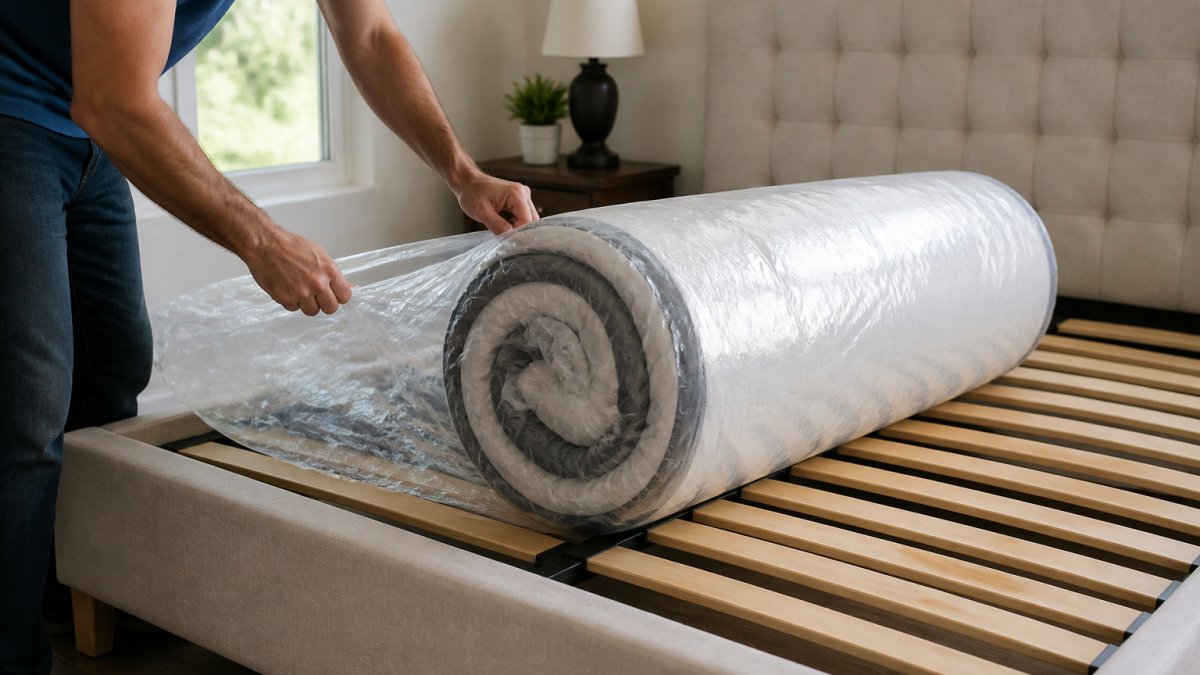
Close-up of a compressed mattress being unboxed in a bright bedroom, with hands pulling the plastic wrap and the mattress expanding on a bed frame

Mattress in a Box Problems: What Actually Goes Wrong

The real problems with mattress in a box products are rarely about shipping. They are about construction shortcuts, weak support cores, and comfort layers that break down under daily use. Compression itself is safe for quality materials; the issues show up when manufacturers cut corners to hit a low price.

Common mattress in a box problems include:

  • Sagging and body impressions from low-density foam
  • Weak edge support, so the sides collapse when you sit on them
  • Softening comfort layers that lose their bounce within a year or two
  • A too-thin support core that cannot hold up heavier sleepers

Weight, sleeping position, and foundation all affect how fast these problems appear. A heavier sleeper puts more stress on foam and coils, stomach and back sleepers concentrate pressure in specific zones, and a sagging or unsupportive bed frame accelerates wear across the whole mattress.

Durability Indicators You Can Check Before Buying

You can judge durability before you buy by checking a few objective specs rather than trusting a showroom feel. The trick is knowing which numbers matter and what counts as a strong result. Below is how to read each indicator, plus a checklist you can run against any product page.

Foam density

Foam density is measured in pounds per cubic foot (PCF), and it is the single best predictor of how a foam layer will age. As a general rule, support cores in the 1.8 to 2.5 PCF range hold up better than cores under 1.5 PCF, and comfort layers under 3 PCF tend to soften faster. If a brand does not publish density, treat that as a warning sign, reputable makers list it.

Coil gauge and count

For hybrids, coil gauge tells you wire thickness: lower numbers mean thicker wire. A gauge in the 13 to 15 range is common in durable hybrids, while very thin wire (higher gauge) flexes and fatigues sooner. Coil count matters too, but only alongside gauge and coil height, a high count of thin coils is not automatically better than a moderate count of thicker ones.

Support core thickness

A thicker support core distributes load better and resists bottoming out. All-foam beds with a thin base layer tend to sag faster under heavier sleepers, while hybrids with a taller coil unit generally hold their shape longer. Match core thickness to body weight: heavier sleepers benefit from more support material.

Edge support

Sit on the edge of the bed. If it collapses more than an inch or two, the perimeter is underbuilt, and that weakness usually spreads inward over time. Strong edge support, often from reinforced coils or a firmer perimeter foam, keeps the sleep surface from developing a bowl shape.

Material quality and layer construction

Look at how many layers sit between you and the support core. A thin comfort layer over a firm base can feel fine at first but break down quickly. Quality latex, high-density memory foam, and pocketed coils are all signals of a build designed to last.

Warranty length and coverage

A longer warranty is not a guarantee of durability, but a short one (under 10 years) often signals the maker expects faster wear. Read what is covered: most warranties exclude normal softening and require a visible sag depth, often around 1 to 1.5 inches, before they will act.

Checklist before you buy:

  • Foam density listed at 1.8 PCF or higher for support cores
  • Coil gauge in the 13 to 15 range for hybrids
  • Support core thick enough for your body weight
  • Edge support that resists collapsing when you sit on it
  • Warranty length of 10 years or more, with clear coverage terms
  • Trial period and return policy terms in writing
  • Foundation or bed frame requirements stated by the maker

For broader context on sleep health and mattress quality, the CDC sleep and health resources are a helpful starting point.

Warranty Exclusions and How to Document a Claim

Most mattress warranties cover manufacturing defects, not normal softening or comfort preference changes. That distinction is where most claims fail, so it pays to understand the terms before you need them.

Newsletter Sign Up →

Common exclusions include:

  • Normal softening or body impressions below the stated sag threshold
  • Damage from an unsupportive foundation or bed frame
  • Stains or soiling that void the warranty
  • Comfort preference changes (the bed is simply too firm or too soft)

To protect a claim, keep your receipt, note the purchase date, use a supportive foundation, and photograph any sagging with a straight edge across the surface. Measure the deepest point of the impression and compare it to the warranty threshold, which is often around 1 to 1.5 inches. Document everything in writing before you contact the retailer, and keep a copy of your correspondence.

Watch Out
A warranty will not cover a mattress that sagged because it sat on a weak or bowed frame. Check your foundation before you file, because that is one of the first things a manufacturer will ask about.

How to Make a Mattress Last Longer

A few habits add years to any boxed mattress, and most of them work by protecting the comfort layers and support structure that decide how long the bed stays comfortable. Here is what to do, why it works, and how to respond when you spot early wear.

Rotate the mattress head-to-foot

Rotating every few months spreads your body weight across a wider area, so no single zone takes all the compression. This is especially important for all-foam beds, which do not have coils to redistribute load. Set a reminder for every three to six months.

Use a waterproof mattress protector

Sweat, spills, and body oils break down foam and stain fabric, and stains can void a warranty. A waterproof protector blocks moisture at the surface and is far cheaper than replacing a mattress early.

Keep the foundation supportive

A sagging or bowed bed frame accelerates wear across the whole mattress. Slatted frames should have slats no more than a few inches apart, and box foundations should be structurally sound. Check the maker’s foundation requirements, using the wrong base is a common reason warranties get denied.

Clean gently

Vacuum the surface and spot-clean with mild soap and water. Avoid harsh chemicals and excess moisture, which can degrade foam and adhesives.

Avoid jumping or standing on the mattress

Concentrated point loads stress the foam and coils far more than normal sleeping pressure, and they are a fast route to permanent impressions.

Let it fully expand after unboxing

Give a new bed-in-a-box the full expansion window the maker recommends, often 24 to 72 hours, before regular use. Using it too soon can compress layers before they recover.

How to identify and respond to early sagging

Early sagging is easier to fix than late sagging. Watch for visible body impressions, a loss of support in your usual sleeping position, or a noticeable dip when you lie down. To measure, lay a straight edge across the surface and measure the deepest point of the impression with a ruler.

If the sag meets your warranty threshold, often around 1 to 1.5 inches, document it with photos and a written description, then contact the seller or manufacturer.

Our sleep product safety and care guidance from the CPSC can help you handle any product concerns responsibly.

Conclusion: Weighing Durability Before You Buy

Durability is not a mystery you have to gamble on. Check the foam density, support core, and warranty before you commit, then care for the mattress so it delivers its full lifespan. If you want help comparing specific models, reading real reviews, and finding mattresses built to last, Real Mattress Reviews offers detailed video reviews and exclusive coupon codes to guide your decision. Get started with Real Mattress Reviews and choose a bed in a box you can trust for years.

Frequently Asked Questions

Does compressing a mattress in a box affect its durability?

Compression itself does not shorten a mattress’s life when it is done correctly. Manufacturers roll and vacuum-seal mattresses for shipping, and the materials return to their original shape within hours to days after unboxing. The durability of a bed in a box depends on foam density, coil gauge, and overall construction quality, not the shipping method. A low-density foam mattress will sag whether it arrives compressed or flat.

Do bed-in-a-box mattresses sag over time?

They can, just like traditional mattresses. Sagging usually comes from low-density comfort foams breaking down or from a weak foundation that does not support the mattress evenly. Higher-density foams (2.5 lb/ft³ or more for memory foam) and sturdy coil systems resist body impressions better. Rotating the mattress every few months and using a rigid bed frame also reduce the chance of early sagging.

What are the drawbacks of a mattress in a box?

Common mattress in a box problems include a break-in period where the mattress feels firmer than expected, a slight off-gassing smell for the first few days, and limited ability to try the mattress in a store before buying. Some shoppers also find that cheaper models use low-density foams that sag within a few years. A generous trial period and a clear warranty help offset these risks.

How can you make a bed-in-a-box mattress last longer?

Use a supportive foundation or adjustable base that matches the mattress type, rotate the mattress head-to-foot every three to six months, and put a waterproof protector on it to keep sweat and spills out of the foam. Avoid jumping on the bed and keep heavy pets off if the cover is thin. These habits can add years to how long a bed-in-a-box mattress lasts.

How to Choose a Mattress for Back Pain

Table of Contents

Last Updated: October 11, 2026

Understanding Your Back Pain and Mattress Needs

When you choose mattress back pain solutions, you need to match firmness, material, and support to your specific condition. The right mattress reduces pressure on your spine, supports your natural spinal curve, and helps you wake without stiffness.

Back pain varies widely, from desk work strain to previous injuries or degenerative conditions. Your mattress choice depends on understanding what type of support your back actually needs, not just buying the firmest option available.

Research from the American Academy of Physical Medicine and Rehabilitation emphasizes that proper spinal alignment during sleep is critical for pain management. A mattress that keeps your spine neutral, neither sagging nor arching, reduces strain on muscles and discs throughout the night.

Pro Tip
Before shopping, identify whether your pain is localized (lower back, upper back) or widespread. This determines which mattress features matter most. Localized pain often responds better to targeted pressure relief, while widespread pain typically needs balanced support across the entire body.

Our top picks for Back Pain

Click HERE to see out recommendations

Best Mattress Firmness for Back Pain

The ideal firmness for back pain falls between medium and medium-firm for most people. Conflicting advice exists because firmness and support are not the same thing, what feels supportive depends entirely on your body weight, sleeping position, and pain location.

A firm mattress provides strong resistance but creates concentrated pressure points at hips and shoulders, especially for lighter sleepers or side sleepers, actually pulling the spine out of alignment.

Medium and medium-firm mattresses provide enough support to keep your spine neutral while allowing contouring for pressure relief, which is why they work for the broadest range of back pain sufferers.

How Body Weight Changes Firmness Needs

Body weight is the primary factor that shifts your ideal firmness level:

  • Under 130 pounds: You compress mattress materials less, so a medium or even medium-soft mattress can provide adequate support. A firm mattress may feel unnecessarily hard and create pressure points.
  • 130-230 pounds: Medium-firm is typically ideal. You compress materials enough to benefit from a firmer feel without sinking so deeply that pressure points develop.
  • Over 230 pounds: Medium-firm to firm is often necessary. Heavier bodies compress softer materials significantly, so a firmer base layer prevents excessive sinking and maintains spinal alignment.

Test mattresses in your actual sleeping position to confirm the firmness works for your body.

Sleep Position and Firmness

Your sleeping position also determines how firmness affects your spine:

  • Back sleepers benefit from medium-firm support that keeps the lower back from arching excessively while supporting the natural curve of the spine.
  • Side sleepers need more contouring to prevent hips and shoulders from creating pressure points. Medium or medium-soft often works better than firm, even for heavier side sleepers.
  • Stomach sleepers typically need firmer support to prevent the abdomen from sinking and pulling the spine into an arched position.

Common Firmness Mistakes

A frequent error when you choose mattress back pain options is relying solely on online firmness ratings. Firmness perception depends on body weight, sleeping position, and personal sensitivity, a 200-pound back sleeper and a 120-pound side sleeper experience the same mattress very differently.

Another mistake is assuming firmer is always better. Excessive firmness creates pressure points that strain muscles and discs. The goal is optimal support, the firmness level that keeps your spine neutral without creating pressure point pain.

How to Test Firmness Before Buying

When testing a mattress, lie in your typical sleeping position for 10-15 minutes. Check whether your lower back feels supported, whether hips and shoulders sink comfortably without pressure, and whether your spine feels neutral.

Pro Tip
If you’re between firmness levels during a trial period, remember that mattresses often soften slightly after 1-2 weeks of use as foam materials settle. A mattress that feels slightly too firm initially may reach your ideal firmness after a short break-in period.

Best Mattress Type for Back Pain

Memory Foam Mattresses

Memory foam conforms closely to your body, distributing weight evenly and reducing pressure points, especially helpful for side sleepers. It also absorbs motion. The drawback is heat retention; if you sleep hot, look for cooling gel infusions or hybrid designs.

Latex Mattresses

Latex provides responsive support with natural contouring and sleeps cooler than memory foam. It costs more and has a bouncy feel some dislike, but it’s worth the investment if you want cooling and support without memory foam feel.

Innerspring and Hybrid Mattresses

Innerspring mattresses use steel coils for support and are affordable with strong edge support, but offer less contouring than foam. Hybrid mattresses combine coils with foam or latex, offering both support and contouring while sleeping cooler than all-foam options.

How Sleep Position Affects Mattress Choice for Side Sleepers with Back Pain

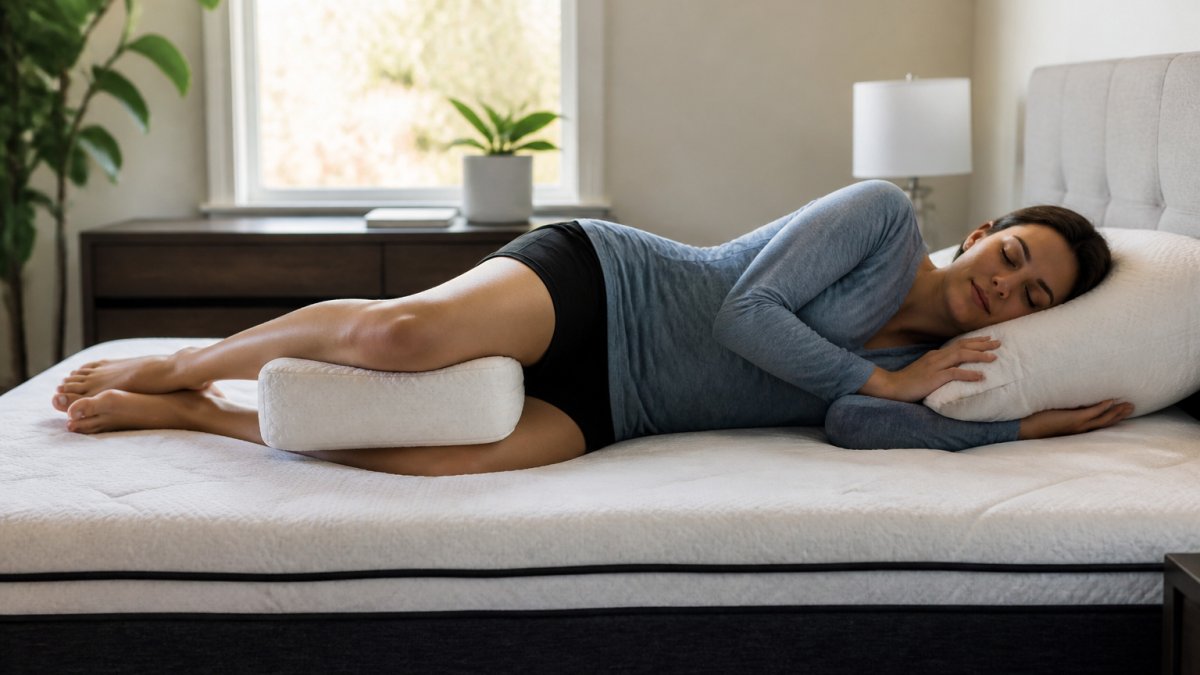
Side sleepers need medium or medium-soft mattresses that allow hips and shoulders to sink slightly while supporting lower back. A pillow between your knees keeps your spine neutral and prevents your top leg from pulling your pelvis out of alignment.

Person sleeping on their side on a supportive mattress with a pillow between knees, showing neutral spinal alignment and proper positioning in a modern bedroom with soft morning light

Memory foam and latex both work well for side sleepers because they conform to your body curves while supporting pressure-sensitive areas. Test the mattress in a side-sleeping position before buying to confirm it provides the contouring you need.

Newsletter Sign Up →

Testing Your Mattress and Understanding Trial Periods and Return Policies

Most mattresses require 30-90 days of use before you know whether they’ll work for your back. Many online retailers offer trial periods of 100 nights or longer, giving you genuine time to test the mattress in your own home.

Trial Period Length and What It Means

A 30-night trial is too short for back pain evaluation. A 60-90 night trial is the practical minimum, allowing your body to adapt and time to notice pain changes. A 100+ night trial is ideal if uncertain about your choice.

Trial Period Terms and Hidden Costs

Read trial period terms carefully. Key variations include: minimum sleep requirements (often 30 nights), restocking fees (10-25%), return shipping costs ($50-$200), refund timelines (5-10 business days typical), and condition requirements (minor wear acceptable, but stains or damage may reduce refunds).

Best policies offer full refunds with no restocking fees and free return shipping, but these are less common. Factor potential costs into your decision.

What to Evaluate During Your Trial Period

During your trial, track: pain levels (should trend downward), sleep quality (ease of falling asleep, wake frequency, morning restfulness), pressure points (hips, shoulders, lower back), temperature (heat retention), partner disturbance (motion absorption), and edge support.

Warranty Coverage and What It Protects

A mattress warranty protects against manufacturing defects, not normal wear or personal preference. Understand what your warranty covers:

  • Coverage period: Most mattress warranties last 10 years, though some extend to 20 years. A longer warranty suggests the manufacturer is confident in durability.
  • What’s covered: Warranties typically cover sagging (usually more than 1-1.5 inches), foam deterioration, zipper failures, and structural defects. They do not cover comfort preference changes, stains, or damage from misuse.
  • Prorated vs. full replacement: Some warranties offer full replacement for the first 5 years, then prorated coverage (you pay a percentage of replacement cost) for years 6-10. Understand the prorated schedule before buying.
  • Proof of purchase: Keep your receipt and warranty documentation. Manufacturers require proof of purchase to honor warranty claims.
  • Exclusions: Read the fine print for exclusions. Some warranties exclude damage from improper bed frames, water damage, or use outside the manufacturer’s guidelines.
Watch Out
Do not assume a long warranty means the mattress will last that long. A 10-year warranty protects against defects, not normal softening or comfort changes. Many mattresses feel noticeably softer after 7-8 years of use, which is normal wear and not covered by warranty.

Making Your Decision

If the mattress improves your pain, supports your sleep position, and feels comfortable after 4-6 weeks, keep it. If pain worsens, pressure points develop, or sleep quality declines, initiate a return before your trial period expires. Document your experience (photos of pressure points, notes on pain levels) in case the retailer questions your return.

Key Factors to Evaluate Before Buying

Factor Why It Matters What to Check
Firmness Level Affects spinal alignment and pressure relief Medium to medium-firm for most back pain
Material Type Determines contouring, cooling, and bounce Memory foam, latex, or hybrid based on preference
Body Weight Heavier bodies compress mattresses more Heavier people often need firmer options
Sleep Position Determines pressure point locations Side sleepers need more contouring than back sleepers
Trial Period Allows testing before final commitment Minimum 60-90 nights for meaningful evaluation
Edge Support Affects usable sleeping surface Important if you sleep near mattress edges
Warranty Protects against manufacturing defects Look for 10+ year coverage

Before purchasing, consider your budget and priorities. A premium mattress with advanced cooling might not be necessary if you sleep cool naturally. A basic memory foam option might work perfectly if you prioritize support over temperature regulation.

Key Takeaway
The best mattress for back pain is one that keeps your spine neutral throughout the night. This requires the right firmness for your body weight, material that provides both support and pressure relief, and a trial period long enough to confirm it works for your specific situation.

Red Flags: When Back Pain Signals a Medical Issue

Some back pain requires medical attention before or instead of mattress changes. If you experience sharp, shooting pain down your legs, numbness or tingling in your feet, or pain that worsens despite mattress changes, consult a healthcare provider. These symptoms suggest nerve involvement that mattress support alone cannot address.

Sudden-onset pain that follows an injury also warrants medical evaluation. A mattress can help manage chronic pain, but it won’t heal acute injuries. If your pain started after an accident or fall, see a doctor before investing in a new mattress.

Pain that doesn’t improve after 4-6 weeks with a supportive mattress may indicate an underlying condition requiring professional treatment. A healthcare provider can determine whether your pain stems from muscle strain, disc problems, or other structural issues. This diagnosis guides both mattress selection and treatment options.


Choosing a mattress for back pain shouldn’t mean guessing which option works. Real Mattress Reviews provides detailed video reviews of mattresses designed for pain relief, helping you understand exactly how each option performs. Start by exploring our video library to find mattresses that match your firmness preference and budget, then use trial periods to confirm your choice before making a final commitment.

Frequently Asked Questions

What mattress firmness is best for back pain?

Medium-firm to firm mattresses work best for most people with back pain because they provide adequate support while maintaining natural spinal alignment. Medium-firm mattresses offer a balance between comfort and support, preventing excessive sinkage that can strain the lower back. However, the ideal firmness depends on your body weight, sleep position, and personal preference. Heavier individuals typically need firmer support, while lighter sleepers may find medium-firm sufficient. Always test a mattress during the trial period to confirm it reduces your pain.

Which is the best type of mattress for back pain?

Memory foam, latex, and hybrid mattresses all can support back pain relief when properly constructed. Memory foam contours to your body and reduces pressure points, latex provides responsive support with natural materials, and hybrids combine foam comfort with innerspring support. The best mattress type depends on your heat sensitivity, firmness preference, and budget. Innerspring-only mattresses often lack adequate contouring for back pain relief. Test different types during trial periods to find which material works best for your specific needs.

Can a mattress actually help relieve back pain?

A supportive mattress can significantly reduce back pain by maintaining proper spinal alignment and reducing pressure on sensitive areas. However, mattress quality is one factor among many, sleep position, pillow support, exercise, and underlying medical conditions all affect pain levels. If your back pain is severe, persistent, or worsening despite a supportive mattress, consult a healthcare provider to rule out serious conditions. A new mattress works best when combined with good sleep habits and appropriate medical care.

How long should I test a mattress before deciding if it works for my back pain?

Most mattress trial periods last 30 to 120 days, giving you time to adjust to a new mattress. Back pain relief typically becomes noticeable within the first 2-4 weeks as your body adjusts to the new support and comfort layers. However, some people need the full trial period to accurately assess whether the mattress reduces their pain. Keep a sleep journal during the trial, noting pain levels, sleep quality, and comfort. If pain worsens or doesn’t improve after the full trial, use the return policy to try a different firmness or type.