
Best Mattress for Chronic Lower Back Pain 2026
Table of Contents
- What Makes a Mattress Work for Chronic Lower Back Pain
- Helix Midnight Luxe: Shop Here
- Winkbeds: Shop Here
- Durable 2-Sided: Shop Here
- Novosbed: Shop Here
- Mattress Firmness for Back Pain: Why Medium-Firm Wins
- Best Mattress for Back Sleepers With Lower Back Pain
- Mattress Types Compared: Memory Foam, Hybrid, Latex, Innerspring
- Can a Mattress Cause Sciatica? What the Evidence Shows
- How to Choose a Mattress for Back Pain: A Step-by-Step Plan
- What You’ll Need
- Step 1: Confirm Your Firmness Target [Time: 10 minutes]
- Step 2: Test in Your Sleep Position [Time: 20 minutes]
- Step 3: Use the Trial Period [Time: 2-4 weeks]
- What the Research Can and Cannot Tell You
- Frequently Asked Questions
Last Updated: October 7, 2026
What Makes a Mattress Work for Chronic Lower Back Pain
The best mattress for chronic lower back pain 2026 is a medium-firm surface that keeps your spine in neutral alignment while cushioning pressure points. At Real Mattress Reviews, we have spent nearly a decade owning a mattress store and producing over 300 video reviews, and one pattern holds true: support where you need it matters more than softness where you want it.
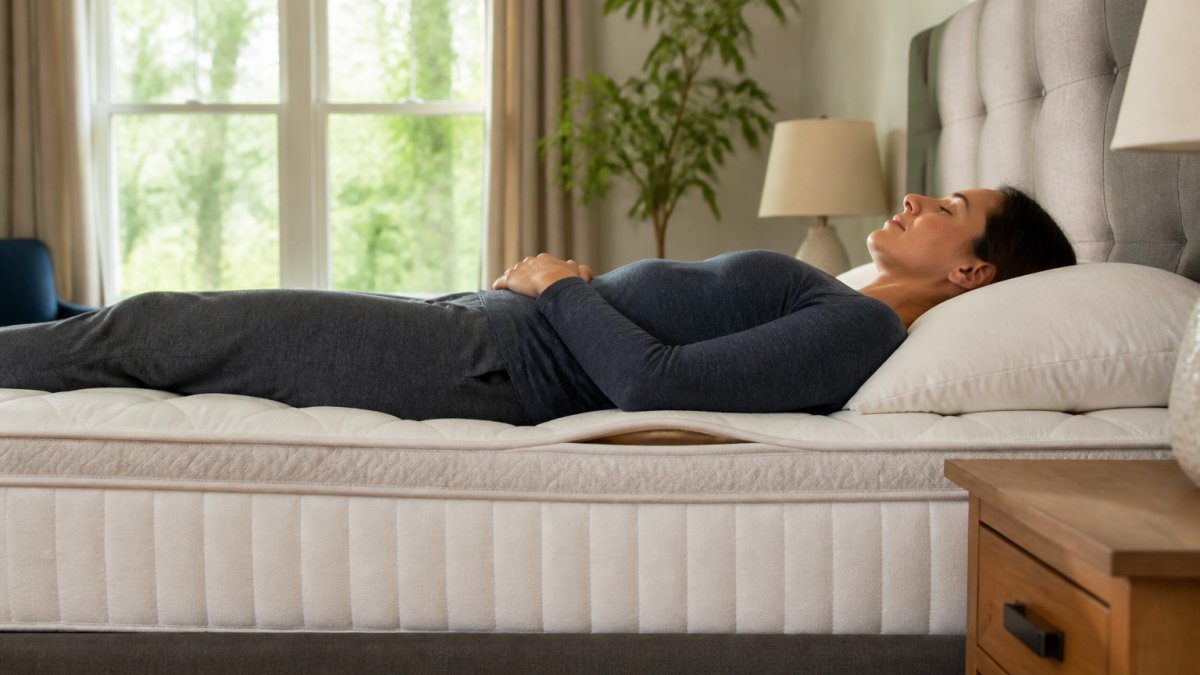
Chronic lower back pain is persistent discomfort in the lumbar region lasting twelve weeks or longer, and it changes how you sleep, move, and recover. A mattress helps only when it holds your hips and shoulders in line with your spine. Too soft, and your midsection sinks. Too firm, and your lower back arches. Both positions load the same joints all night.
Three factors decide whether a mattress works for you:
- Support: keeps the lumbar curve neutral, not flattened or exaggerated
- Pressure relief: cushions the hips and shoulders so you stop shifting
- Durability: holds its shape so support does not fade within a year
Brands we recommend:
Helix Midnight Luxe: Shop Here
Winkbeds: Shop Here
Durable 2-Sided: Shop Here
Novosbed: Shop Here
Mattress Firmness for Back Pain: Why Medium-Firm Wins
Medium-firm, roughly a 6 to 7 on the standard 1-to-10 firmness scale, is the sweet spot for most people with lower back pain. It supports the lumbar curve without creating pressure at the hips and shoulders.
The reason is simple mechanics. A soft mattress lets your pelvis drop, which pulls the lower back out of line. A very firm mattress pushes your shoulders and hips up, leaving a gap under your lumbar spine. Medium-firm splits the difference.
Your body weight shifts the target. Sleepers under roughly 150 pounds often find a 6 comfortable, while heavier sleepers may need a 7 to keep from sinking. This is where personal testing matters.
Best Mattress for Back Sleepers With Lower Back Pain
Back sleepers with lower back pain do best on a medium-firm mattress with even support from head to hip. Back sleeping is the easiest position for spinal alignment, so the mattress mainly needs to fill the gap under your lumbar curve.
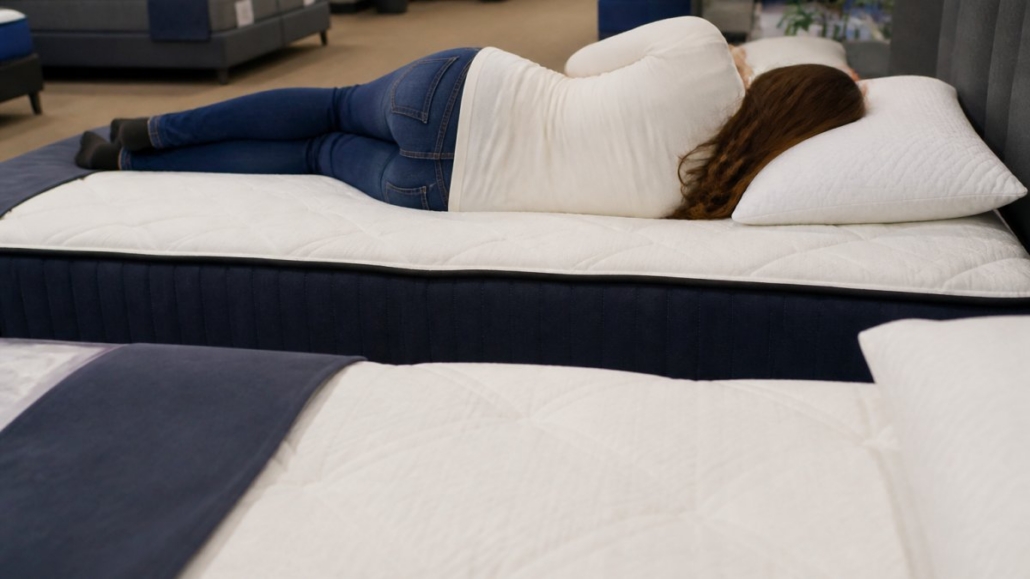
Side sleepers need more cushioning at the shoulder and hip, which usually means a slightly softer medium-firm. Stomach sleepers should avoid soft surfaces entirely, since a sinking midsection twists the lower back.
- Back sleepers: medium-firm, 6 to 7, even support
- Side sleepers: medium, 5 to 6, pressure relief at hips and shoulders
- Stomach sleepers: firm, 7 to 8, flat and supportive
Couples with different positions should look for a mattress that isolates motion and offers zoned support, so one partner’s firm side does not force the other into a bad position.
Mattress Types Compared: Memory Foam, Hybrid, Latex, Innerspring
Every mattress type handles the two jobs that matter for chronic lower back pain, holding your lumbar curve neutral and cushioning pressure points, in a different way. The right pick depends on your sleep position, your body weight, and how much heat you generate overnight.
|
Type |
Feel |
Pressure Relief |
Support Style |
Best For |
Watch Out For |
|---|---|---|---|---|---|
|
Contouring, slow sink |
High |
Even, no zones |
Side sleepers, motion isolation |
Heat retention, softening over time |
|
|
Hybrid |
Bouncy, responsive |
High |
Zoned coil support |
Most chronic lower back pain sleepers |
Higher price, heavier to move |
|
Latex |
Buoyant, springy |
Medium-high |
Consistent, firm |
Hot sleepers, heavier builds |
Cost, less contouring |
|
Innerspring |
Firm, traditional |
Low-medium |
Coil-driven, edge-stiff |
Stomach sleepers, firm preference |
Thin comfort layers, pressure points |
Memory foam conforms to your body and relieves pressure at the hips and shoulders, which helps side sleepers with lower back pain. The trade-off is heat: traditional memory foam traps body heat, and lower-density foams soften faster under a heavier sleeper, which can let the pelvis drop out of alignment within a year or two.
Hybrids pair a coil support core with foam or latex comfort layers. The coils do the alignment work, the comfort layer does the pressure work, and many hybrids add zoned support, firmer coils under the lumbar region, softer under the shoulders. That zoning is why hybrids are the most common recommendation for chronic lower back pain across body types.
Latex is buoyant and responsive rather than contouring. It sleeps cooler than memory foam, holds its shape longer, and suits heavier sleepers who sink through softer foams. The catch is price and feel: latex pushes back instead of cradling, which some side sleepers find too firm at the shoulder.
Innerspring mattresses run firm and breathe well, but a thin comfort layer can concentrate pressure at the hips and shoulders. They work for stomach sleepers who need a flat, unyielding surface, and they are the wrong choice for side sleepers with lower back pain.
A common mistake is buying a soft memory foam mattress because it feels great in a five-minute showroom test. Five minutes on your back is not the same as eight hours, and the sink that feels luxurious at first is often what pulls your lumbar spine out of line by morning.
Can a Mattress Cause Sciatica? What the Evidence Shows
A mattress does not cause sciatica, which comes from compression or irritation of the sciatic nerve, but a poorly supportive mattress can aggravate the symptoms. The evidence on mattresses and pain is limited, and most studies are small and short-term.
What we can say with confidence: a mattress that throws your spine out of alignment can worsen existing nerve irritation. If you wake with pain radiating down one leg, the surface is likely too soft or too worn.
How to Choose a Mattress for Back Pain: A Step-by-Step Plan
Choosing the best mattress for chronic lower back pain 2026 is a testing problem, not a shopping problem. The goal is to find the surface that keeps your spine neutral for eight hours, and the only reliable way to know is to test it against your own body over time. Here is a plan to consider.
Total Time: 3-6 weeks of testing and evaluation Difficulty: Beginner
What You’ll Need
- Your current sleep position and pain pattern
- A store or trial period that allows returns
- A partner’s preferences, if you share the bed
Step 1: Confirm Your Firmness Target [Time: 10 minutes]
Start at medium-firm, 6 to 7, and adjust for body weight. Heavier sleepers go firmer, lighter sleepers go slightly softer.
Step 2: Test in Your Sleep Position [Time: 20 minutes]
Lie in your normal position for at least 15 minutes. Check whether your hips and shoulders stay level with your spine.
Step 3: Use the Trial Period [Time: 2-4 weeks]
Sleep on it for the full trial window before deciding. Most mattresses need a break-in period, and your body needs time to adjust.
Expected Result: You wake with less stiffness and no new pressure points.
What the Research Can and Cannot Tell You
Mattress research is thinner than most buyers realize. Studies on firmness and back pain exist, but they are small, short, and rarely isolate one variable. The National Institute of Neurological Disorders and Stroke overview of back pain is a better starting point for understanding causes than any single mattress study.
What research cannot do is tell you which mattress fits your body. Body weight, build, and sleep position change the answer, and no study covers every combination. Treat firmness ratings as a starting point, then rely on a trial period.
The Consumer Product Safety Commission guidance on mattress safety and labeling helps you verify what you are buying, and the U.S. Department of Health and Human Services sleep health resources covers the non-mattress factors, like weight, activity, and sleep habits, that shape lower back pain.
That is why we built Real Mattress Reviews around video walkthroughs and a decade of store experience. We answer your questions before you buy, and our coupon codes help you save on the mattresses we cover.
Frequently Asked Questions
What mattress firmness is best for chronic lower back pain?
Medium-firm is the most commonly recommended firmness for chronic lower back pain. It keeps the spine in neutral alignment while still cushioning pressure points at the hips and shoulders. A mattress that is too firm creates pressure buildup; one that is too soft lets the hips sink and the lower back arch. Side sleepers often do better slightly softer, back sleepers slightly firmer. The right mattress for back pain depends on your sleep position, body weight, and how you feel after a full night.
Can a bad mattress cause sciatica?
A mattress does not cause sciatica, but it can aggravate it. Sciatica usually comes from compression or irritation of the sciatic nerve, often from a herniated disc or spinal narrowing. A sagging or overly soft mattress can push the spine out of alignment and increase pressure on that nerve, making symptoms worse. If you wake with sharp leg pain, numbness, or tingling that does not ease during the day, see a doctor. A supportive mattress may help comfort but will not treat the underlying cause.
How long should you try a new mattress before deciding if it helps?
Give a new mattress at least 30 nights before judging it. Your body needs time to adjust to a different sleep surface, and early discomfort is common. Most mattresses come with a sleep trial of 90 to 100 nights, so you have room to test. If pain gets worse rather than better after two to three weeks, contact the retailer. Use the trial period to track how you feel each morning, not just the first night.
What mattresses should you avoid if you have lower back pain?
Avoid mattresses that are too soft or show visible sagging. A soft mattress lets the hips sink, which arches the lower back and strains muscles overnight. Very firm mattresses can also backfire by creating pressure at the shoulders and hips. Skip any mattress with worn-out support, a visible body impression, or one that is more than eight to ten years old. If a mattress feels like a hammock or a board, it is probably not right for chronic lower back pain.
Chronic lower back pain is stubborn, and no mattress fixes it alone. But the right surface removes one nightly source of strain, and that is worth getting right. At Real Mattress Reviews, we compare mattresses by firmness, type, and sleep position, with over 300 video reviews and nearly ten years of store experience behind every recommendation. Sign up for our newsletter to get new reviews and exclusive coupon codes before you buy.

Leave a Reply
Want to join the discussion?Feel free to contribute!