
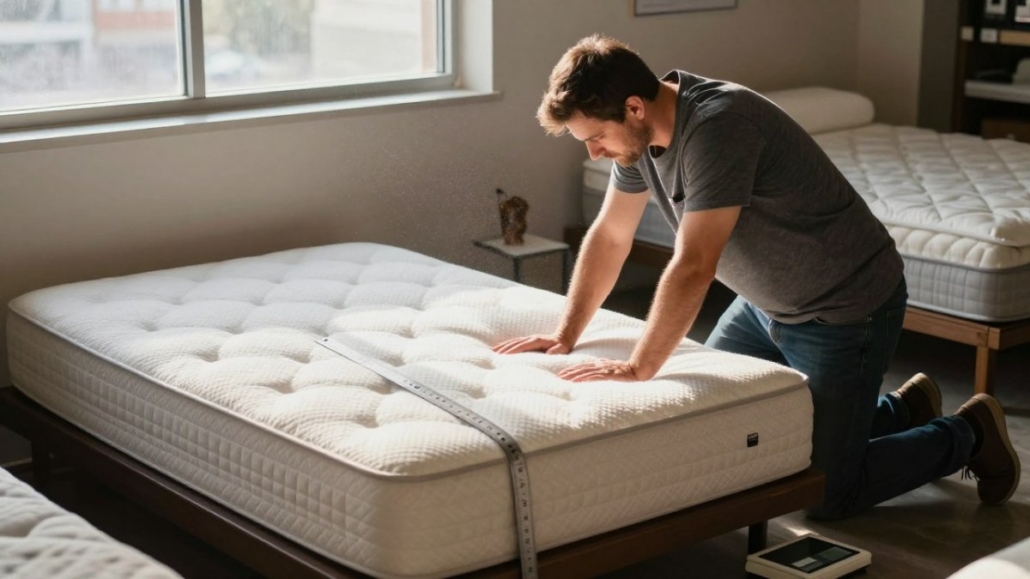
7 Signs Online Mattress Reviews Are Not Unbiased
Last Updated: November 7, 2026
Quick Summary
Most online mattress reviews are not fully unbiased because review sites usually earn a commission when you buy, which shapes which mattresses get ranked at the top. Genuinely unbiased mattress reviews disclose how the site makes money, explain the testing method, date every review, and list real cons. You can audit any site in about ten minutes and treat two or more missing checks as a warning.
- A disclosed commercial relationship is not the same as bias; bias appears when commissions change rankings without changing test data.
- Pull reviews from at least three independent sources, since three sites under one parent company count as one source.
- Check the review date, the model year named, and the manufacturer’s current product page before trusting a review.
- Score each audit checklist item yes or no, and treat two or more no answers as a warning.
- Keep the original packaging during the trial and read who pays return shipping before you buy.
Table of Contents
- Why Online Mattress Reviews Rarely Stay Unbiased
- How to Spot Fake Mattress Reviews in Customer Feedback
- Mattress Review Site Affiliate Links: How Commissions Shape Rankings
- How to Compare Mattress Reviews Without Getting Fooled
- The Best Mattress Review Sites Share These Traits
- A Practical Audit Checklist for Any Review Site
- Before You Buy: Test a Mattress With a Real Return Plan
- Frequently Asked Questions
Why Online Mattress Reviews Rarely Stay Unbiased
Most online mattress reviews are not fully unbiased, and the reason unbiased mattress reviews are so rare is simple: review sites usually earn money when you buy. For a deeper look at why mattress reviews are often unreliable, read our full guide.
The problem is structural, not personal. A site that earns a commission on each sale has a reason to favor brands that pay well. A site with no testing process has no way to catch a bad mattress before you do.
So when you ask whether online mattress reviews are actually unbiased, the honest answer is: some are, most are not, and you can tell the difference with a few checks. Below, we show you exactly how to run those checks before you spend a dollar.
How to Spot Fake Mattress Reviews in Customer Feedback
Fake mattress reviews show up in patterns, not in single comments. One glowing review means little. Twenty glowing reviews posted in the same week, all using the same phrases, is a red flag.
Here is how to spot fake mattress reviews in customer feedback:
- Check the dates. A burst of five-star reviews in a short window often signals a campaign, not real customers.
- Read the one-star reviews first. They tend to be specific about problems like sagging, heat, or shipping damage.
- Look for verified purchase labels. A review tied to a confirmed order carries more weight.
- Watch for vague praise. “Best bed ever” with no details tells you nothing. Real buyers mention firmness, sleep position, and body type.
- Search for repeated phrases. Copy-pasted wording across reviews usually means incentivized testimonials.

Customer feedback is still useful. You just have to read it like a skeptic, not a shopper in a hurry.
Mattress Review Site Affiliate Links: How Commissions Shape Rankings
Affiliate links are the engine behind most mattress review site affiliate links, and they explain a lot of what you see. When you click a link and buy, the site earns a commission. That is a legal and common model, and the FTC’s guidance on endorsements and disclosures requires sites to disclose it clearly.
The mechanism is worth understanding because it separates a disclosed commercial relationship from demonstrable editorial bias.
A disclosed commercial relationship is not the same as bias. A site can take commissions, state clearly that it does, and still rank mattresses on test results.
Here is how to tell a disclosed commercial relationship from editorial bias:
- Check whether the disclosure names the compensation model. “We earn commissions” is weaker than “We earn a tiered commission and brands cannot pay for placement.” The second tells you the structure and the firewall.
- Compare rankings across time. If a brand’s position improves right after a commission increase, and the site does not explain a retest, that is a bias signal. Rankings that stay stable while commissions change are a good sign.
- Look for a stated scoring method. A site that publishes its criteria, firmness, heat retention, edge support, trial terms, gives you a way to check whether the ranking follows the data. A site that only publishes a numbered list does not.
- Read the “how we make money” page, not just the footer link. The page should say whether brands can pay for placement, whether commissions are tiered, and whether any brand is excluded from rankings for refusing to pay.
- Check whether low-commission or no-commission brands appear at all. A ranking that includes only brands with affiliate programs is a commercial list, not a comprehensive test.
A site can take commissions and still be honest. The test is whether it tells you how it makes money, how it tests, and whether those two things are connected. If it hides the method, treat the rankings as ads.
How to Compare Mattress Reviews Without Getting Fooled
Comparing mattress reviews without getting fooled means triangulating sources, not trusting one site. Pull three or four reviews of the same mattress from different sites. If they agree on firmness and heat, that is a real signal.
Use this source-triangulation method:
- List your must-haves. Sleep position, firmness, cooling, edge support, and budget. Write them down before you read any review so a persuasive ranking cannot reset your priorities.
- Pull reviews from at least three independent sources. Independence means different owners, different testing methods, and different revenue models. Three sites owned by the same parent company are one source, not three.
- Note where they agree and where they clash. Agreement on measurable traits, firmness rating, heat retention, edge support, is a stronger signal than agreement on comfort, which is personal.
- Check the testing method behind each review. Look for sample size (how many units or testers), testing duration (a week versus a month), comparison criteria (what the mattress was tested against), and who performed the test. A review that states none of these is an opinion, not a test.
- Confirm the model is still sold in its current form. Mattress models change materials, firmness, and warranties without changing the name. A review from two years ago may describe a different product.
- Add owner feedback and retailer policy. Customer reviews tell you about durability and shipping; the return policy and warranty tell you what happens if the mattress fails. Combine all three before you decide.
Conflicting opinions are normal. Comfort is personal, and a side sleeper and a back sleeper will rate the same bed differently. The method for resolving a conflict is to separate measurable traits from preference.
Watch out: a review that is undated or that describes a model no longer sold can send you toward a mattress that has since changed materials or warranty terms, so verify the review date against the manufacturer’s current product page before you rely on it. Checking whether a review still matches the current mattress is one part of learning to find unbiased product recommendations, since reliable advice should make its sources and timing clear.
Review recency matters more than most shoppers realize. Mattress models are revised quietly, a foam layer is swapped, a cover fabric changes, a warranty is shortened, and old reviews stay online.
You can put your shortlist side by side using our compare list to see how the mattresses stack up on the specs that matter to you.
The Best Mattress Review Sites Share These Traits
The best mattress review sites share a few traits you can check in minutes. They disclose ownership and how they make money. They explain their testing criteria. They show reviewer experience and firsthand testing. And they keep reviews current as models change.
Look for:
- A visible disclosure page listing affiliate relationships and corporate ties
- A stated review methodology you could repeat yourself
- Video or photo evidence of real testing
- Clear dates on every review
- Honest cons in every write-up, not just praise
Transparency is the whole game when it comes to unbiased mattress reviews. A site that shows its work is far more trustworthy than one that only shows rankings. If you want to see how we approach this, our testing process walks through how we evaluate each mattress before it earns a recommendation.
A Practical Audit Checklist for Any Review Site
You can audit any review site in about ten minutes with a simple checklist. Score each item yes or no, and treat two or more “no” answers as a warning.
- Does the site disclose how it earns money?
- Is there a named owner or team behind the reviews?
- Does it explain its testing method?
- Are reviews dated and updated?
- Do reviews include real cons?
- Are customer reviews marked as verified purchases?
- Does it avoid pushing one brand everywhere?
- Is the return policy and warranty explained clearly?
| Check | Why It Matters | Red Flag If Missing |
|---|---|---|
| Money disclosure | Shows financial incentives | No disclosure page |
| Testing method | Proves firsthand testing | Only opinions, no process |
| Review dates | Confirms current models | Old, undated reviews |
| Real cons | Signals honest coverage | All praise, no drawbacks |
| Verified reviews | Filters fake feedback | No purchase labels |
Run this audit before you trust any ranking. It takes less time than a return.
Before You Buy: Test a Mattress With a Real Return Plan
A return plan turns a risky online purchase into a low-risk test. Most online brands offer a trial period, so read the fine print before you buy: how long the trial runs, who pays return shipping, and whether there are fees.
Here is how to approach it:
- Shortlist two or three mattresses that fit your sleep position and budget.
- Read the return policy and warranty in full.
- Try the top online brands in person if you can.
- Keep the original packaging during the trial.
- Track your sleep for the first few weeks.
Trying a mattress in person before you commit is the surest way to avoid a bad return. You can visit our showroom to test the top online brands and compare how each one feels. If you want a low-risk starting point, our list of the best-selling online mattresses shows the models that come back least often.
Real Mattress Reviews offers a video library of reviews and exclusive coupon codes to help you shop with more confidence. Get started with Real Mattress Reviews and find a mattress that fits how you actually sleep.
The mattress you buy should match your body, your budget, and your sleep position, not a ranking someone got paid to publish. Real Mattress Reviews gives you more than 300 video reviews, nearly a decade of store ownership experience, and exclusive coupon codes to cut the cost.
Frequently Asked Questions
How can you tell if a mattress review site is biased?
Look for undisclosed affiliate links, rankings that never change, and reviews that skip testing details. A biased site will rarely mention a product’s flaws, and its top picks often match the highest-paying commission. Check whether the site names its owner, explains how it makes money, and shows photos or video of the mattress being tested. If those disclosures are missing, treat the rankings as advertising rather than unbiased mattress reviews.
Are online mattress reviews actually unbiased?
Most are not fully unbiased, but that does not make them useless. Many sites earn money through affiliate links, so they have a financial reason to recommend certain brands. The key is transparency: a site that discloses commissions, explains its testing method, and mentions drawbacks is more trustworthy than one that claims total objectivity without proof. Use several sources and weigh the evidence before you buy.
Are customer mattress reviews more reliable than expert reviews?
They answer different questions. Customer reviews show how a mattress holds up over months, but they can be fake or incentivized, so check for verified purchase badges and detailed complaints. Expert reviews cover firmness, materials, and sleeping position fit, but may be shaped by affiliate links. The strongest approach is to combine both: read verified customer feedback for durability and use expert testing for how the mattress performs.
How do you compare conflicting mattress reviews?
Start by noting each reviewer’s sleep position, body weight, and whether they tested the mattress in person. A side sleeper and a back sleeper will rate the same firmness differently, so conflicting opinions often reflect personal preference rather than error. Then check the review date, since mattress models change. If two credible sources still disagree, look for a third that shows testing data, and lean on the brand’s return policy to protect your purchase.


Leave a Reply
Want to join the discussion?Feel free to contribute!