
How to Choose a Mattress for Back Pain
Table of Contents
- Understanding Your Back Pain and Mattress Needs
- Best Mattress Firmness for Back Pain
- Best Mattress Type for Back Pain
- How Sleep Position Affects Mattress Choice for Side Sleepers with Back Pain
- Testing Your Mattress and Understanding Trial Periods and Return Policies
- Key Factors to Evaluate Before Buying
- Red Flags: When Back Pain Signals a Medical Issue
- Frequently Asked Questions
Last Updated: October 11, 2026
Understanding Your Back Pain and Mattress Needs
When you choose mattress back pain solutions, you need to match firmness, material, and support to your specific condition. The right mattress reduces pressure on your spine, supports your natural spinal curve, and helps you wake without stiffness.
Back pain varies widely, from desk work strain to previous injuries or degenerative conditions. Your mattress choice depends on understanding what type of support your back actually needs, not just buying the firmest option available.
Research from the American Academy of Physical Medicine and Rehabilitation emphasizes that proper spinal alignment during sleep is critical for pain management. A mattress that keeps your spine neutral, neither sagging nor arching, reduces strain on muscles and discs throughout the night.
Before shopping, identify whether your pain is localized (lower back, upper back) or widespread. This determines which mattress features matter most. Localized pain often responds better to targeted pressure relief, while widespread pain typically needs balanced support across the entire body.
Best Mattress Firmness for Back Pain
The ideal firmness for back pain falls between medium and medium-firm for most people. Conflicting advice exists because firmness and support are not the same thing, what feels supportive depends entirely on your body weight, sleeping position, and pain location.
A firm mattress provides strong resistance but creates concentrated pressure points at hips and shoulders, especially for lighter sleepers or side sleepers, actually pulling the spine out of alignment.
Medium and medium-firm mattresses provide enough support to keep your spine neutral while allowing contouring for pressure relief, which is why they work for the broadest range of back pain sufferers.
How Body Weight Changes Firmness Needs
Body weight is the primary factor that shifts your ideal firmness level:
- Under 130 pounds: You compress mattress materials less, so a medium or even medium-soft mattress can provide adequate support. A firm mattress may feel unnecessarily hard and create pressure points.
- 130-230 pounds: Medium-firm is typically ideal. You compress materials enough to benefit from a firmer feel without sinking so deeply that pressure points develop.
- Over 230 pounds: Medium-firm to firm is often necessary. Heavier bodies compress softer materials significantly, so a firmer base layer prevents excessive sinking and maintains spinal alignment.
Test mattresses in your actual sleeping position to confirm the firmness works for your body.
Sleep Position and Firmness
Your sleeping position also determines how firmness affects your spine:
- Back sleepers benefit from medium-firm support that keeps the lower back from arching excessively while supporting the natural curve of the spine.
- Side sleepers need more contouring to prevent hips and shoulders from creating pressure points. Medium or medium-soft often works better than firm, even for heavier side sleepers.
- Stomach sleepers typically need firmer support to prevent the abdomen from sinking and pulling the spine into an arched position.
Common Firmness Mistakes
A frequent error when you choose mattress back pain options is relying solely on online firmness ratings. Firmness perception depends on body weight, sleeping position, and personal sensitivity, a 200-pound back sleeper and a 120-pound side sleeper experience the same mattress very differently.
Another mistake is assuming firmer is always better. Excessive firmness creates pressure points that strain muscles and discs. The goal is optimal support, the firmness level that keeps your spine neutral without creating pressure point pain.
How to Test Firmness Before Buying
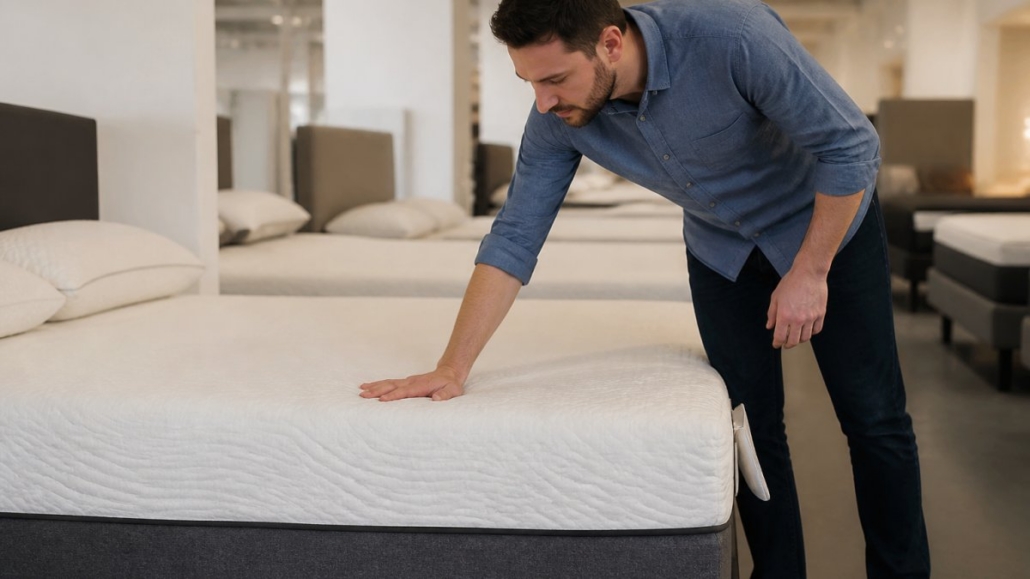
When testing a mattress, lie in your typical sleeping position for 10-15 minutes. Check whether your lower back feels supported, whether hips and shoulders sink comfortably without pressure, and whether your spine feels neutral.
If you’re between firmness levels during a trial period, remember that mattresses often soften slightly after 1-2 weeks of use as foam materials settle. A mattress that feels slightly too firm initially may reach your ideal firmness after a short break-in period.
Best Mattress Type for Back Pain
Memory Foam Mattresses
Memory foam conforms closely to your body, distributing weight evenly and reducing pressure points, especially helpful for side sleepers. It also absorbs motion. The drawback is heat retention; if you sleep hot, look for cooling gel infusions or hybrid designs.
Latex Mattresses
Latex provides responsive support with natural contouring and sleeps cooler than memory foam. It costs more and has a bouncy feel some dislike, but it’s worth the investment if you want cooling and support without memory foam feel.
Innerspring and Hybrid Mattresses
Innerspring mattresses use steel coils for support and are affordable with strong edge support, but offer less contouring than foam. Hybrid mattresses combine coils with foam or latex, offering both support and contouring while sleeping cooler than all-foam options.
How Sleep Position Affects Mattress Choice for Side Sleepers with Back Pain
Side sleepers need medium or medium-soft mattresses that allow hips and shoulders to sink slightly while supporting lower back. A pillow between your knees keeps your spine neutral and prevents your top leg from pulling your pelvis out of alignment.
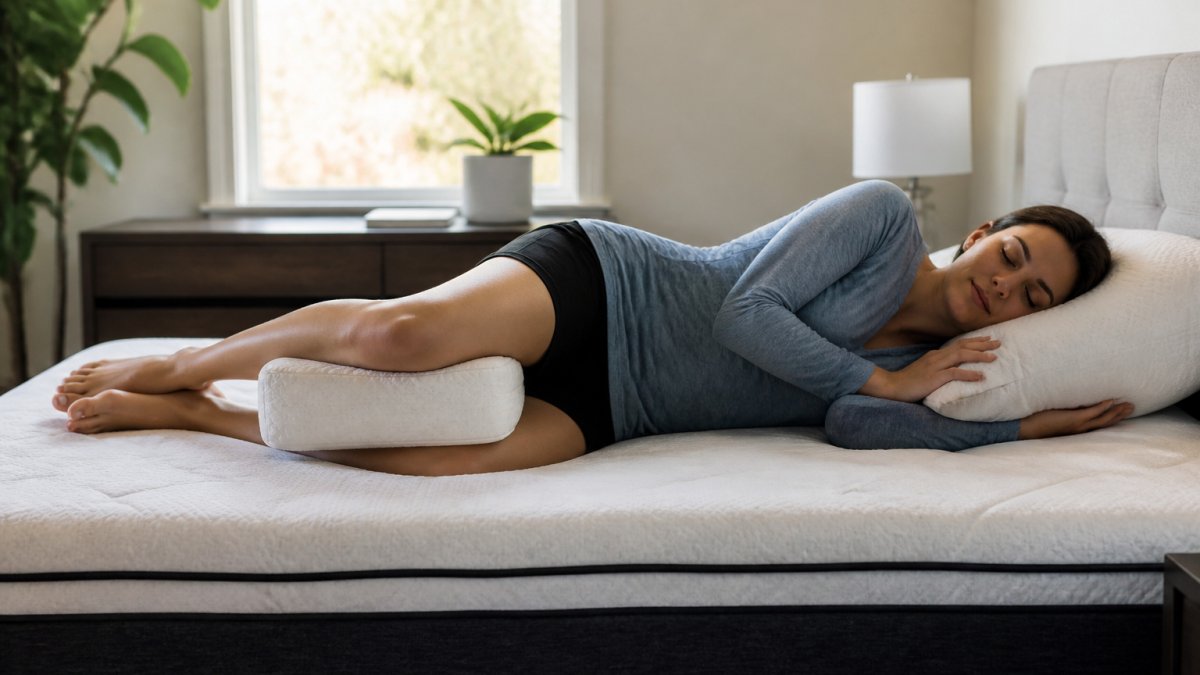
Memory foam and latex both work well for side sleepers because they conform to your body curves while supporting pressure-sensitive areas. Test the mattress in a side-sleeping position before buying to confirm it provides the contouring you need.
Testing Your Mattress and Understanding Trial Periods and Return Policies
Most mattresses require 30-90 days of use before you know whether they’ll work for your back. Many online retailers offer trial periods of 100 nights or longer, giving you genuine time to test the mattress in your own home.
Trial Period Length and What It Means
A 30-night trial is too short for back pain evaluation. A 60-90 night trial is the practical minimum, allowing your body to adapt and time to notice pain changes. A 100+ night trial is ideal if uncertain about your choice.
Trial Period Terms and Hidden Costs
Read trial period terms carefully. Key variations include: minimum sleep requirements (often 30 nights), restocking fees (10-25%), return shipping costs ($50-$200), refund timelines (5-10 business days typical), and condition requirements (minor wear acceptable, but stains or damage may reduce refunds).
Best policies offer full refunds with no restocking fees and free return shipping, but these are less common. Factor potential costs into your decision.
What to Evaluate During Your Trial Period
During your trial, track: pain levels (should trend downward), sleep quality (ease of falling asleep, wake frequency, morning restfulness), pressure points (hips, shoulders, lower back), temperature (heat retention), partner disturbance (motion absorption), and edge support.
Warranty Coverage and What It Protects
A mattress warranty protects against manufacturing defects, not normal wear or personal preference. Understand what your warranty covers:
- Coverage period: Most mattress warranties last 10 years, though some extend to 20 years. A longer warranty suggests the manufacturer is confident in durability.
- What’s covered: Warranties typically cover sagging (usually more than 1-1.5 inches), foam deterioration, zipper failures, and structural defects. They do not cover comfort preference changes, stains, or damage from misuse.
- Prorated vs. full replacement: Some warranties offer full replacement for the first 5 years, then prorated coverage (you pay a percentage of replacement cost) for years 6-10. Understand the prorated schedule before buying.
- Proof of purchase: Keep your receipt and warranty documentation. Manufacturers require proof of purchase to honor warranty claims.
- Exclusions: Read the fine print for exclusions. Some warranties exclude damage from improper bed frames, water damage, or use outside the manufacturer’s guidelines.
Do not assume a long warranty means the mattress will last that long. A 10-year warranty protects against defects, not normal softening or comfort changes. Many mattresses feel noticeably softer after 7-8 years of use, which is normal wear and not covered by warranty.
Making Your Decision
If the mattress improves your pain, supports your sleep position, and feels comfortable after 4-6 weeks, keep it. If pain worsens, pressure points develop, or sleep quality declines, initiate a return before your trial period expires. Document your experience (photos of pressure points, notes on pain levels) in case the retailer questions your return.
Key Factors to Evaluate Before Buying
| Factor | Why It Matters | What to Check |
|---|---|---|
| Firmness Level | Affects spinal alignment and pressure relief | Medium to medium-firm for most back pain |
| Material Type | Determines contouring, cooling, and bounce | Memory foam, latex, or hybrid based on preference |
| Body Weight | Heavier bodies compress mattresses more | Heavier people often need firmer options |
| Sleep Position | Determines pressure point locations | Side sleepers need more contouring than back sleepers |
| Trial Period | Allows testing before final commitment | Minimum 60-90 nights for meaningful evaluation |
| Edge Support | Affects usable sleeping surface | Important if you sleep near mattress edges |
| Warranty | Protects against manufacturing defects | Look for 10+ year coverage |
Before purchasing, consider your budget and priorities. A premium mattress with advanced cooling might not be necessary if you sleep cool naturally. A basic memory foam option might work perfectly if you prioritize support over temperature regulation.
The best mattress for back pain is one that keeps your spine neutral throughout the night. This requires the right firmness for your body weight, material that provides both support and pressure relief, and a trial period long enough to confirm it works for your specific situation.
Red Flags: When Back Pain Signals a Medical Issue
Some back pain requires medical attention before or instead of mattress changes. If you experience sharp, shooting pain down your legs, numbness or tingling in your feet, or pain that worsens despite mattress changes, consult a healthcare provider. These symptoms suggest nerve involvement that mattress support alone cannot address.
Sudden-onset pain that follows an injury also warrants medical evaluation. A mattress can help manage chronic pain, but it won’t heal acute injuries. If your pain started after an accident or fall, see a doctor before investing in a new mattress.
Pain that doesn’t improve after 4-6 weeks with a supportive mattress may indicate an underlying condition requiring professional treatment. A healthcare provider can determine whether your pain stems from muscle strain, disc problems, or other structural issues. This diagnosis guides both mattress selection and treatment options.
Choosing a mattress for back pain shouldn’t mean guessing which option works. Real Mattress Reviews provides detailed video reviews of mattresses designed for pain relief, helping you understand exactly how each option performs. Start by exploring our video library to find mattresses that match your firmness preference and budget, then use trial periods to confirm your choice before making a final commitment.
Frequently Asked Questions
What mattress firmness is best for back pain?
Medium-firm to firm mattresses work best for most people with back pain because they provide adequate support while maintaining natural spinal alignment. Medium-firm mattresses offer a balance between comfort and support, preventing excessive sinkage that can strain the lower back. However, the ideal firmness depends on your body weight, sleep position, and personal preference. Heavier individuals typically need firmer support, while lighter sleepers may find medium-firm sufficient. Always test a mattress during the trial period to confirm it reduces your pain.
Which is the best type of mattress for back pain?
Memory foam, latex, and hybrid mattresses all can support back pain relief when properly constructed. Memory foam contours to your body and reduces pressure points, latex provides responsive support with natural materials, and hybrids combine foam comfort with innerspring support. The best mattress type depends on your heat sensitivity, firmness preference, and budget. Innerspring-only mattresses often lack adequate contouring for back pain relief. Test different types during trial periods to find which material works best for your specific needs.
Can a mattress actually help relieve back pain?
A supportive mattress can significantly reduce back pain by maintaining proper spinal alignment and reducing pressure on sensitive areas. However, mattress quality is one factor among many, sleep position, pillow support, exercise, and underlying medical conditions all affect pain levels. If your back pain is severe, persistent, or worsening despite a supportive mattress, consult a healthcare provider to rule out serious conditions. A new mattress works best when combined with good sleep habits and appropriate medical care.
How long should I test a mattress before deciding if it works for my back pain?
Most mattress trial periods last 30 to 120 days, giving you time to adjust to a new mattress. Back pain relief typically becomes noticeable within the first 2-4 weeks as your body adjusts to the new support and comfort layers. However, some people need the full trial period to accurately assess whether the mattress reduces their pain. Keep a sleep journal during the trial, noting pain levels, sleep quality, and comfort. If pain worsens or doesn’t improve after the full trial, use the return policy to try a different firmness or type.

Leave a Reply
Want to join the discussion?Feel free to contribute!