
Best Cooling Mattress for Hot Sleepers 2026: Top Picks
Table of Contents
- Best Cooling Mattress for Hot Sleepers 2026: Top Picks Compared
- Best Mattress for Night Sweats: Hybrid, Latex, and Foam Options
- Cooling Hybrid Mattress: Coil Support Meets Breathable Comfort Layers
- Best Cooling Mattress Pad for Night Sweats: A Budget-Friendly Fix
- How to Make a Mattress Cooler: Room, Bedding, and Sleepwear Tips
- Cooling Performance by Sleep Position, Body Type, and Partner Needs
- Conclusion: Matching Cooling Technology to Your Sleep Needs
- Frequently Asked Questions
Last Updated: October 9, 2026
Best Cooling Mattress for Hot Sleepers 2026: Top Picks Compared
Finding the best cooling mattress for hot sleepers in 2026 comes down to one thing: how well a bed moves heat away from your body all night, not just in the first hour.
Here is the uncomfortable truth most roundups skip: a mattress cannot cool you below room temperature. It can only help your body shed heat faster. That distinction shapes everything below.
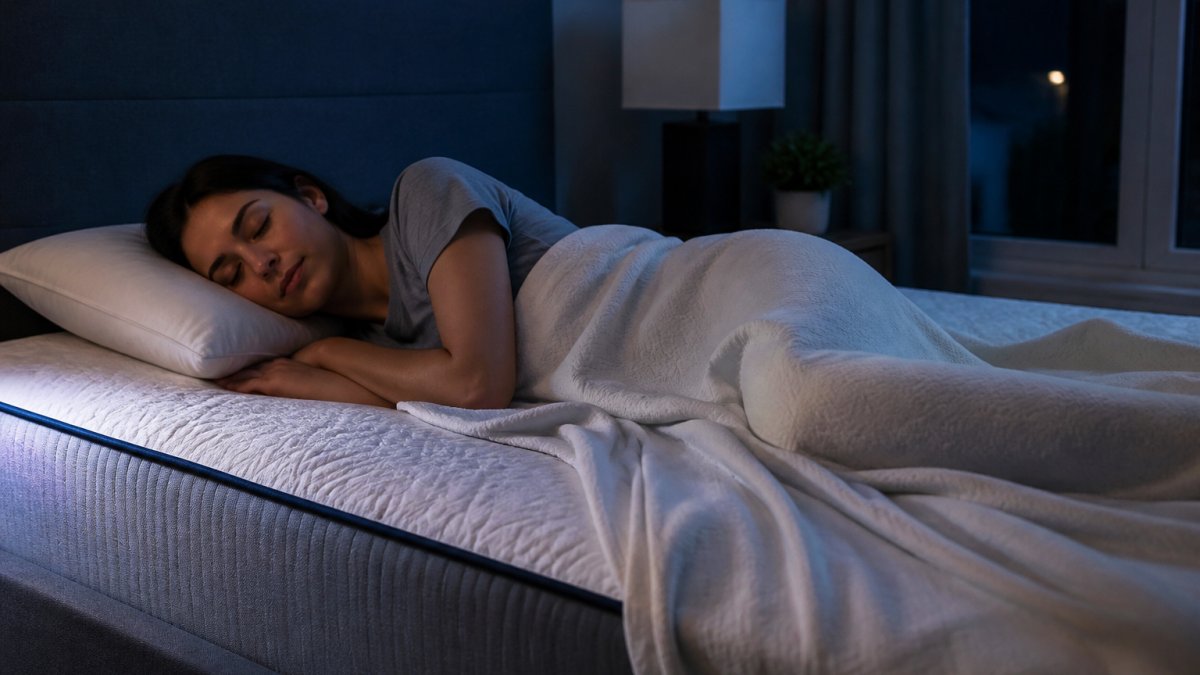
Quick Comparison: What Matters Most
| Priority | Best Construction | Why It Works |
|---|---|---|
| Overall cooling | Hybrid with coil support | Air moves through the coil layer |
| Budget fix | Cooling mattress pad | Adds airflow without a new bed |
| Natural feel | Latex | Open structure, no heat trap |
| Side sleepers | Hybrid with soft comfort layer | Pressure relief plus airflow |
| Couples | Hybrid, split firmness | Independent support, less heat buildup |
How We Evaluated Cooling Performance
A cooling mattress is a bed built to move heat and moisture away from your body faster than a standard foam bed. We judge cooling by construction first: coil support, open-cell foam, and breathable covers matter more than any “cool-to-the-touch” surface treatment, which tends to fade once you lie down. The U.S. Department of Energy guidance on home temperature and sleep is a useful reminder that your room does half the work. For sleep science context, the National Sleep Foundation overview of sleep and temperature is not available to us as a source, so we rely on construction and airflow instead.
A gel-infused or phase-change cover feels cool for the first few minutes, then warms to your body temperature. If a bed’s only cooling claim is its cover, expect that effect to disappear within the hour.
Best Mattress for Night Sweats: Hybrid, Latex, and Foam Options
The best mattress for night sweats is almost always a hybrid, because coil support lets air circulate under the comfort layers. Latex is the strongest alternative for sleepers who want a natural, open structure. Memory foam is the weakest choice unless it uses open-cell or graphite-infused designs.
Why Hybrids Often Win for Night Sweats
A hybrid pairs a coil support core with a foam or latex comfort layer. That coil layer is the key. Air moves through the springs, so heat and moisture do not get trapped the way they do in a solid foam block. For a hot sleeper, this single design choice matters more than any cooling gel.
When Latex or Foam Makes Sense
Latex has an open, pinhole structure that breathes well and holds less heat than dense memory foam. It suits sleepers who want a buoyant, responsive feel.
Foam still has a place. If you love the contouring of memory foam, look for open-cell, copper-infused, or graphite-infused versions. These pull heat away better than traditional dense foam, though they still run warmer than a hybrid.
Match the construction to your priority: hybrid for maximum airflow, latex for a natural breathable feel, open-cell foam only if you refuse to give up the memory foam hug.
Cooling Hybrid Mattress: Coil Support Meets Breathable Comfort Layers
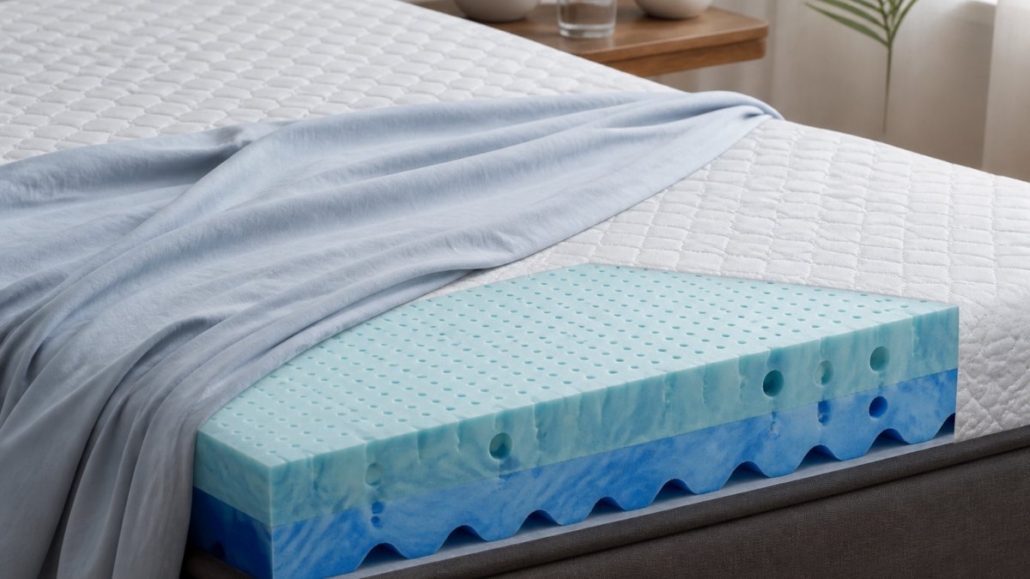
A cooling hybrid mattress combines coil support with breathable comfort layers to balance pressure relief and heat dissipation. The coils create channels for airflow, while a breathable cover and open-cell foams handle moisture at the sleep surface. That is the short version. The details are where hybrids separate from each other.
Airflow and Heat Dissipation in Hybrid Construction
Think of the coil layer as a ventilation system. Pocketed coils leave gaps that let warm air rise and escape instead of pooling under your body. On top, a cooling cover and moisture-wicking fabric move sweat away from the sleep surface.
What most guides miss is the comfort layer thickness. A hybrid with four inches of dense foam over its coils will sleep warmer than one with two inches. Thinner, more breathable comfort layers keep the airflow advantage intact. As a rule of thumb, every extra inch of dense memory foam above the coils reduces the cooling benefit of the coil core. Maintaining this thermal balance is essential for your sleep environment, much like selecting the right hotel quality sheets to ensure that the surface temperature remains consistent throughout the night.
Comparing the Cooling Materials Inside a Hybrid
Not all hybrid comfort layers behave the same way. Here is how the common options stack up on heat retention, feel, and cost:
- Open-cell foam. Engineered with larger, interconnected cells so air passes through instead of trapping it. Sleeps cooler than traditional memory foam and keeps most of the contouring hug. Usually the mid-price option.
- Graphite-infused foam. Graphite conducts heat away from the surface and is often paired with open-cell foam. It helps, but it is a supporting feature, not a cure for a thick, dense comfort layer.
- Copper-infused foam. Copper is a strong heat conductor and also has antimicrobial properties. Expect a modest cooling benefit and a higher price.
- Latex. An open, pinhole structure that breathes well and holds less heat than dense foam. Buoyant and responsive rather than contouring. Tends to be the most expensive comfort layer and the heaviest.
- Phase-change material (PCM). Absorbs and releases heat to buffer surface temperature. Effective for the first part of the night, then it equalizes. Best treated as a bonus layer, not the main cooling mechanism.
The Trade-Offs Nobody Lists
Cooling features are not free. A few patterns show up again and again:
- Thicker comfort layers feel plusher but sleep warmer. If you want the memory foam hug and run hot, cap the dense foam at two inches and let the coils do the work.
- Cooling covers add cost and fade. Gel and PCM treatments raise the price and lose effectiveness with washing and use. A breathable knit cover that never claimed to be “cooling” often outperforms a treated one after a year.
- Firmer hybrids sleep cooler for heavier sleepers. Sinking deep into any comfort layer reduces airflow. A firmer surface keeps more of your body in contact with the breathable top rather than buried in foam.
- Latex breathes well but is heavy and pricey. If natural materials matter to you, latex is the strongest choice; if budget matters, an open-cell foam hybrid gets you most of the way.
Match the construction to your priority: hybrid for maximum airflow, latex for a natural breathable feel, open-cell foam only if you refuse to give up the memory foam hug. And remember that the cover is the smallest lever, the core and the comfort-layer thickness do the real work.
Best Cooling Mattress Pad for Night Sweats: A Budget-Friendly Fix
The best cooling mattress pad for night sweats is a breathable, moisture-wicking pad with an open or phase-change top layer. It is the cheapest way to cool a bed you already own, and it works best when paired with a breathable fitted sheet.
What to Look For in a Cooling Pad
- Breathable top fabric: Look for moisture-wicking or phase-change materials, not plastic-backed waterproof layers that trap heat.
- Open structure: A pad with airflow channels or a ventilated design beats a solid quilted one.
- Secure fit: A deep-pocket skirt keeps the pad flat so it does not bunch and create hot spots.
- Easy washing: A machine-washable pad stays hygienic and keeps its cooling properties longer.
A pad will not turn a hot foam bed into a cool one. It reduces heat buildup at the surface, which is often enough to take the edge off night sweats.
How to Make a Mattress Cooler: Room, Bedding, and Sleepwear Tips
You can make a mattress cooler without buying anything new by fixing the three things around it: room climate, bedding, and what you wear. This is where the biggest, cheapest gains usually come from.
Moisture Management and Humidity Control
- Lower the room temperature before bed and use a fan to keep air moving across the sleep surface.
- Control humidity. Damp air stops sweat from evaporating, so a dehumidifier or air conditioning helps more than most people expect.
- Switch to breathable bedding. Cotton, linen, or bamboo sheets and a light wool or down-alternative blanket beat heavy synthetics.
- Choose moisture-wicking sleepwear. Synthetic athletic fabrics or lightweight cotton move sweat away instead of holding it against your skin.
- Rotate your bedding seasonally. A lighter comforter in summer reduces heat retention with no cost.
U.S. EPA guidance on indoor air and humidity control confirms that managing indoor humidity supports a healthier, more comfortable sleep environment.
Cooling Performance by Sleep Position, Body Type, and Partner Needs
Cooling needs change with how you sleep and who shares the bed. Side sleepers need pressure relief plus airflow, so a hybrid with a softer comfort layer works best. Back and stomach sleepers can handle a firmer, more breathable surface.
Body type matters too. Heavier sleepers sink deeper into foam, which reduces airflow and traps more heat, so a supportive hybrid with firm coils holds up better. Lighter sleepers get more benefit from a breathable cover and thinner comfort layers.
For couples, the challenge is split. One partner runs hot, the other likes it firm. A hybrid with independent coil support and a split-firmness option lets each side get what it needs, and the coil core keeps the shared surface cooler for both.
If you and your partner disagree on firmness, ask about a split-firmness hybrid. You each get your own feel, and the shared coil core still moves heat away for both of you.
Conclusion: Matching Cooling Technology to Your Sleep Needs
The right cooling mattress is the one whose construction matches how you sleep, not the one with the loudest cooling claim. Start with a hybrid if airflow is your priority, latex if you want a natural breathable feel, and a cooling pad if you are not ready to replace your bed.
At Real Mattress Reviews, we help you cut through the noise with nearly a decade of store experience, over 300 video reviews, and exclusive coupon codes that save you real money. We answer your questions before you buy, so you can match a bed to your specific needs, whether that is night sweats, back pain, or a partner who sleeps at a different temperature.
Frequently Asked Questions
What’s the coolest mattress to sleep on?
Hybrid mattresses with coil support and breathable covers tend to sleep coolest because air moves through the coil layer. Look for open-cell foam or latex in the comfort layer, plus a cool-to-the-touch cover. Materials like copper-infused foam and graphite-infused foam are designed to pull heat away from your body. For hot sleepers, a cooling hybrid mattress often outperforms all-foam options because airflow through the coils helps with heat dissipation.
Which cooling mattress pad is best for night sweats?
The best cooling mattress pad for night sweats uses phase-change material or breathable, moisture-wicking fabrics. Look for pads labeled as breathable and designed to absorb heat. A pad with a cool-to-the-touch cover can help, but check that it does not trap heat underneath. If night sweats are severe, combine a cooling pad with a cooling mattress and moisture-wicking sheets for the best results.
Do hybrid mattresses sleep cooler than all-foam mattresses?
Yes, hybrid mattresses generally sleep cooler than all-foam because the coil support layer allows air to flow through the mattress. All-foam models, especially those with traditional memory foam, can retain heat. If you choose foam, look for open-cell foam or infusions like copper or graphite that help with heat dissipation. A cooling hybrid mattress balances pressure relief with better breathability.
Can a cooling mattress help with night sweats?
A cooling mattress can help with night sweats by improving temperature regulation and heat dissipation, but it is not a medical cure. Look for breathable materials, phase-change material, and coil support for airflow. Combine it with moisture-wicking bedding and a cool room. If night sweats persist, talk to a doctor, as they can be a sign of an underlying condition.
Choosing a mattress as a hot sleeper is frustrating when every brand promises the same cooling technology and few deliver. Real Mattress Reviews makes the decision easier with hands-on video reviews, honest comparisons, and coupon codes that lower the final price. Explore our full review library, watch the beds in action, and grab our exclusive discounts. Get started with Real Mattress Reviews and find a cooler, more comfortable night’s sleep.

Leave a Reply
Want to join the discussion?Feel free to contribute!