Best Mattress for Stomach Sleepers 2026: What Actually Works?

Last Updated: November 8, 2026

Quick Summary

The best mattress for stomach sleepers in 2026 is a medium-firm to firm hybrid, because its coil core holds your hips level with your shoulders instead of letting your midsection sag. Firmer surfaces keep your spine closer to neutral, while too-soft foam arches your lower back and twists your neck.

  • Hybrids pair innerspring coils with a foam or latex comfort layer for strong lower-back support.
  • Memory foam offers deep contouring, but softer foams can let your midsection sag.
  • Dunlop latex is responsive and buoyant, pushing back instead of letting you sink.
  • Lie face down for 10-15 minutes and slide a hand under your hips to check for sag.
  • Check the warranty for sagging exclusions and confirm the sleep trial before you buy.
Not sure which firmness is right for you?Real Mattress Reviews matches you to mattresses by sleep position, pain, and budget, with coupons to save.

Find Your Stomach Sleeper Mattress

Table of Contents

Why Stomach Sleepers Need a Firm Mattress

If you sleep on your stomach, the mattress under you matters more than you probably think. Stomach sleeping is the position that puts the most strain on your spine, because your hips and abdomen sink down while your head and shoulders stay higher. The best mattress for stomach sleepers in 2026 needs to keep your hips from dropping out of line with your shoulders.

The wrong surface can turn a night’s rest into hours of spinal pressure. A surface that’s too soft lets your midsection sag, which arches your lower back and twists your neck. A firmer surface holds your hips up so your body stays closer to neutral.

That’s the core tension most buying guides skip. Stomach sleeping isn’t a comfort preference. It’s a structural demand, and the mattress has to answer it.
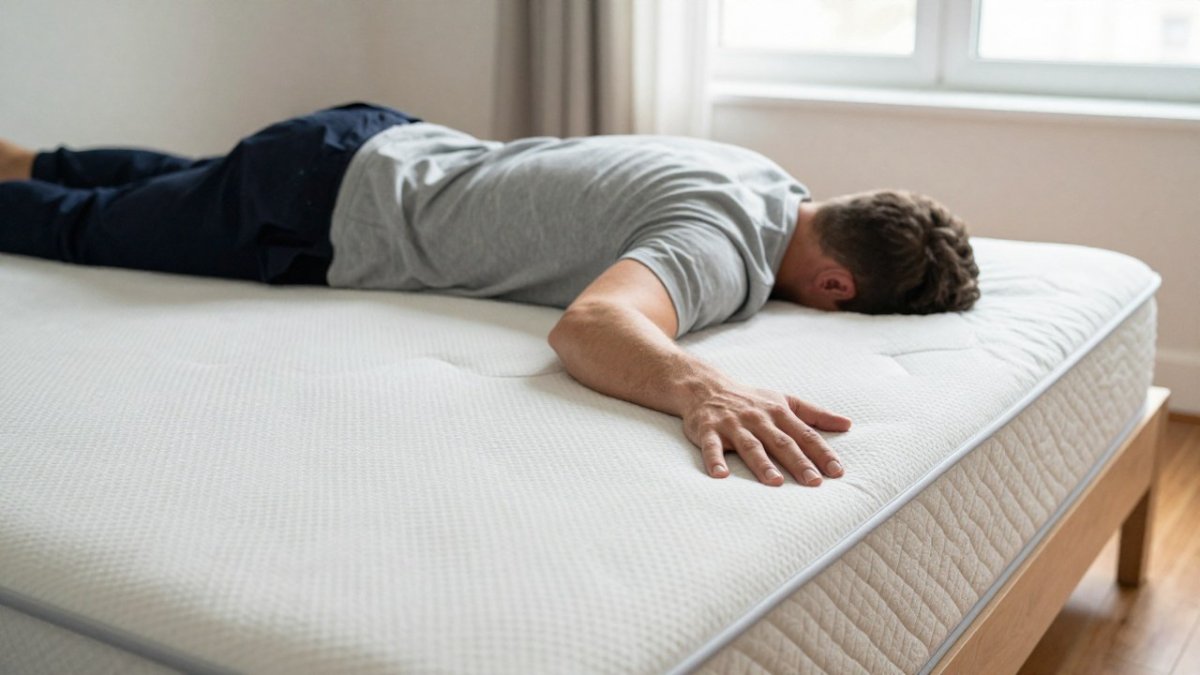
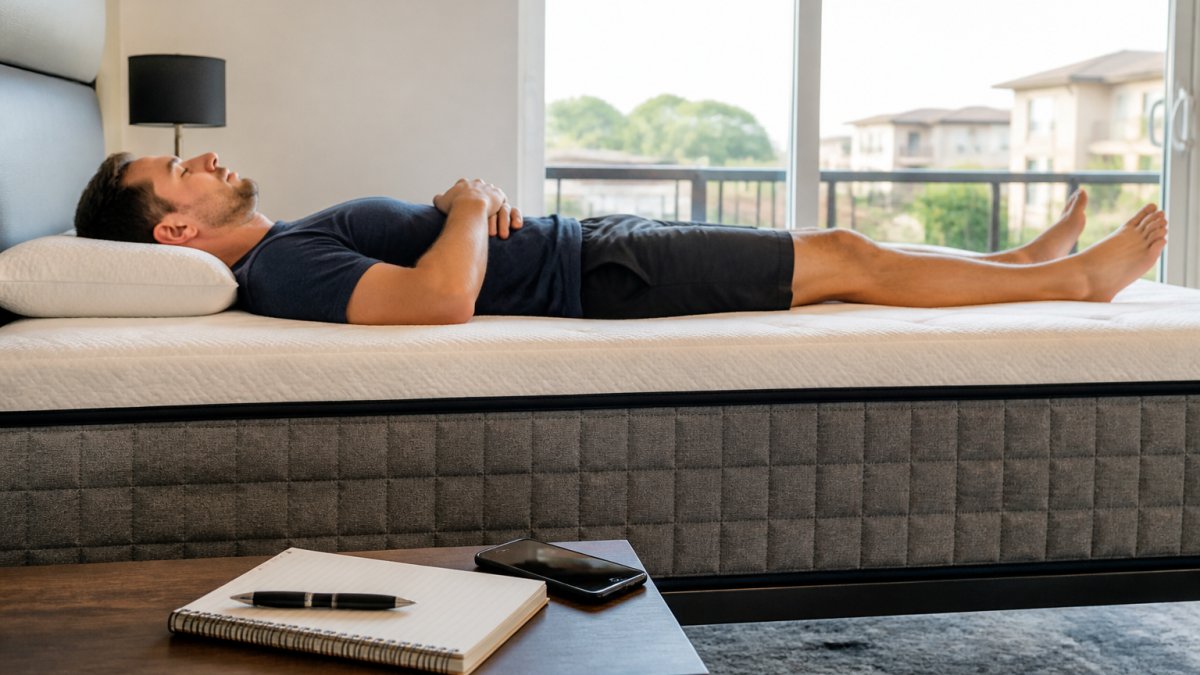
Man lying face down on a firm mattress with aligned hips for stomach sleepers

How Firmness Affects Spinal Alignment

Firmness is the single biggest lever for stomach sleepers. Spinal alignment is the goal: your head, shoulders, hips, and heels should sit in a roughly straight line when you lie face down.

Softer mattresses let your abdomen and hips sink, which pushes your lower back into an arch. Firmer surfaces resist that sinkage and keep your body level. Most stomach sleepers do best on a medium-firm to firm surface, though body weight and shape shift that target. A lighter sleeper may find a true firm mattress too rigid, while a heavier sleeper may sink right through a medium.

If terms like “medium-firm” feel vague, our guide to the mattress firmness scale explained for beginners breaks down each level so you can match a number to how it actually feels.

Best Mattress Types for Stomach Sleepers

Three mattress types dominate the conversation, and each handles stomach sleeping differently. The right pick depends on how much support and responsiveness you want under your hips, how much you weigh, and how long you expect the surface to hold its shape.

Hybrid mattresses pair innerspring coils with a foam or latex comfort layer. The coil system gives strong lower-back support and keeps your hips from sinking, which is why hybrids are a frequent top pick for stomach sleepers. The mechanism matters: a pocketed-coil core compresses locally under your hips and abdomen, then pushes back, so your midsection stays closer to the plane of your shoulders. Hybrids also tend to sleep cooler than all-foam because air moves through the coil layer (Memory Foam vs. Hybrid Mattresses). The trade-off is that a thick, plush pillow-top over the coils can soften the surface just enough to let your hips drop, so look for a hybrid with a relatively thin, firm comfort layer.

Memory foam offers deep contouring and pressure relief, but softer foams can let your midsection sag. If you go foam, look for a firmer, denser build rather than a plush one. The key spec is the support core, not the top layer: a high-density polyfoam base resists compression better than a low-density one, and a firm transition layer between the comfort foam and the base keeps your hips from bottoming out. Check the density ratings and warranty terms before you commit.

Latex, especially Dunlop latex, is responsive and buoyant. It pushes back instead of letting you sink. The trade-off is price and feel: latex is bouncier and less contouring, and some sleepers find it too rigid on the shoulders. A latex-over-coil hybrid can split the difference.

Hybrid vs. Foam vs. Latex

Here’s how the three compare for stomach sleeping:

Type Support Feel Pressure Relief Durability Outlook Best For
Hybrid Firm, responsive Good Strong if coils and foam densities are high Most stomach sleepers, especially heavier adults
Memory foam Soft, contouring High Varies widely; low-density foams sag sooner Lighter sleepers who want cushioning
Latex Bouncy, firm Moderate Generally the longest-lasting Hot sleepers, heavier bodies, durability-focused buyers

A common mistake is buying the plushest mattress because it feels good for a few minutes in the showroom, when a softer surface may not hold a stomach sleeper’s hips up overnight. When you want to browse real picks in one place, our stomach sleeper mattress archive collects the reviews and coupons worth your time.

How Body Weight and Shape Change the Type Decision

Body weight and shape both affect how a mattress feels. Test candidates in your own sleep position to see how they respond to your weight and build.

Body shape matters too. Sleepers with a larger chest or broader shoulders need enough give in the top layer to avoid shoulder pressure when face down, while sleepers with a pronounced lumbar curve need a firmer core to keep the lower back from over-arching. The practical test is to lie face down and slide a hand under your hips: if there’s a visible gap under your abdomen but your hips stay level with your shoulders, the surface is holding you; if your hips dip below your shoulders, the type is too soft for your build.

Check the warranty for sagging exclusions before you buy. For a deeper look at how we weigh these factors, see our mattress testing methodology.

Best Mattress for Stomach Sleepers 2026 with Back Pain

For stomach sleepers with back pain, the priority is a firm surface that stops your hips from sagging and keeps your lower spine neutral. Look for a firm mattress or a firm hybrid with minimal sinkage under your midsection. Too much cushioning can let your abdomen drop and arch your back, so balance give with firmness.

Best Mattress for Side and Stomach Sleepers with Back Pain

Combination sleepers who flip between their side and stomach need a surface that suits both positions. The best mattress for side and stomach sleepers with back pain balances pressure relief for the shoulder and hip against the firmness stomach sleeping demands.

Medium-firm is a common compromise for combination sleepers, since it can cushion a side-sleeping shoulder while still supporting the hips in a stomach position.

Best Mattress for Stomach Sleepers with Lower Back Pain

Lower-back support matters for stomach sleepers. A good mattress for this situation keeps the lumbar region from dipping, so the lower spine stays closer to its natural curve. That is a comfort and alignment goal, not a medical treatment; if you have persistent back pain, talk to a clinician about sleep posture alongside any mattress change.

Favor firmer hybrids and denser foams with a supportive core. Sagging is the enemy: a mattress that develops a dip under your hips will undo the alignment you bought it for. Check the warranty terms for sagging exclusions before you buy.

Body weight shifts the firmness target, so the right feel depends on your build. The practical check is to lie face down and feel whether your hips stay level with your shoulders and whether your lower back feels neutral rather than arched or pressed.

For a deeper set of picks aimed at chronic pain, our guide to the best mattress for chronic lower back pain goes further into lumbar support and firmness choices. Pair any mattress change with a thin pillow and a setup that keeps your neck in line, since mattress choice is only one part of sleep posture.

Best Mattress for Stomach Sleepers with Shoulder Pain

Shoulder pain and stomach sleeping pull in opposite directions. Stomach sleeping wants firmness, but a too-rigid surface can press on the shoulder you’re lying on. Pair any mattress with a thin pillow, since a thick one pushes your neck out of line when you’re face down.

How to Test a Mattress Before You Buy

Testing well comes down to lying in your actual sleep position, not sitting on the edge. Give any candidate at least 15 minutes face down and check three things: whether your hips stay level with your shoulders, whether your lower back feels neutral, and whether your shoulders or hips ache.

A simple routine:

  • Lie face down for 10-15 minutes, not 30 seconds
  • Slide a hand under your hips to feel for a gap or a sag
  • Roll to your side to confirm it still works for combination sleeping
  • Check the sleep trial and return policy before you commit

A mattress testing session in a store beats reading specs alone, but only if you test the right way. Our mattress testing methodology explains how we evaluate support, sinkage, and durability so you can judge a recommendation with confidence.

Find Your Next Mattress with Real Mattress Reviews

Picking a mattress for stomach sleeping comes down to one rule: keep your hips up and your spine straight. Firmness, support, and durability decide whether that happens night after night.

Real Mattress Reviews exists to make that decision simpler. With nearly a decade of mattress store ownership behind us and a library of over 300 video reviews, we aim to answer your questions before you buy and share exclusive coupon codes to help you save. If you’re tired of guessing, start with our reviews and let the testing do the work.


Ready to stop guessing and start sleeping better? Explore our video reviews, compare firmness and support side by side, and grab a coupon before you buy. Get started with Real Mattress Reviews and find the surface that finally matches how you sleep.

Frequently Asked Questions

What firmness of mattress is best for stomach sleepers?

Many stomach sleepers do best on a medium-firm to firm mattress. This range keeps the hips and abdomen from sinking too deep, which helps maintain a straight spine. If you weigh less than 150 pounds, a medium-firm feel may be enough. If you weigh more, look for a firm option with strong support layers. Testing the mattress in person or using a sleep trial is the best way to confirm the right feel for your body.

Can a mattress that is too soft cause back pain for stomach sleepers?

Yes. A soft mattress lets the hips and abdomen sink lower than the chest, which arches the lower back and strains the spine. Stomach sleepers often wake up with lower back pain for this reason. If your current mattress leaves a visible dip under your hips or you feel a hammock effect, it is likely too soft. Switching to a firmer surface with solid support layers usually reduces that strain within a few nights.

Is a memory foam or hybrid mattress better for stomach sleepers?

Hybrid mattresses generally work better for stomach sleepers because the coil system adds responsiveness and prevents deep sinkage. Memory foam can work if it is a firmer, high-density version, but soft foam tends to let the hips sink too far. A hybrid with pocketed coils and a firm comfort layer gives you both pressure relief and support. If you sleep hot, hybrids also tend to sleep cooler than all-foam beds because air moves through the coil layer.

How can stomach sleepers tell if their mattress provides enough support?

Lie face down on the mattress for at least 10 to 15 minutes and check three things. First, your hips should not sink lower than your shoulders. Second, your lower back should feel flat, not arched or strained. Third, you should not feel pressure points at your shoulders or knees. If you feel any of these issues, the mattress is likely too soft. Testing on your stomach, not your back, is the only way to know for sure.

Best Mattress for the Money 2026: What Actually Pays Off?

Last Updated: November 4, 2026

Quick Summary

The best mattress for the money is the one that delivers the most performance per dollar over its full life, not the lowest sticker price. We judge value by support, pressure relief, cooling, and durability divided by total cost, so a mid-tier bed with solid durability often wins on lifetime cost.

  • Entry-tier mattresses under $500 typically last roughly 3 to 5 years.
  • Mid-tier beds from $500 to $1,200 typically last roughly 6 to 8 years.
  • Upper-mid hybrids from $1,200 to $2,000 typically last roughly 8 to 10 years.
  • Divide total cost by expected years to compare beds on true cost per year.
  • A steep return fee can outweigh a generous trial period, so price the return first.

Table of Contents

What Best Mattress for the Money Actually Means in 2026

A “best mattress for the money” list that only ranks by sticker price is doing you a disservice. The mattress that costs the least on day one can be the most expensive purchase you make if it sags in three years or fails your back.

Value in a mattress is the performance you get per dollar over the full life of the bed, not the number on the sale tag. That means support, pressure relief, cooling, and durability all count toward the numerator.

Price-to-Performance Scoring: How We Define Value

  • Support and spinal alignment: does the mattress hold your hips and shoulders in line?
  • Pressure relief: does it cushion the spots that take your body weight?
  • Temperature regulation: does it sleep hot or neutral?
  • Durability: how long before comfort layers break down?

A bed that scores well on all four and costs a little more usually beats a cheap bed that fails two of them. That’s the core of how we judge the best mattress for the money in 2026.

Budget Tiers: Realistic Price Thresholds by Mattress Type

A price band is only useful if it tells you what you’re actually buying. Pricing depends on size, materials, retailer, and timing, so we describe general spending bands and the construction you should expect within each. For current prices, check Real Mattress Reviews’ website or the retailer before you buy.

Tier Typical Queen Price Band What You Typically Get Expected Lifespan Best For What You Give Up
Entry Under $500 Basic foam or bonnell innerspring, 1.5-2 inch comfort layers, low-density foam Roughly 3-5 years Guest rooms, first apartments, short-term use Cooling, motion isolation, long-term support
Mid $500-$1,200 Hybrid or quality all-foam, 2-3 inch comfort layers, denser support core Roughly 6-8 years Everyday sleepers, most couples Premium cooling features, luxury quilting
Upper-Mid $1,200-$2,000 Pocketed-coil hybrids, higher-density foams, phase-change or gel cooling Roughly 8-10 years Back pain, hot sleepers, heavier sleepers The very top of the cooling and customization market
Premium $2,000+ Dense foams, advanced coil systems, zoned support, premium cooling Roughly 10+ years Long-term ownership, specific pain needs You may pay for features you won’t use

What Each Tier Actually Buys You

The upper-mid tier is where cooling and zoned support become real rather than marketing. Pocketed coils, higher-density foams, and phase-change or gel-infused layers cost more to build, and that cost shows up in temperature regulation and motion isolation. Premium beds add refinement and longevity, but the returns diminish once your needs are met.

Mattress Type Changes the Math

  • All-foam: Cheapest to produce, so entry and mid tiers are common. Watch for low-density comfort layers that soften early.
  • Hybrid: Coils plus foam. The mid and upper-mid tiers are where hybrids make sense, because cheap hybrids often skimp on coil count or foam density.
  • Innerspring: Traditional bonnell coils dominate entry pricing; pocketed coils push into mid and above.
  • Latex: Rarely an entry-tier option; expect upper-mid and premium pricing for natural latex.

Watch out: A sale price can move a bed down a tier temporarily. Judge the tier by construction and warranty, not by the discount, or you may buy a premium-priced bed with entry-level layers.

Match the spending level to how you sleep and how long you plan to keep the bed, then use the price-to-performance framework above to compare within it.

Best Mattress by Sleeper Type and Need

Your sleep position changes what “value” means. A bed that’s perfect for a back sleeper can wreck a side sleeper’s shoulders. This is where generic roundups fall short, and it’s the first thing we check in every review.

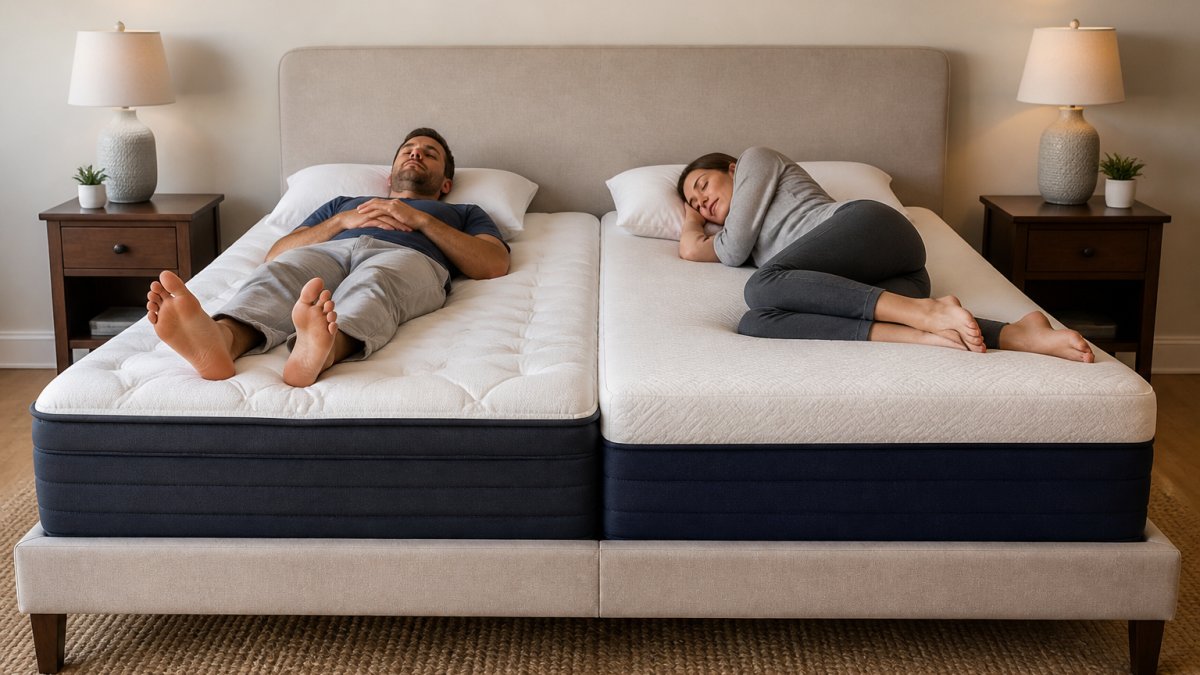
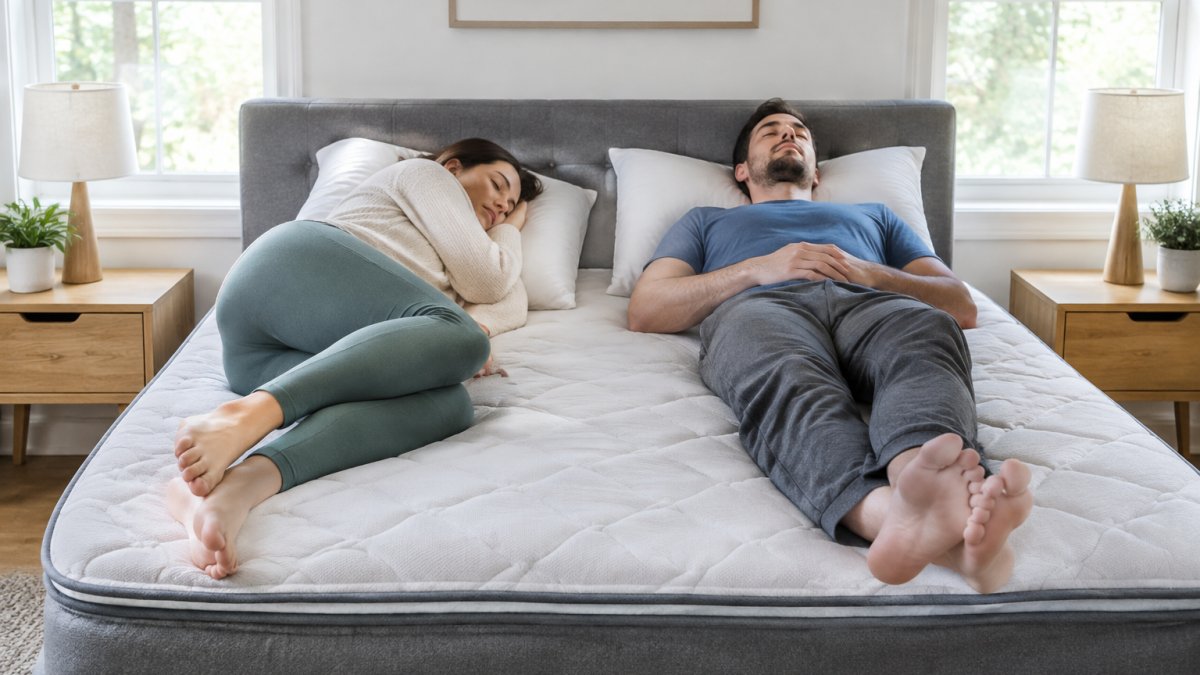
Infographic comparing how the best mattress supports side and back sleepers sharing a queen bed

Side Sleepers, Back Sleepers, and Stomach Sleepers

Side sleepers need pressure relief at the shoulders and hips, which usually means a softer, contouring surface. Proper spinal alignment for these positions also depends on the loft and firmness of your head support, which makes choosing the best side sleeper pillows a critical final step in optimizing your nightly rest.

If you’re shopping by position, start with our curated picks: best mattresses for side sleepers and best mattresses for back sleepers both compare support and firmness so you can match the bed to how you actually sleep.

Couples, Hot Sleepers, and Pressure Relief

Couples add two variables: motion isolation and differing firmness preferences. Hot sleepers add a third: temperature regulation. A bed that sleeps cool and isolates motion can be worth more than a cheaper one that wakes both partners every time someone rolls over.

For shared beds with different needs, our guide to the best mattress for couples with different needs breaks down how to satisfy both sleepers. If you run hot, the best cooling mattresses for hot sleepers covers the materials that actually move heat away.

How to Choose a Mattress for Back Pain

Back pain is the reason most people start shopping, and it’s also where the most money gets wasted on the wrong bed. The fix is a method, not a guess.

A mattress for back pain should keep your spine in neutral alignment while relieving pressure at the hips and shoulders. Medium-firm is the most common starting point, but your body weight and sleeping position shift that.

  • Match firmness to your position: softer for side sleepers, firmer for stomach sleepers
  • Prioritize support layers over plush top layers
  • Check the return policy before you buy, since back pain relief is personal
  • Give a new bed a fair trial before deciding it doesn’t work

For a step-by-step walkthrough, read our guide on how to choose a mattress for back pain. It turns this into a checklist you can take to the store.

Newsletter Sign Up →

Mattress Durability and Lifespan: What You Get for the Price

Durability is the hidden half of value. A cheaper bed that needs replacing in a few years can cost more over time than a better-built one that lasts.

Higher-density foams and well-built coil systems generally hold up longer than thin, low-density layers. Heavier sleepers put more stress on a mattress and tend to wear through comfort layers faster, so body weight should factor into how much you’re willing to spend.

Mattress Trial Periods and Return Policies: The Hidden Value

A generous trial period is worth real money, because it’s your safety net if the bed doesn’t suit you. Mattress trial periods and return policies vary widely, and the details matter more than the headline number.

  • Trial length: how long you have to sleep on it before deciding
  • Return costs: who pays shipping or a return fee
  • Break-in requirements: some policies require a minimum number of nights
  • Refund vs. exchange: whether you get money back or store credit

A bed with a strong trial and clear return terms is lower-risk, and lower risk is part of value. Always read the fine print before you buy, because a great price with a rigid return policy can trap you with a mattress you can’t use.

Total Cost of Ownership: The Math Most Shoppers Skip

Here’s the angle most roundups ignore. Total cost of ownership spreads everything you’ll spend across the years you’ll actually sleep on the bed, then divides by those years to get a true cost per year. That single number is the fairest way to compare a cheap bed against a better-built one.

The Full Cost Stack

Most shoppers count only the sticker price. The real cost includes:

A Worked Example

The math flips if you move frequently, expect your needs to change, or buy for a guest room. In those cases the cheaper bed’s lower commitment can be the better value even at a higher cost per year.

Warranty Coverage Is Part of the Math

A warranty only counts toward value if it covers the failure you actually experience. Most mattress warranties cover manufacturing defects like sagging beyond a stated threshold, but not normal softening, stains, or damage from an unsupported foundation. Read the exclusions before you treat a long warranty as a durability guarantee.

Watch out: A generous trial period with a steep return fee can cost more than a shorter trial with free returns. Price the return before you buy, not after.

How to Run the Math Yourself

  1. Write down the sale price plus shipping, setup, removal, and foundation costs.
  2. Estimate realistic lifespan from construction quality and warranty terms, not marketing claims.
  3. Divide total cost by expected years.
  4. Compare that per-year figure across your shortlist, then weigh it against the performance scores above.

A bed you keep for many years costs far less per year than a cheap one you replace quickly. That’s why a mid-tier mattress with solid durability often wins on lifetime cost even when it loses on sticker price. Answer the lifespan, shipping, and return questions before you buy, and the “cheap” option often stops looking cheap.

Compare Value Picks Before You Buy

The best mattress for the money in 2026 is the one that matches your sleep position, relieves your pressure points, sleeps at the right temperature, and holds up over time, at a price you can justify per year of use.

That’s the standard we hold every review to at Real Mattress Reviews. We don’t just quote specs; we help you weigh performance against cost so the bed you buy actually works for your body.

Frequently Asked Questions

What’s the best mattress for the least amount of money in 2026?

There is no single cheapest winner, because the best mattress for the money depends on your sleep position, body weight, and how long you plan to keep it. A lower-priced foam or hybrid mattress can be good value if it has the firmness and support your body needs and comes with a real sleep trial. Compare price against durability, warranty length, and return terms rather than sticker price alone. A cheap mattress you replace in three years often costs more than a mid-priced one that lasts eight.

How much should I spend on a mattress in 2026?

Spending depends on size, materials, and your needs. Set a budget tier first, then compare mattresses within it on support, cooling, and durability rather than stretching to the most expensive option. A mattress priced in the middle of its category usually delivers most of the comfort and lifespan of premium models. Factor in delivery fees, old-mattress removal, and whether a foundation is included, since those can add real cost to an otherwise affordable pick.

Are budget-friendly mattresses worth it in 2026?

Many are, provided you check the construction and the trial terms. Budget mattresses often use thinner foam layers or lighter coil counts, which can shorten mattress durability and lifespan. Look for a warranty that covers sagging, a trial period long enough to test it for at least 30 nights, and a return policy that states who pays shipping. If those terms are solid, a budget mattress can be genuinely good value for a guest room or a first apartment.

How do I know if a mattress is a good value?

Compare what you pay against what you get over time. Divide the price by the expected years of use, then weigh in warranty coverage, trial length, and return costs. A mattress with strong edge support, good motion isolation for couples, and cooling features may cost more upfront but need replacing less often. Check whether the sale price is a real discount or a permanent markdown, and confirm the trial period and return policy before you order.


The challenge is simple: most shoppers compare price tags, not performance per year. Real Mattress Reviews gives you the video reviews, back-pain guidance, and coupon codes to judge value the right way. Get started with Real Mattress Reviews and choose a mattress you’ll still be glad you bought years from now.

7 Best Affordable Mattresses for Back Sleepers in 2026

Last Updated: November 2, 2026

Quick Summary

Medium-firm is the starting firmness for back sleepers, and a budget hybrid with 6-8 in. pocketed coils is the most durable affordable mattress construction at the low end. Expect 5-7 years of usable life from a budget hybrid priced $500-$900, and always confirm the sleep trial and indentation threshold before ordering.

  • Check lumbar fill by sliding a hand under your lower back: a tunnel means too firm, no movement means too soft.
  • Budget all-foam beds under $600 typically last 3-5 years before comfort layers soften.
  • Lighter back sleepers under about 130 lb should start at medium firmness to avoid gaps.
  • Heavier sleepers over about 230 lb need 8 in.+ pocketed coils or 2.0 lb+ high-density foam.
  • Warranty length is not a durability measure; read the indentation threshold and prorated terms.

Table of Contents

Why Back Sleepers Need a Different Mattress (And What Budget Buys You)

Back sleeping puts your spine in a neutral line, but only if the mattress fills the gap under your lower back without pushing your hips up.

Here’s the tension most budget guides ignore. Cheap does not mean bad for your back. It means fewer layers, thinner foams, and a shorter usable life.

Below, we’ll show you how we screen mattresses, what firmness actually suits back sleeping, and which constructions hold up longest at the low end of the market.

How We Tested: Reproducible Criteria for Affordable Mattress Picks

Below are five checks you can run yourself in a showroom or during a sleep trial.

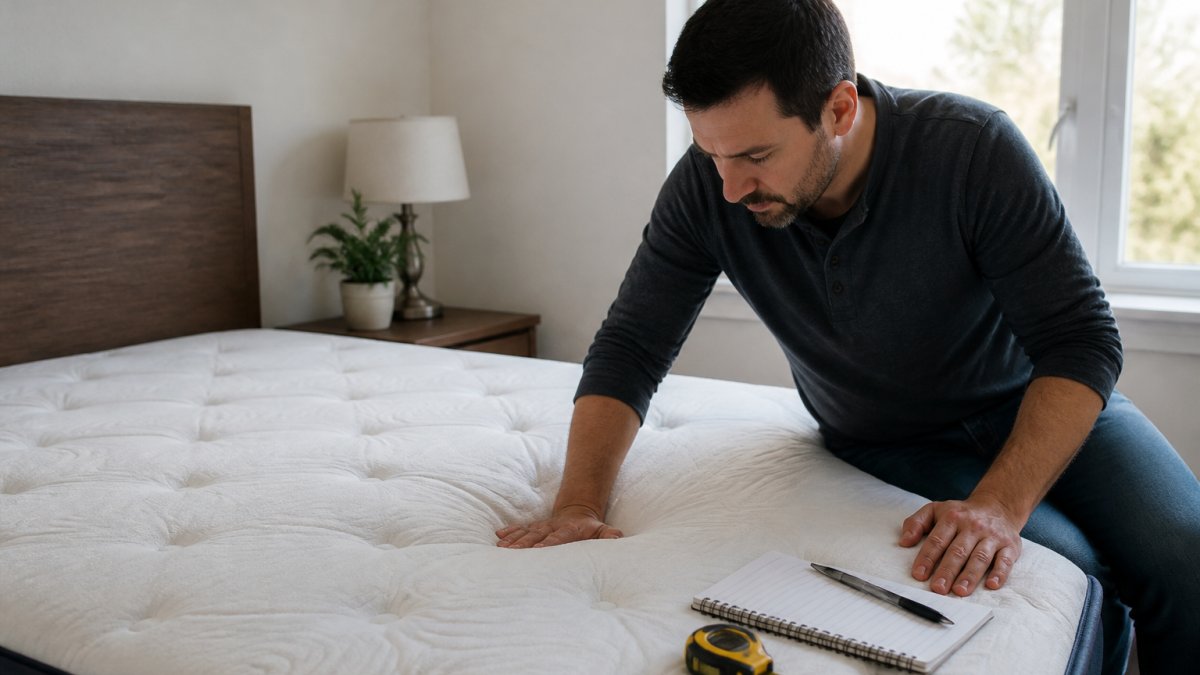
Reviewer testing the firmness of an affordable mattress with a measuring tape and notebook nearby.
  • Hand-press test: Push your palm into the center and the edge. You want resistance that gives slowly, not a surface that bottoms out immediately.
  • Lumbar fill check: Lie flat on your back and slide a hand under your lower back. A slight gap is fine. A tunnel means too firm; a hand you can’t move means too soft.
  • Edge sit: Sit on the corner. Deep collapse signals weak perimeter foam, which shortens usable life.
  • Layer inventory: Read the spec sheet. Support core thickness matters more than the comfort layer’s brand name.

A common mistake is judging a mattress in the first 60 seconds. Foam needs time to warm and settle. Give any candidate a full night before you decide.

The Best Affordable Mattress for Back Pain: What Actually Helps

No mattress treats back pain. That distinction matters, and most budget roundups blur it. A mattress may support neutral alignment and reduce pressure at the hips and shoulders. If your pain has a medical cause, it’s worth talking to a clinician about what position and surface your situation calls for.

What budget shoppers should prioritize, in order:

  1. Support core density over comfort gimmicks. A thicker, denser support layer does more for your back than a fancy cover.
  2. Medium-firm, not extra firm. The old advice to sleep on the hardest surface you can tolerate has aged badly.
  3. Zoned support if you can find it cheaply. Firmer foam under the hips and softer foam under the shoulders helps back sleepers hold alignment.
  4. A real sleep trial. This is your only true test.

If back pain is your main driver rather than general comfort, our guide to which mattress relieves back pain best goes deeper on matching surfaces to specific pain patterns.

Mattress Firmness for Back Sleepers: Medium-Firm Is the Starting Point

Medium-firm is a common starting recommendation for back sleepers (Best Mattress for Back Sleepers of 2026: Expert Tested).

Firmness is subjective, though. If you’re unsure what the labels mean in practice, the mattress firmness scale explained for beginners breaks down each level with what it feels like lying down.

Use this as your starting filter:

Sleeper Profile Starting Firmness Why
Back sleeper, average build Medium-firm Balances lumbar support and pressure relief
Back sleeper, lighter build Medium Prevents a too-firm surface from creating gaps
Back sleeper, heavier build Firm Resists sink-through in the support core
Combination sleeper Medium-firm Works across back and side positions

Treat that table as a starting point, not a verdict. Your body weight and build shift the answer, which is the next thing to sort out.

The Best Budget Hybrid Mattress: When Springs Plus Foam Beat Foam Alone

A hybrid pairs a coil support core with foam comfort layers (What Is a Hybrid Mattress?).

Common hybrid characteristics:

  • Better airflow, which matters if you sleep hot
  • Stronger edge support in most builds
  • More bounce, so you don’t feel stuck in the surface

Where they fall short: cheap hybrids sometimes use thin gauge coils that soften quickly, and motion transfer is worse than all-foam.

All-foam still makes sense if you want maximum motion isolation and a lower price. The trade-off is heat retention and a shorter support life at the budget end.

What separates a good budget hybrid from a bad one

At the low end of the market, the coil unit is the whole ballgame. Use these specs as your filter:

Newsletter Sign Up →

  • Coil count and gauge: More coils at a thinner gauge generally means better conforming; fewer, thicker coils mean a firmer, more durable feel. Neither is automatically better, match it to your weight band above.
  • Coil height: A 6-8 in. coil unit gives the support core room to work. A 4-5 in. coil unit stacked under thick foam is mostly decoration.
  • Edge reinforcement: Look for a dedicated perimeter coil or high-density edge foam. Without it, the usable surface shrinks and the corners collapse within a year or two.
  • Transition layer: A thin foam or fiber pad between coils and comfort foam prevents the coil tops from telegraphing through. Its absence is a common cost cut.

Expected lifespan at the budget end

This is where budget guides usually go quiet.

Construction Typical Usable Life First Failure Point
Budget all-foam (under $600) 3-5 years Comfort layer softening and body impressions
Budget hybrid ($500-$900) 5-7 years Thin-gauge coil softening or edge collapse
Hybrid with 8 in.+ pocketed coils ($800-$1,200) 7-10 years Cover wear and minor comfort-layer compression
Watch Out
Warranty length is not a durability measure. A 10-year warranty that only covers visible indentations beyond 1.5 in. will not help you when the mattress feels soft at year three. Read the indentation threshold and the prorated coverage terms before you buy.
:::

If you’re leaning hybrid, our breakdown of the best hybrid mattress for back support compares constructions in detail.

Mattress for Spinal Alignment: What to Check Before You Buy

Spinal alignment is the single most useful thing to evaluate, and it’s free to check. Lie on your back, relax completely, and have someone look at or photograph your profile.

Red flags during that check:

  • Hips lower than shoulders: the mattress is too soft, and your lower back is arching.
  • Visible gap under the lumbar curve: too firm for your build.
  • Shoulder pressure or numbness: the comfort layer isn’t cushioning enough.

Also look for zoned support, where the core is firmer in the middle third. And check certifications on the label if you’re sensitive to off-gassing; independent testing programs exist for exactly this, and the CertiPUR-US foam certification program publishes what each certification actually verifies.

Picks by Body Weight, Build, and Couples’ Needs

Body weight strongly influences which firmness feels right. A lighter sleeper on a firm mattress feels like they’re lying on a board.

Here is how the three weight bands typically map to budget-friendly construction choices.

Sleeper Build Starting Firmness Support Core to Look For Comfort Layer to Look For Typical Queen Price Band
Lighter (under about 130 lb) Medium 5-6 in. pocketed coils or 1.8 lb density foam 2-3 in. of softer foam so shoulders and lumbar curve aren’t left hanging $300-$700
Average (about 130-230 lb) Medium-firm 6-8 in. pocketed coils or 1.8-2.0 lb density foam 2-3 in. of responsive foam or latex alternative $400-$900
Heavier (over about 230 lb) Firm 8 in.+ pocketed coils, thicker gauge wire, or 2.0 lb+ high-density foam Thin, dense comfort layer that won’t bottom out $600-$1,200

Two things to notice in that table. First, the heavier you are, the more your support core matters relative to the comfort layer, since that is where budget mattresses commonly fail first.

For couples, the problem compounds. One partner sleeps hot, the other wants firm, and both want to stay asleep. Practical fixes:

  • Split-firmness or customizable models let each side run at a different firmness. On a budget, look for a zippered cover with swappable comfort layers rather than two separate mattresses.
  • Pocketed coils isolate motion better than continuous coils or cheap all-foam. Test this specifically: have your partner roll over while you rest a hand on your side of the bed.
  • Usable sleep surface matters more than headline size. Weak perimeter foam can steal 3-4 in. per side, so a queen that sleeps like a full is a false economy for two people.
  • Breathable covers and gel-infused foams help the hot sleeper without changing the firmness.

If you and your partner differ by more than one firmness step, price out a split-firmness model against the cost of two twin XL mattresses and a split king foundation. The two-twin-XL route sometimes lands cheaper at the budget end and gives each sleeper a full custom surface.

If you’re shopping as a pair, our guide to the best mattress for couples with different needs covers split-firmness options and how to test them together. And for the full curated shortlist of back-sleeper beds with lumbar support and firmness comparisons, see our roundup of the best mattresses for back sleepers.

Compare Your Shortlist With Our Video Reviews Before You Buy

Spec sheets lie by omission. The layer list tells you what’s inside, not how it feels at 2 a.m. on night forty. Video reviews let you see how a mattress is judged in practice, such as a hand-press or an edge sit, and decide for yourself.

Our library of over 300 video reviews is a resource for comparing mattresses. We also publish exclusive coupon codes.

Frequently Asked Questions

Is a firm or medium-firm mattress better for back sleepers?

Medium-firm is the safer starting point for most back sleepers. It keeps the hips from sinking too deep while still cushioning the shoulders and lower back. A mattress that is too firm can leave gaps under the lower back, and one that is too soft lets the hips drop out of line. If you weigh more than roughly 230 pounds, a firm option may hold you up better. Try medium-firm first and use a sleep trial to confirm it before committing.

Can a cheap mattress provide enough support for back pain?

Yes, if the support layer is dense enough and the comfort layer is not too thick. Affordable mattresses often cut cost with thinner foam or fewer coils, so check the construction rather than the price tag. Look for a medium-firm feel and a support core that resists sagging. A cheap mattress will not treat a medical condition, but it may offer back sleepers the alignment they need at a lower price.

What mattress should back sleepers stay away from?

Skip anything labeled soft or plush, since those let the hips sink and pull the spine out of line. Very firm mattresses with no comfort layer are also a poor fit because they leave a gap under the lower back. Avoid mattresses with thick pillow-top layers that may break down quickly.

How do you choose a mattress that keeps your spine aligned when sleeping on your back?

Start with a medium-firm mattress and check that your hips and shoulders stay level with your spine. Zoned support, where the middle third is firmer, helps keep the lower back from dipping. Match firmness to your body weight: lighter sleepers often do better slightly softer, heavier sleepers firmer. Use the sleep trial to test for at least two weeks, and confirm the return policy and warranty before you order.


Your back doesn’t need a luxury mattress. It needs the right firmness, a support core that holds up, and a trial long enough to prove it. Real Mattress Reviews exists to shorten that search: nearly a decade of store ownership, over 300 video reviews, and coupon codes that lower the real cost of getting it right. Sign up for our newsletter to get new reviews and current discount codes before your next purchase.

Which Mattress Relieves Back Pain Best in 2026?

Last Updated: November 1, 2026

Quick Summary

The best mattress for back pain keeps your spine in neutral alignment with medium-firm support and a conforming comfort layer, which works for most sleepers. Match firmness to your body weight and sleep position, then confirm the trial period before you buy.

  • Medium-firm is the best starting point for most people with back pain.
  • Sleepers under about 150 lb usually do well on a medium or medium-firm bed.
  • Side sleepers with back pain need a medium-soft to medium surface.
  • Sleep on a new mattress for at least 30 nights before judging it.
  • Hybrids combine coil support with foam or latex and sleep cooler than all-foam beds.

Table of Contents

5 Best Mattresses for Back Pain Relief in 2026

Finding a mattress for back pain is not about buying the most expensive bed. It is about matching firmness, support layers, and sleep position to how your spine actually rests at night. This guide from Real Mattress Reviews breaks down the 5 best mattresses for back pain relief by sleep style, body type, and budget, so you can stop guessing and start sleeping better.

The core problem most shoppers face: a bed that feels great in a showroom for eight minutes can wreck your lower back after eight hours. Below, we cover the signs your current mattress is the culprit, the firmness that suits your sleeping position, and how to test a bed before you commit. The pattern across mattress reviews is consistent: support beats softness every time.

Person testing a medium-firm mattress for back pain to check proper spine alignment in a bright bedroom.

Proper spinal alignment serves as the foundation for restorative sleep, yet lasting comfort often requires a broader approach to non-surgical pain relief that addresses daily posture and muscle recovery.

What makes a mattress good for back pain? A mattress for back pain should keep your spine in neutral alignment, distribute weight evenly, and relieve pressure at the shoulders and hips. Medium-firm support with a conforming comfort layer works for most sleepers.

Quick Comparison: Top Picks at a Glance

Here is how our five picks stack up. We list construction, firmness feel, trial and warranty terms, and the sleeper each bed suits best, so you can shortlist before reading the full breakdown. Pricing depends on the seller, sales, and current terms; confirm current pricing and terms with the seller before buying.

Pick Best For Construction Firmness Feel Trial / Warranty Typical Queen Price
Best Overall Most back-pain sleepers Hybrid: pocketed coils + memory foam comfort layer Medium-firm 100-night trial / 10-year limited warranty $1,200-$1,600
Best for Lower Back Pain Back sleepers and stomach sleepers Hybrid with zoned lumbar coils Firm 120-night trial / 15-year limited warranty $1,400-$1,800
Best Value Budget shoppers All-foam: high-density base + gel memory foam Medium-firm 90-night trial / 10-year limited warranty $600-$900
Best for Side Sleepers Side sleepers under about 200 lb All-foam or hybrid with thick pressure-relief top layer Medium-soft 100-night trial / 10-year limited warranty $900-$1,300
Best Hybrid Combination sleepers and couples Hybrid: coils + latex or foam, reinforced edge Medium 100-night trial / 10-year limited warranty $1,300-$1,700
Pro Tip
Firmness labels are not standardized across brands. A “medium-firm” from one maker can feel like a “firm” from another, so treat the table as a starting point and confirm the return policy before you order.

What the table does not tell you. A mattress is one part of a sleep setup. An adjustable base, a supportive pillow, and a consistent sleep schedule can change how your back feels as much as the bed itself. Use the picks below as a shortlist, then match the bed to your body weight, sleep position, and the type of back pain you are managing.

Signs Your Mattress Is Causing Back Pain

Your mattress may be the problem if you wake up stiff and sore, feel better after moving around, or notice a visible sag or dip where you sleep. Pain that eases during the day and returns each morning is a classic signal that your bed is not supporting your spine.

Watch for these warning signs:

  • Morning stiffness that fades within an hour of getting up
  • A sagging or dented surface in your usual sleeping spot
  • Rolling toward the center or edge of the bed
  • Waking with numbness or tingling in your arms or legs
  • Pain that improves when you sleep somewhere else

If several of these sound familiar, your mattress is likely working against you. How to Choose a Mattress for Back Pain walks you through picking a back-pain-friendly bed step by step.

Best Mattress Firmness for Back Pain

Medium-firm is the best starting point for most people with back pain, but “medium-firm” is a range, not a setting. Mattress Firmness Scale Explained for Beginners breaks down the full scale in beginner-friendly terms. The right firmness depends on your body weight, your sleep position, and whether your pain is general morning stiffness or a diagnosed condition.

Why firmness matters for your spine. When you lie down, your body weight presses into the mattress. A surface that is too soft lets your hips sink lower than your shoulders, which flattens or arches the lower-back curve. A surface that is too firm pushes back at the hips and shoulders, leaving a gap under the lower back and concentrating pressure at a few points. Either way, the muscles around your spine work all night to compensate, and you wake up stiff. The goal is a surface that lets your hips and shoulders sink just enough to stay level with your spine.

Firmness by body weight. Body weight changes how much you sink into a given bed, so the same mattress can feel firm to a 130-lb sleeper and soft to a 230-lb sleeper.

  • Under about 150 lb: A medium or medium-firm bed usually provides enough support without feeling hard. Very firm beds can create pressure points at the hips and shoulders.
  • 150-200 lb: Medium-firm is the sweet spot for most sleepers in this range. Look for a bed with a supportive base layer and a comfort layer thick enough to cushion without bottoming out.
  • 200-250 lb: Lean toward firm or medium-firm with reinforced support. Softer beds may let the hips sink too far, and all-foam beds in this range can lose support faster.
  • Over 250 lb: Firm hybrid or latex beds with dense support cores hold up best. Check the warranty’s weight limits, because some brands void coverage above a stated weight.

Firmness by sleep position.

  • Back sleepers: Medium-firm supports the lumbar curve without pressure at the shoulder blades. A bed that is too soft lets the pelvis drop and arches the lower back.
  • Side sleepers: Medium-soft to medium lets the shoulder and hip sink enough to keep the spine straight. Too firm creates shoulder pressure; too soft lets the hips roll forward.
  • Stomach sleepers: Firm or medium-firm keeps the hips from sinking and the lower back from arching. Soft beds are the worst choice for this position.
  • Combination sleepers: Medium works as a compromise, ideally with a hybrid construction that responds quickly when you change position.

General discomfort versus diagnosed conditions. If your pain is morning stiffness that fades after you move, firmness and support are likely the main levers. If you have a diagnosed condition such as a herniated disc, spinal stenosis, or arthritis, a mattress can support comfort but will not treat the condition. Talking with your clinician about positioning and support needs is a sensible step, and the mattress can be one part of a broader plan. Be skeptical of any bed marketed as a cure for back pain.

Newsletter Sign Up →

Watch Out
Firmness is not the same as support. A bed can feel firm on top and still lack the deeper support that keeps your spine aligned. Ask about the support core, not just the top layer.

A practical way to choose. Start with the body-weight range above, adjust one step softer for side sleeping and one step firmer for stomach sleeping, then use the trial period to confirm. If you wake with pressure at the hips and shoulders, go softer; if you wake with lower-back ache and a feeling of sinking, go firmer.

Best Mattress for Side Sleepers With Back Pain

Side sleepers with back pain need a mattress that cushions the hips and shoulders while keeping the spine straight. A medium-soft to medium surface works best because it lets the shoulder and hip sink slightly without throwing the spine out of line. Too-firm beds create pressure at the shoulder, and too-soft beds let the hips drop too far.

Look for a thick, conforming comfort layer over a supportive base. Memory foam and latex both contour well, and a hybrid adds coil support underneath.

Hybrid Mattress Benefits for Back Pain

Hybrid mattresses combine coil support with foam or latex comfort layers, which makes them a strong choice for back pain (Best Hybrid Mattress for Back Pain). The coils provide pushback and spinal alignment, while the top layers relieve pressure. Hybrids also tend to sleep cooler and hold their shape longer than all-foam beds.

The main trade-off is price and motion transfer. Coils can let movement ripple across the bed, which matters for couples.

How to Test a Mattress at Home Before You Commit

Test a new mattress during the trial period by sleeping on it for at least 30 nights before judging it. Your body needs time to adjust, and the first week often feels different from the fourth. Use the trial window to check support, pressure, and temperature.

Follow this at-home checklist:

  • Sleep on it for 30 nights before deciding
  • Test all your usual sleep positions, not just one
  • Note any morning stiffness or pressure points
  • Check for sagging after the first month
  • Confirm the return policy and any fees before you buy
  • Keep the original packaging until you are sure

A common mistake is returning a bed too early, before your body adapts. Give it a fair trial, then decide with clear notes.

Find Your Match With Our Video Reviews and Coupon Codes

Our library of over 300 video reviews can help you research mattresses before you buy, and our exclusive coupon codes can help you save. How to Find Real Mattress Coupon Codes That Actually Work shows how to spot codes that actually work before you purchase.

Frequently Asked Questions

What is the best mattress for a backache?

There is no single answer, but a medium-firm mattress for back pain tends to work for most sleepers. Medium-firm surfaces keep your spine aligned while still cushioning pressure points. Your sleep position and body weight shift the ideal firmness, so back sleepers often do well with medium-firm, while side sleepers may need slightly softer comfort layers. Test a mattress for at least 30 nights before deciding it does not work.

Is a firm or medium-firm mattress better for back pain?

Medium-firm is the safer default for most people with lower back pain. A mattress that is too firm can create pressure points at the hips and shoulders, while one that is too soft lets your hips sink and throws your spine out of alignment. Heavier sleepers often need a firmer feel for support, and lighter sleepers may prefer medium. Use a sleep trial to confirm which feel works for your body.

What are the benefits of a hybrid mattress for back pain?

Hybrid mattress benefits for back pain come from combining support layers with comfort layers. The coil base provides pushback and spinal alignment, while the foam or latex top relieves pressure points. Hybrids also tend to sleep cooler and hold their edge better than all-foam beds. If you run hot or share a bed, a hybrid is often the more practical choice.

What are the signs of a bad mattress?

Watch for morning stiffness that fades as you move, sagging visible when you press the surface, and waking with pain in the same spot night after night. A mattress older than seven to ten years, or one that squeaks and lumps, is a likely culprit. If you sleep better in hotels than at home, that is a strong signal your mattress is causing back pain.


Back pain does not have to be your normal. At Real Mattress Reviews, we pair nearly a decade of mattress store experience with hundreds of hands-on video reviews, so you can compare support, firmness, and cooling side by side. Sign up for our newsletter to get new reviews and verified coupon codes before you buy. Get started with Real Mattress Reviews and find the bed that finally supports your back.

7 Best Cooling Hybrid Mattresses for Back Pain in 2026

Last Updated: October 26, 2026

Quick Summary

The best cooling hybrid mattress for back pain pairs a coil core with breathable materials and medium-firm support, since airflow through the coils and a breathable cover do more to regulate temperature than any gel foam additive. Match firmness to your sleep position and body weight, and judge the whole build rather than the cooling label.

  • Medium-firm is the safest firmness starting point for most back-pain sleepers.
  • Lighter sleepers under roughly 130 lb usually do better with medium to medium-soft hybrids.
  • Heavier sleepers over roughly 230 lb need firmer hybrids with denser support foam and stronger coils.
  • Zoned pocketed coils place firmer support under the lower back and softer support under shoulders.
  • A cooling cover over dense memory foam still traps heat underneath.

Table of Contents

Why a Cooling Hybrid Mattress Helps Back Pain and Night Sweats

A cooling hybrid mattress addresses two problems at once: it supports the spine while moving heat away from your body. That combination matters because pain and overheating rarely show up alone. At Real Mattress Reviews, we’ve spent nearly a decade selling mattresses and built a library of over 300 video reviews, and the same pattern keeps surfacing: people with back pain often sleep hot too.

The reason is simple. Pain disrupts sleep, poor sleep raises stress and inflammation, and a hot mattress makes both worse. A hybrid design pairs a coil core with foam or latex comfort layers, so you get stable support without the heat trap of an all-foam bed.

Below, we break down the best cooling hybrid mattress for back pain by firmness, materials, and sleep position, and show you how to judge one before you buy.

Our Top Picks: Best Cooling Hybrid Mattress for Back Pain

The best cooling hybrid mattress for back pain balances firm support with genuine airflow. We rank options by spinal alignment, pressure relief, cooling performance, and durability, not marketing claims. Here’s how the leading designs compare on the factors that decide whether your back and your temperature cooperate.

Quick Comparison Table

Design Firmness Cooling Approach Best For Watch Out For
Zoned coil hybrid Medium-firm Breathable cover, gel foam Back sleepers, average weight Can feel firm to light side sleepers
Latex hybrid Medium Natural latex, open-cell Hot sleepers wanting bounce Higher cost, heavier to move
Plush hybrid Medium-soft Airflow coil core Side sleepers, pressure points Less lumbar support if too soft
Firm hybrid Firm Pocketed coils, thin foam Stomach and back sleepers Limited contouring for hips

How We Evaluated These Mattresses

We judge every mattress on four things: support, pressure relief, cooling, and durability. Our team’s store background means we’ve watched how beds hold up over years, not just on day one.

  • Spinal alignment: Does the surface keep a neutral spine position across sleep positions?
  • Pressure relief: Do shoulders and hips sink without bottoming out?
  • Cooling performance: Does airflow through the coil core reduce heat retention?

A common mistake is choosing a bed by firmness label alone. Two medium-firm hybrids can feel completely different.

Mattress Firmness for Back Pain: Finding Your Sweet Spot

Medium-firm is the safest starting point for most back-pain sleepers, but your body weight and sleep position shift that target. Heavier sleepers usually need firmer support to avoid sinking into the foam. Lighter sleepers often find medium-firm too stiff and do better with a touch more plushness.

Firmness is where shoppers get stuck, so here’s a practical framework:

  • Back sleepers: Medium-firm to firm for lumbar support.
  • Side sleepers: Medium to medium-soft to relieve shoulder and hip pressure.
  • Stomach sleepers: Firm to keep the hips from dropping.

The real test is whether your spine stays neutral, not what number the label says.

Fit by body weight and sleep position

Firmness labels are not absolute. The same medium-firm hybrid can feel supportive to a lighter back sleeper and too soft to a heavier side sleeper. Use this as a starting point, then adjust for your build:

  • Lighter sleepers (roughly under 130 lb): Medium to medium-soft hybrids usually give enough pressure relief without feeling like a board. Firm beds often create pressure at the shoulders and hips.
  • Average-weight sleepers (roughly 130-230 lb): Medium-firm is the broadest fit. Back and stomach sleepers lean firmer; side sleepers lean medium.
  • Heavier sleepers (roughly over 230 lb): Firmer hybrids with denser support foam and stronger coil gauges resist sinking better. A soft bed can let the hips drop and pull the lower back out of alignment.

These ranges are general guidance, not medical thresholds. Your own comfort in the trial period is the deciding evidence.

Match firmness to your back-pain pattern

Back pain is not one thing, and the right firmness depends on what you feel:

  • Lower-back discomfort that eases when you lie flat: A firmer, well-supported hybrid that keeps the hips from sinking is often the better fit.
  • Pressure sensitivity at the shoulders or hips: A medium or medium-soft hybrid with zoned support relieves pressure points without losing lumbar support.
  • Pain that changes with sleep position: Match firmness to the position you spend most of the night in, not the one you fall asleep in.
Pro Tip
If you wake with stiffness that fades within an hour of getting up, your mattress may be too soft for your build. If you wake with pressure or numbness at the shoulders or hips, it may be too firm.

Zoned support and coil quality

Zoned pocketed coils put firmer support under the lower back and softer support under the shoulders, which helps side sleepers keep a neutral spine. Coil gauge and count matter too: a stronger coil system resists sagging longer, which protects support over the life of the bed. A firmness label tells you how the bed feels on day one; coil quality tells you how it will feel in year three.

Cooling Mattress Materials That Actually Regulate Temperature

Cooling claims are everywhere, and most of them are thin. What actually regulates temperature is airflow plus materials that resist trapping heat. Gel-infused memory foam helps a little, but the coil layer and a breathable cover do more heavy lifting than any single foam additive.

Newsletter Sign Up →

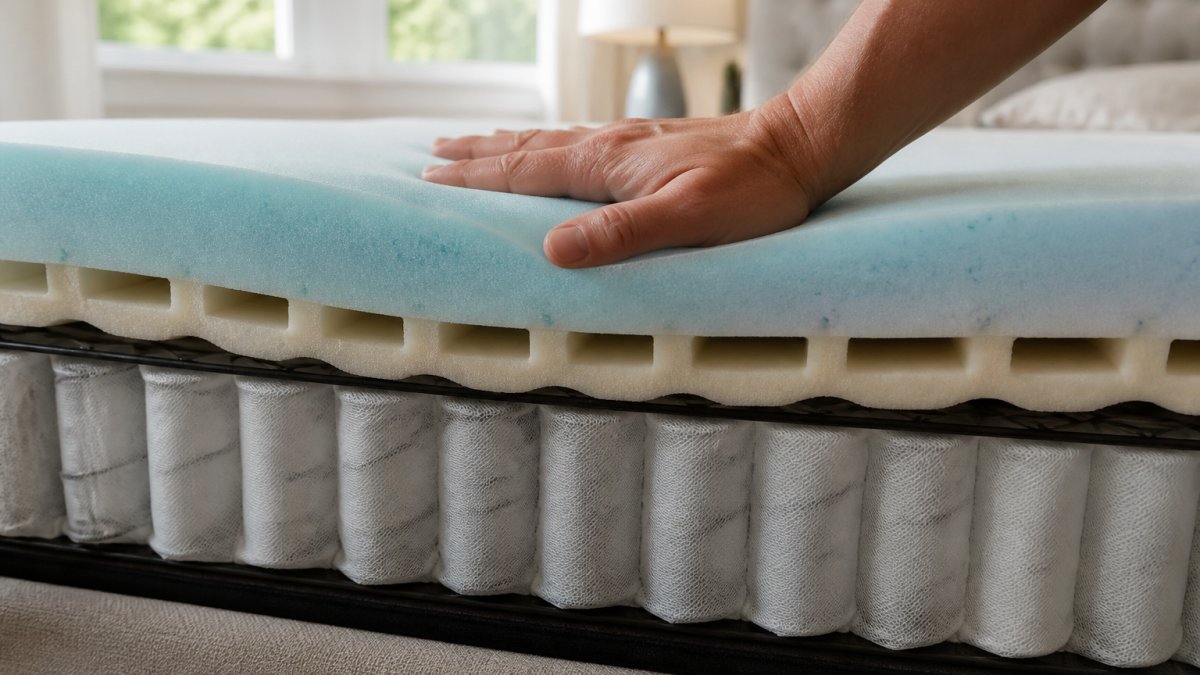
Close-up of a person's hand pressing into a breathable gel-infused foam layer on a hybrid mattress, showing the coil core and airflow channels underneath in a bright bedroom setting
Close-up of a person’s hand pressing into a breathable gel-infused foam layer on a hybrid mattress, showing the coil core and airflow channels underneath in a bright bedroom setting

How we test cooling performance

Most reviews repeat the manufacturer’s cooling language. We do not. Our cooling check uses a consistent method so you can compare designs on the same terms:

  • Baseline temperature: We record surface temperature at the center of the mattress after the bedroom has sat at a steady thermostat setting.
  • Heat retention: A standardized heat source is placed on the surface for a set interval, then we measure how much the surface temperature rises and how quickly it falls back toward baseline.
  • Airflow: We assess how much air moves through the coil layer by checking whether the cover and comfort layers block or channel air, and we note whether the design uses a breathable side panel or a sealed border.

This is not a laboratory-grade thermal test, and we do not present it as one. It is a repeatable side-by-side method that lets us say which designs shed heat faster under the same conditions instead of repeating a claim from a spec sheet.

What the materials actually do

  • Pocketed coils: Open space between coils lets air move. A coil core with a breathable side panel is the single biggest airflow advantage a hybrid has over an all-foam bed.
  • Latex: Naturally breathable and cooler than dense memory foam, with more bounce and less heat buildup.
  • Gel-infused foam: Helps a little at the surface, but a thin gel layer over dense foam still traps heat underneath.
  • Transition foam: Thinner layers reduce heat buildup; thick, dense transition foam is where hybrids lose their cooling edge.
Watch Out
A “cooling” cover on top of dense memory foam still traps heat underneath. Judge the whole build, coil airflow, foam density, and cover, not the label on the cover.

Cooling trade-offs and bedroom conditions

Breathable construction can help with heat retention, but it cannot control room temperature, bedding, or your own heat sensitivity. A hybrid with strong airflow will feel cooler than a sealed all-foam bed in the same room, but if the bedroom runs warm or you sleep under heavy bedding, no mattress will fully compensate.

For a deeper comparison of temperature-regulating options, see our guide to the best cooling mattresses for hot sleepers.

Best Mattress for Side Sleepers with Back Pain

Side sleepers with back pain need pressure relief at the shoulder and hip without losing lumbar support. That’s a narrow window. Too soft and the hips sink, twisting the lower back.

A medium hybrid with zoned coil support tends to hit this balance. If you’re a side sleeper comparing options, our picks for the best mattresses for side sleepers break down pressure relief and support side by side.

If you’re also dealing with ongoing back pain beyond sleep position, our hub on the best mattress for back pain covers the full range of designs.

How to Choose a Mattress for Back Pain: A Step-by-Step Framework

Choosing a mattress for back pain comes down to matching support to your sleep position, body weight, and cooling needs. Work through these steps in order:

  1. Identify your sleep position. Back, side, and stomach sleepers need different firmness.
  2. Weigh body type against firmness. Heavier sleepers lean firmer; lighter sleepers lean softer.
  3. Check the coil core. Zoned pocketed coils support the lumbar region better than uniform coils.
  4. Confirm cooling. Look for airflow through the coil layer and a breathable cover.
  5. Review trial and warranty terms. A generous sleep trial lets you test real support.
  6. Compare total cost. Factor in returns and warranty length, not just sticker price.

For a fuller walkthrough, read our step-by-step guide on how to choose a mattress for back pain.

Check Current Prices and Find Your Best Fit

Pricing shifts with sales, so check current prices before you commit rather than trusting an old review. A mattress that fit your needs last year may have a new model, and the deal you saw may have expired.

Our advice: shortlist two or three designs, confirm the trial period, and buy when the price and policy both work for you. If you’re timing a purchase around promotions, our Memorial Day mattress sales page tracks current offers.

Frequently Asked Questions

What should you look for in a cooling hybrid mattress for back pain?

Focus on three things: a supportive coil core with zoned lumbar support, breathable cooling materials like gel-infused foam or latex, and a firmness that keeps your spine in a neutral position. Medium-firm is a safe starting point for most back-pain sleepers. Also check for a trial period of at least 100 nights and a warranty of 10 years or more so you can test the cooling hybrid mattress at home.

Do cooling mattresses actually sleep cooler?

Cooling mattress materials like phase-change covers, gel foams, and breathable latex can help reduce heat retention, but they do not create a refrigerated surface. The biggest gains come from airflow through the coil core and a breathable cover. If your bedroom runs warm, pair the mattress with breathable sheets and a fan. Cooling performance varies by construction, so read tester feedback on temperature regulation before buying.

Can a hybrid mattress help with back pain?

A hybrid mattress can help with back pain because the pocketed coils provide stable support and spinal alignment while the foam layers add pressure relief at the shoulders and hips. That combination works well for back sleepers and side sleepers who need both support and cushioning. Firmness matters more than the category itself, so match the mattress to your sleep position and body weight before deciding.

What mattress firmness is best for back pain?

Medium-firm is the most common recommendation for back pain because it supports the lumbar spine without creating pressure points. Back sleepers often do well on medium-firm to firm, while side sleepers usually need medium to medium-soft for shoulder and hip pressure relief. Stomach sleepers need firmer support to keep the hips from sinking. Test your mattress firmness for back pain during a trial period before committing.


Back pain and overheating are a rough combination, and the wrong mattress makes both worse. Real Mattress Reviews helps you cut through the noise with nearly a decade of store experience and over 300 video reviews, plus exclusive coupon codes that save you real money. Compare cooling performance, check firmness against your sleep position, and use our reviews to buy with confidence. Get started with Real Mattress Reviews and find the cooling hybrid mattress that finally supports your back.

Best Hybrid Mattress for Back Support in 2026?

Last Updated: October 25, 2026

Quick Summary

The best hybrid mattress for back support combines a foam comfort layer with pocketed coils that keep your spine in neutral alignment, usually at a medium-firm rating of 6 or 7 out of 10. Choose zoned support with firmer coils under the lumbar area, and match the firmness to your body weight and sleep position.

  • Medium-firm, roughly 6 or 7 out of 10, is the usual firmness target for back sleepers.
  • Above roughly 230 pounds, look for firm (7-8) with a support core of at least 8 inches.
  • Lie on the bed for at least 15 minutes and check the gap under your lower back.
  • Most mattresses need replacing every seven to ten years, and back support goes first.
  • Most hybrid warranties run 10 years and require sagging beyond about 1 to 1.5 inches.

Table of Contents

Why a Hybrid Mattress for Back Support Makes Sense in 2026

A hybrid mattress combines a foam comfort layer with a pocketed coil support core, and that combination is why it has become the default recommendation for back support.

The American Academy of Orthopaedic Surgeons notes that sleep position and surface support both affect how the spine is loaded overnight, which is why the coil layer matters so much for anyone shopping for the best hybrid mattress for back support.

How Coils and Foam Work Together to Support Your Spine

The foam top layer contours to your curves and eases pressure at the hips and shoulders. The pocketed coils underneath do the structural work: each coil responds independently, pushing back where you need it most. That responsive support keeps your midsection from sinking out of line. Foam alone gives you cushioning. Coils alone give you pushback. Together they deliver both, which is exactly what lumbar support requires.

The Best Hybrid Mattress for Back Pain: What Actually Matters

The best hybrid mattress for back pain is not the firmest one you can find. It is the one that keeps your spine in neutral alignment while still cushioning pressure points.

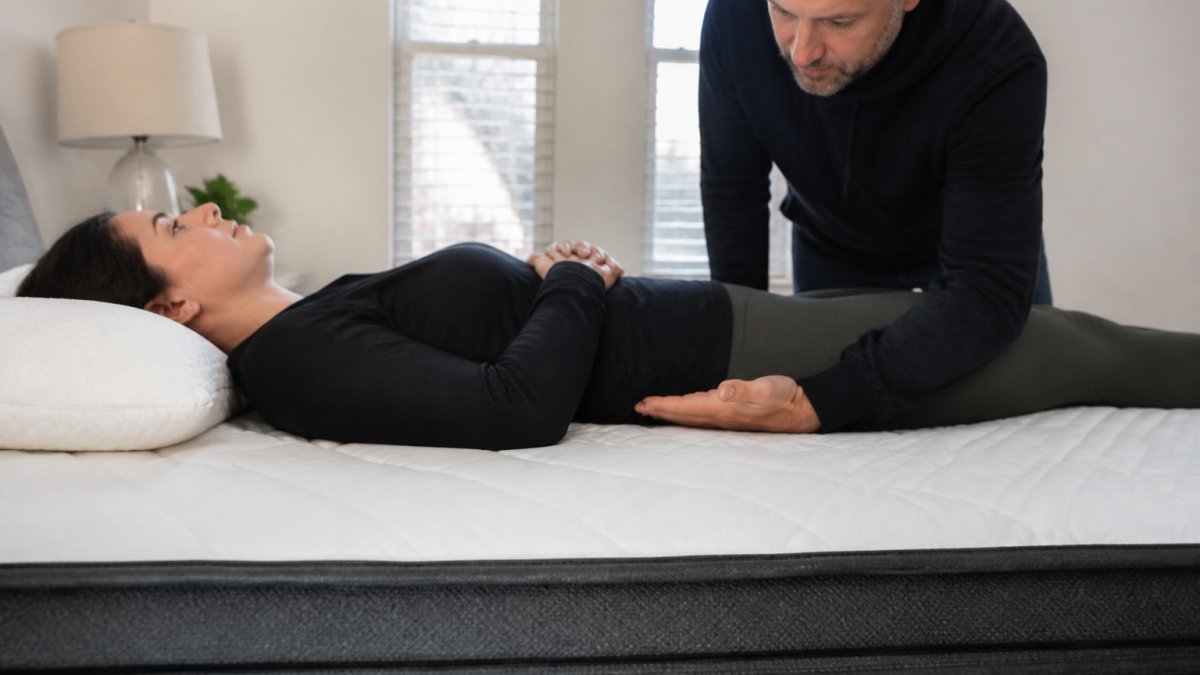
Reviewer checking spinal alignment for a person lying on a hybrid mattress

What most guides miss is that back support is not the same as back-pain treatment. If your pain is persistent, the MedlinePlus overview of low back pain is a sensible starting point before you blame your bed.

Three things decide whether a hybrid works for you:

  • Support core: pocketed coils that stay firm under the midsection
  • Comfort layer: enough foam to cushion without swallowing your hips
  • Zoned support: firmer coils under the lumbar area, softer near the shoulders

Mattress Firmness for Back Pain: Finding Your Number

Mattress firmness for back pain usually lands at medium-firm, roughly a 6 or 7 out of 10 on the industry’s 1-to-10 scale, where 1 is softest and 10 is hardest. That range gives back sleepers enough pushback to keep the pelvis level while still relieving pressure at the shoulders and hips. But “medium-firm” is a label, not a measurement, and two beds rated 6 can feel completely different once a body is on them. The number that actually matters is how far your hips sink relative to your shoulders, because that difference is what tilts the pelvis and loads the lower back.

Why Body Weight Changes the Firmness You Need

Firmness is a response, not a property. A hybrid’s comfort layer compresses in proportion to the load placed on it, so the same bed that feels supportive to a 150-pound sleeper can feel like a hammock to someone at 250 pounds.

  • Under roughly 130 pounds: a medium (5-6) hybrid usually provides enough contouring; firmer beds can create pressure at the hips and shoulders because the body does not generate enough load to compress the comfort layer.
  • Roughly 130-230 pounds: medium-firm (6-7) is the common sweet spot for back sleepers, with enough give at the shoulders and enough pushback under the lumbar curve.
  • Above roughly 230 pounds: firm (7-8) with a thicker coil unit, look for a support core of at least 8 inches and a higher coil count or heavier gauge, reduces the risk of sinkage that pulls the spine out of line.

These are starting ranges, not prescriptions. The only reliable test is to lie on the bed in your normal sleep position for at least 15 minutes and slide a hand under your lower back: if you can push your hand through easily, the bed is too soft for your weight; if there is no gap at all and your shoulders or hips ache, it is too firm.

Body Shape Matters as Much as Body Weight

Two people at the same weight can need different firmness because weight distribution differs. A person who carries weight in the hips and thighs puts more load on the lower half of the bed and tends to sink at the pelvis first, the exact failure mode that arches the lower back. A person with a broader shoulder-to-hip ratio needs more give in the upper comfort layer so the shoulders can sink without levering the spine.

That is why zoned support earns its place in a hybrid: firmer coils under the lumbar area and softer coils near the shoulders compensate for shape differences that a uniform firmness rating cannot. If you are still narrowing it down, our guide on how to choose a mattress for back pain walks through the decision step by step.

Sleeper Type Firmness Target What to Watch
Back sleeper, average weight Medium-firm (6-7) Midsection sinkage
Side sleeper Medium (5-6) Shoulder pressure
Stomach sleeper Firm (7-8) Hip arching
Higher body weight Firm (7-8) Support core thickness and coil gauge
Lower body weight Medium (5-6) Excess pushback
Hip-weighted shape Medium-firm with zoned lumbar support Pelvis sinkage
Broad shoulders Medium with a soft upper comfort layer Shoulder pressure and spinal twist
Pro Tip
Shop by your body, not by the label. Bring your own weight and sleep position to the store, lie on the bed for 15 minutes in that position, and judge the gap under your lower back, not how the bed feels under your hand.

Hybrid Mattress Pros and Cons: An Honest Breakdown

The honest case for hybrids is durability and airflow. The honest case against is price and motion transfer. Coils keep air moving, so hot sleepers tend to run cooler than on all-foam. The coil core also resists the body impressions that plague soft foam over time.

The trade-offs are real. Once you have weighed those points, our mattress shopping tips for back pain relief help you apply them in the store.

Newsletter Sign Up →

How Often to Replace a Mattress for Back Support

Most mattresses need replacing every seven to ten years, and back support is usually the first thing to go. Sagging under the lumbar area shows up before the surface looks worn. If you wake with stiffness that fades an hour after getting up, the support core is likely the culprit. Rotate the mattress on schedule, use a protective cover, and check the warranty terms before you assume a replacement is covered.

Durability, Adjustable Bases, and the Details That Decide

Durability is where a hybrid’s back support is won or lost, and it comes down to three measurable things: coil gauge, foam density, and how well the comfort layer resists compression. Coil gauge is the thickness of the wire, a lower number means thicker wire and firmer, more durable support. Foam density is measured in pounds per cubic foot (PCF); a comfort layer under about 2.5 PCF is likely to soften and develop body impressions faster than a denser foam. A thicker support core holds up better for heavier sleepers, which is why a bed that feels supportive in month one can feel hollow under the lumbar area by year four.

What Actually Happens to Support Over Time

Support retention is the part of durability that matters most for back pain, and it is the part most product pages ignore. The common failure pattern is not a collapsed coil, it is the comfort foam above the coils compressing permanently, which lets the hips sink closer to the coil layer and removes the cushioning that kept the pelvis level.

A few practical checks before you buy:

  • Coil count and gauge: more coils at a heavier gauge generally mean more consistent pushback under the midsection; ask for the coil count in the queen size, since counts are often quoted for a king.
  • Foam density: ask for the PCF of the comfort layers, not just the support core. Denser foam resists compression longer.
  • Edge support: a reinforced perimeter keeps the sleep surface from rolling off at the edges, which matters if you sit on the edge or sleep near it.

A warranty is not a durability guarantee. Read the body-impression threshold and the foundation requirements before you buy, because a bed used on the wrong base can void coverage even if the coils fail.

Adjustable Bases and Alignment

Adjustable bases are worth considering if you want to raise the head for reflux or reading, but confirm the bed is compatible first.

Base choice also affects alignment even when you never adjust it. A slatted foundation with gaps wider than about 3 inches, or a box spring that flexes, can let the mattress sag between supports and undermine the coil layer’s pushback.

Break-In, Rotation, and Troubleshooting Uneven Support

New hybrids need a break-in period, typically a few weeks, during which the comfort foam softens slightly and the bed reaches its settled feel. Rotate the mattress on the schedule the manufacturer specifies, many hybrids are not designed to be flipped, only rotated head-to-foot, and use a protective cover to keep the warranty intact. If you notice uneven support, check the foundation first: a sagging or flexing base is a more common culprit than a defective mattress, and it is the first thing a warranty claim will ask about.

How We Test Hybrid Mattresses for Back Support

We test for spinal alignment, pressure distribution, and how the bed holds up over time. Our process is repeatable: lie in each sleep position, check for gap under the lower back, note sinkage at the hips, and rate edge support and motion isolation. You can browse the tested beds in our hybrid and innerspring reviews to see the evidence behind each pick.

Compare Hybrid Mattresses and Claim Your Coupon Code

Comparing hybrids side by side is the fastest way to choose. Match the support core to your body weight, the comfort layer to your sleep position, and the warranty to how long you plan to keep the bed. Ready to act? Our top picks page and coupon codes let you compare current models and save on the one that fits.

Frequently Asked Questions

What kind of hybrid mattress is best for someone with back problems?

Look for a hybrid with a medium-firm feel and a support core of pocketed coils under a comfort layer of memory foam or latex. Coils provide responsive support and keep your hips from sinking too deep, while foam cushions pressure points. Zoned support, where the middle third of the mattress is firmer, helps keep your midsection lifted. Body weight matters: lighter sleepers often do better on the softer end of medium-firm, while heavier sleepers need more coil support to prevent sagging.

What mattress firmness is best for back support?

Medium-firm, roughly a 6 to 7 out of 10, is the most common recommendation for back support. It keeps your spine in a neutral line without creating pressure at the shoulders and hips. Back sleepers usually do well at a 6 to 7, side sleepers often prefer a 5 to 6 for shoulder and hip cushioning, and stomach sleepers need a firmer 7 to 8 to keep the midsection from dipping. Your body weight shifts the effective firmness, so test in person when you can.

How often should you replace a hybrid mattress?

Most hybrid mattresses last seven to ten years, though coil quality and foam density affect that range. Replace sooner if you notice visible sagging, waking with back stiffness that fades during the day, or a mattress that feels less supportive than it did a year ago. Higher-density foams and thicker coil gauges retain support longer. Rotating the mattress every six months helps distribute wear and extends usable life.

What are the downsides of a hybrid mattress?

Hybrids typically cost more than all-foam models, weigh more, and may need a sturdier foundation or adjustable base. Some coil systems transfer motion more than dense foam, which matters for couples. Edge support varies widely by model, so check reviews if you sit on the edge. Foam layers can still trap heat unless the design includes breathable covers or gel infusions. None of these are dealbreakers, but they are worth weighing against the support benefits.


Finding a bed that supports your back without wrecking your budget takes legwork, and that is where we come in. Real Mattress Reviews pairs nearly a decade of store ownership with over 300 video reviews, exclusive coupon codes, and plain answers to the questions shoppers actually ask. Get started with Real Mattress Reviews and find the hybrid that supports your back and your wallet.

Best Mattress for Couples With Different Needs (2026)

Last Updated: October 23, 2026

Quick Summary

The best mattress for couples with different needs matches each sleeper individually rather than averaging both, so prioritize strong motion isolation, a split-firmness or dual-comfort option, and a sleep trial long enough to test both sides. A firmness gap of three or more points on a 1-to-10 scale calls for a split king, while a one- to two-point gap is usually bridgeable with a medium-firm mattress plus a topper.

  • Rate each partner on the same 1-to-10 firmness scale before you shop for a shared bed.
  • Choose a split king when the firmness gap is three or more points.
  • Test motion transfer by having one partner shift while the other lies still.
  • Most warranties only cover visible sagging beyond roughly an inch to an inch and a half.
  • Confirm the mattress works with an adjustable base before buying a split setup.

Table of Contents

Best Mattress for Couples With Different Needs: Quick Comparison

Finding the best mattress for couples with different needs comes down to one principle: match each sleeper individually, not the average of both.

The quick answer: prioritize a mattress with strong motion isolation, a split-firmness or dual-comfort option, and a sleep trial long enough to test both sides. Below is a side-by-side of the configurations we see work most often for two sleepers.

Setup Best For Firmness Flexibility Motion Isolation Watch Out For
Split king (two twin XL) Very different firmness needs Highest High Gap in the middle, two bases
Hybrid with zoned support Mixed sleep positions Moderate High Not truly split
Dual-comfort foam Cooling + comfort mismatch Moderate to high High Limited edge support
Adjustable air Changing needs over time Highest Moderate Higher upfront cost

How We Test Mattresses for Two Sleepers

We test every mattress the way two people actually share one: two bodies, two sleep styles, and two sets of preferences on the same surface. A single-sleeper test tells you almost nothing about partner disturbance or split-firmness feel.

Our couple-specific testing methodology covers five checkpoints:

  • Motion transfer test: one tester shifts and rolls while the other notes disturbance
  • Firmness check from both sides, rated independently
  • Temperature read after 20 minutes on each side

A mattress can feel perfect solo and fail as a shared surface, the difference shows up in motion isolation and edge support, not showroom bounce.

Pro Tip
When you test in-store, bring your partner and lie down in your real sleeping positions for at least ten minutes per side. Testing alone, or sitting instead of lying, hides the exact problems couples run into at home.

Best Mattress for Couples With Different Firmness Preferences

The best mattress for couples with different firmness preferences lets each partner choose their own feel, either through a split-firmness design or a dual-comfort build.

A couple lying on opposite sides of a king mattress in a bright bedroom, one on their back and one on their side, each side showing a different firmness feel

A Decision Framework for Two Different Sleepers

Instead of arguing about which single mattress is “right,” run each partner through the same five inputs.

Input What to record for each partner Why it changes the recommendation
Body weight Under 130 lb, 130-230 lb, over 230 lb Lighter sleepers sink less and often need softer top layers; heavier sleepers compress foam faster and need firmer support cores
Sleep position Side, back, stomach, combination Side sleepers need shoulder and hip give; stomach sleepers need a flat, firmer surface to keep hips from sinking
Temperature Runs hot, neutral, runs cold Hot sleepers favor hybrids and breathable covers; a split build keeps one partner’s heat-trapping layers off the other
Pain concerns Shoulder, hip, lower back, none Shoulder and hip pain point toward pressure relief; lower back pain points toward firmer, zoned support
Firmness preference 1-10 rating from each partner The size of the gap decides whether a single mattress, a dual-comfort build, or a split king is the honest answer

A common pattern: a lighter side sleeper rates 3-4 and a heavier back sleeper rates 7-8. That five-point gap is not a topper problem, it is a split-firmness problem. A two-point gap, say 5 and 7, is often solved by a medium-firm hybrid that both partners can live with.

Split-Firmness and Dual-Comfort Configurations

Split-firmness lets each half of the bed carry a different firmness level, solving the firmness-preference problem outright. Dual-comfort designs achieve a similar result within a single mattress by varying the foam layers left to right.

Here is how we would choose between them:

  • Split king: pick this when the firmness gap is large (three or more points), one partner wants soft and the other wants firm, or either partner wants independent head and foot positioning on an adjustable base
  • Dual-comfort foam: pick this when the gap is moderate (one to two points) and you want one mattress and one foundation
  • Adjustable air: pick this when preferences may change over time, one partner has a back condition, or you want to dial firmness in after delivery rather than guess at the store

The trade-off is real: split setups introduce a center gap and often require two bases; dual-comfort builds can feel less refined at the edges; adjustable air beds add a pump and higher upfront cost. Each answers the same question of how much firmness divergence you actually have.

Pro Tip
Bring your firmness ratings to the store and lie on each candidate in your dominant sleep position for at least ten minutes per side. If the firmer partner can feel the softer half sagging under them at the center seam, that configuration will not hold up at home.

When Not to Compromise

A medium-feel mattress can absorb small differences in weight and position, but it cannot fix a genuine firmness mismatch. If one partner wakes with shoulder or hip pressure and the other with lower back ache on the same bed, shop for separate firmness zones, a split setup usually costs less than replacing a mattress neither partner likes.

Best Mattress for Different Sleeping Positions

The best mattress for different sleeping positions balances pressure relief for the side sleeper against support for the back or stomach sleeper. Side sleeping concentrates pressure at the shoulder and hip; back and stomach sleeping demand a firmer, more supportive surface.

Combination sleepers need a responsive surface that adapts quickly. Memory foam isolates motion well but can feel slow to move on; hybrids pair foam layers with pocketed coils for better responsiveness without sacrificing pressure relief.

Watch Out
A mattress that is too soft for a stomach sleeper lets the hips sink, which throws the spine out of alignment. If one partner sleeps on their stomach, do not let the softer partner’s preference pull the whole bed toward plush.

Split King Mattress for Couples: When Two Halves Beat One

The case for it is strong when firmness or position needs diverge sharply. The case against it is practical: you feel the seam between the halves, bedding is more involved, and an adjustable base means buying two.

Our rule of thumb: choose split king when the firmness gap would otherwise force one partner into a mattress they dislike. Choose a single mattress when the difference is minor and you value a seamless sleep surface.

Mattress for Couples With Different Temperature Preferences

The best mattress for couples with different temperature preferences uses cooling and breathable materials that manage heat on both sides, since one hot sleeper can warm the shared surface for both partners.

Newsletter Sign Up →

Hot sleepers do better with hybrid and latex builds that move air, while all-foam memory foam can trap heat.

If only one of you overheats, prioritize airflow across the whole mattress rather than a cooling gimmick on one side. The shared surface is what both of you sleep on.

Motion Isolation, Edge Support, and Long-Term Durability for Two

Motion isolation, edge support, and durability matter more for couples because two bodies put double the stress on a shared surface, and these are where a mattress that felt fine solo quietly fails as a shared bed.

How Motion Isolation Actually Works

Motion transfer is a mechanical property, not a marketing claim. Pocketed coils move independently, so a shift on one side compresses only the coils under that sleeper; a continuous innerspring or dense foam core spreads the load across the surface.

Our couple-specific motion test is simple: one tester lies still while the other shifts from back to side to edge and back again. The still partner notes whether they feel a distinct wave, a faint ripple, or nothing.

Edge Support and the Usable Sleep Surface

Edge support decides how much of the mattress is actually usable. Couples who each get up on their own side put repeated load on both edges, and weak edges compress into a ramp that pushes each sleeper toward the center, reducing the effective sleep surface and increasing motion transfer. Test edge support where each partner actually sits and gets up, and note whether the edge holds firm or rolls you inward.

Long-Term Durability for Two Sleepers

Two sleepers mean more weight and more compression cycles, so a mattress that sags early fails couples faster than solo sleepers. Memory foam and hybrid builds with dense support cores tend to hold up, but check the warranty terms. Heavier couples should favor firmer support layers.

A few concrete checks before you buy:

  • Support-core density: ask for the foam density in the base layer. Higher-density foam resists compression over time; low-density foam is where early sagging starts.
  • Warranty sagging threshold: most warranties only cover visible sagging beyond a stated depth, commonly around an inch to an inch and a half. Measure against that number, not against the marketing claim of a “lifetime” warranty.
  • Weight distribution: if one partner is significantly heavier, that side will break down first. A split or dual-comfort build lets you replace or rotate each half independently rather than replacing the whole mattress.
Key Takeaway
For couples, the three specs that predict long-term satisfaction are motion isolation, edge support, and a support core rated for two sleepers. Firmness gets the attention; these three decide whether you still like the mattress in year five.

Adjustable Bases and Sleep-System Compatibility

If either partner wants independent head and foot positioning, confirm the mattress works with an adjustable base before you buy. Split king setups pair naturally with split adjustable bases, so each partner can raise the head without moving the other; a single king on a single base moves both together. Check the mattress’s compatibility list, the base’s weight rating for two sleepers, and whether a specific foundation is required to keep the warranty valid.

Trials, Returns, and Warranty: The Real Cost of Getting It Wrong

A sleep trial is the only reliable way to know whether a mattress works for both partners, so treat the trial length, return policy, and warranty as part of the price.

Before you buy, confirm four things:

  • Trial length: long enough for both partners to test their own side through a full adjustment period
  • Return policy: who pays shipping, and whether returns are free or deducted
  • Warranty: what sagging depth and defects it covers, and for how long

The Federal Trade Commission’s guidance on buying mattresses is a useful starting point for understanding your rights and what a seller must disclose.

At Real Mattress Reviews, our coupon codes help you save on the purchase, and our video reviews answer the specific questions couples ask before buying.


Two people rarely need the same mattress, and pretending otherwise is how couples end up returning beds. The fix is to match each sleeper’s firmness, position, and temperature needs, then back the choice with a real sleep trial. Real Mattress Reviews can help you get there with nearly a decade of store experience, a library of over 300 video reviews, and exclusive coupon codes that make the right mattress more affordable.

Frequently Asked Questions

What mattress features help couples with different sleep preferences?

Look for three things: adjustable or split-firmness construction, strong motion isolation from pocketed coils or dense foam, and cooling layers if either partner runs hot. A medium-firm hybrid usually balances support and pressure relief for mixed sleep styles. If firmness needs differ sharply, a split king with two separate comfort levels solves the problem outright rather than forcing a compromise. Always check the sleep trial length before committing, since 90 to 120 nights is common and lets both partners test the mattress for a mattress for couples in real conditions.

Are split-firmness mattresses a good choice for couples?

Yes, when partners genuinely need different firmness levels. A split king mattress for couples lets each side carry its own comfort layer, so a side sleeper who needs pressure relief and a back sleeper who needs support both get what they want. The tradeoffs: you lose the shared middle surface, bedding costs more, and some adjustable bases are required to get the full benefit. If your firmness gap is small, a single medium-firm hybrid is simpler and cheaper. If one partner wakes up sore every morning, split firmness is worth the extra spend.

How can couples reduce motion transfer when one partner moves during the night?

Pocketed coil systems and dense memory foam both limit motion transfer, and hybrids that combine them tend to perform best. A mattress with individually wrapped coils isolates movement better than traditional innerspring. Also consider a split king setup, where each half moves independently, and a sturdy adjustable base that absorbs movement. If a partner tosses frequently, test the mattress in-store by having one person roll over while the other stays still, and prioritize motion isolation over plushness when comparing options.

Does a heavier person need a firmer mattress?

Often, yes. Higher body weight compresses comfort layers more, so a mattress that feels medium to a lighter sleeper can feel soft and unsupportive to a heavier one. Heavier sleepers typically do better with firmer support cores, thicker coils, and higher-density foams that resist sagging. For couples with a significant weight difference, split firmness or a medium-firm hybrid with a strong support layer usually works better than a single plush mattress. Check the warranty’s weight limits and sagging clauses before buying.

Best Mattress for Hip and Shoulder Pain in 2026

Table of Contents

Last Updated: October 16, 2026

Why Your Mattress Matters for Hip and Shoulder Pain

The best mattress for hip and shoulder pain is firm enough to keep your spine neutral but soft enough to cushion the joints you sleep on. That balance matters more than any brand name. At Real Mattress Reviews, we have spent nearly a decade selling mattresses and reviewing more than 300 on video, and the pattern is consistent: people with hip and shoulder pain usually buy either too soft or too firm, then blame the mattress.

A mattress cannot cure joint pain, but it can reduce the pressure that builds up overnight, which often improves how you feel in the morning.

What Actually Causes Hip and Shoulder Pain

Hip and shoulder pain come from different mechanics, so the fix is different for each. Your hips carry the heaviest part of your body and need support that keeps the pelvis level.

Common causes include:

  • Hip pain: bursitis, arthritis, muscle strain, or referred pain from the lower back. Sleeping on a too-firm surface can aggravate an inflamed bursa because the joint takes the full load.
  • Shoulder pain: rotator cuff issues, impingement, arthritis, or pressure on the shoulder from side sleeping. A mattress that will not let the shoulder sink pushes it up into the socket.
  • Both at once: often a sign that the mattress is too firm in the top layer, or that a medical issue is affecting more than one joint.

According to information on pressure ulcers and prolonged pressure, sustained pressure on the same points reduces blood flow and causes discomfort, which is why pressure relief matters more than plushness.

The Limits of a Mattress Change

A mattress change is a comfort intervention, not a treatment. If your pain comes from inflammation, a torn rotator cuff, or arthritis, a new mattress may reduce how much it wakes you up but will not resolve the underlying condition. People often spend $1,500 on a new bed, feel better for a few weeks, then find the pain returns because the mattress was never the root cause.

Treat the mattress as one variable among several, alongside pillows, sleep position, activity level, and medical care.

When to See a Clinician Instead of Shopping

See a healthcare provider before you buy a mattress if:

  • The pain is sharp, shooting, or radiates down your arm or leg
  • You have numbness, tingling, or weakness
  • The pain persists during the day, not just after sleeping
  • You have swelling, redness, or warmth at the joint
  • The pain started after an injury

For everyday morning stiffness that fades once you move, a mattress change is a reasonable first step. For anything on the list above, a mattress is not the answer.

Watch Out
The most common mistake we see is buying a mattress that feels great in a store for five minutes. Pressure pain shows up after 30 to 60 minutes of lying down, so a short showroom test tells you almost nothing about how your hips and shoulders will feel at 3 a.m.
Key Takeaway
For pain in both areas, prioritize the shoulder. You can often fix hip pressure with a pillow or a topper, but a shoulder that cannot sink into the surface is much harder to correct after purchase.

How Hip and Shoulder Pain Differ (And Why It Changes Your Pick)

According to information on pressure ulcers and prolonged pressure, sustained pressure on the same points reduces blood flow and causes discomfort, which is why pressure relief matters more than plushness.

  • Hip pain usually points to a mattress that is too firm. The pelvis cannot sink, so the joint takes the load.
  • Shoulder pain usually points to a mattress that is too firm in the top layer. The shoulder cannot compress, so it pushes back into the socket.
  • Both at once is the hardest case. It calls for a mattress with a soft, conforming top layer over a supportive core.

If you sleep on your side and wake with both, the same firmness that helps one joint can aggravate the other.

Mattress Firmness for Hip Pain: Finding Your Number

Mattress firmness for hip pain should land around a 5 to 6 on a 10-point scale for most side sleepers, and closer to a 6 to 7 for back and stomach sleepers. That range lets the hip sink slightly while the core holds the spine straight.

Firmness is not a fixed property: the same mattress feels different depending on your weight, sleep position, and how much weight concentrates on the hip.

Sleep Position Suggested Firmness Why It Helps
Side sleeper 5-6 (medium) Lets the hip and shoulder sink in
Back sleeper 6-7 (medium-firm) Keeps the lower back supported
Stomach sleeper 7 (firm) Prevents the hips from dropping
Combination sleeper 5-6 (medium) Balances cushioning and support

A Step-by-Step Method to Compare Firmness and Pressure Relief

Instead of guessing from a chart, use this method to compare mattresses in a store or at home.

  1. Lie in your normal sleep position for at least 15 minutes. Pressure pain shows up after 30 to 60 minutes, so a short test is misleading.
  2. Check your spine line. Have someone photograph you from behind at hip level. On your side, your spine should form a straight line from neck to tailbone. If your hip dips below it, the mattress is too soft; if your hip rides high, it is too firm.
  3. Slide a hand under your waist. On your back, there should be a small gap you can feel but not easily slide a whole hand through. A large gap means the lumbar is unsupported; no gap means it is too soft.
  4. Press your hip and shoulder into the surface. You should feel the comfort layer give, then meet resistance from the support core. Sinking to a hard stop means the top layer is too thin; never feeling the core means it is too soft for your weight.
  5. Test the edge. Sit on the side of the bed. If the edge collapses more than an inch or two, the perimeter support is weak.
  6. Note the temperature. Memory foam that feels perfect at minute five can feel hot and mushy at minute 30. If you run warm, a responsive foam or hybrid will hold its feel longer.

Adjust With a Topper Before You Replace the Mattress

If a mattress is close but not quite right, a two- to three-inch topper is a cheaper adjustment than a new bed. Hip pain calls for a medium topper that adds give without turning the bed mushy; shoulder pain calls for a softer, thicker topper that lets the shoulder sink.

Heavier sleepers often need to go one step firmer than the chart suggests, because more weight compresses the comfort layer faster. Lighter sleepers may never break in a firm mattress enough to get pressure relief.

Newsletter Sign Up →

Pro Tip
Put the topper on and give it a full week before judging it. Pressure pain often improves gradually as your body adjusts, so a single night is not a fair test.

Best Mattress for Side Sleepers With Joint Pain

The best mattress for side sleepers is a medium-feel model with a responsive comfort layer and a supportive base, because side sleeping concentrates all your weight on the hip and shoulder.

A side sleeper lying on a mattress with a pillow tucked between their knees, soft morning light through bedroom curtains, showing relaxed spinal alignment and pressure relief at the hip and shoulder

Memory foam conforms closely but can sleep hot and let you sink too far. Responsive foams and latex bounce back faster and keep you closer to the surface, which many side sleepers find more supportive. If you run hot, look for a breathable cover and an open-cell foam.

  • Memory foam: best contouring, but can trap heat and cause sinkage
  • Responsive foam: good pressure relief with less heat buildup
  • Latex: durable and buoyant, often firmer than expected
  • Hybrid: foam comfort layer over coils, a strong all-rounder for side sleepers

Mattress Topper for Hip and Shoulder Pain: A Cheaper Fix

A mattress topper for hip and shoulder pain is the fastest way to test whether your current mattress is the problem before buying a new one, and it costs far less than a replacement.

This is the step most shoppers skip, and the one we recommend first. If a topper solves the pressure, you saved a full purchase. If not, the issue is support, not surface softness, which points to the mattress core.

Materials, Durability, and Body Weight: What Holds Up Over Time

Durability depends on density and construction, and body weight is the biggest factor in how fast a mattress breaks down. A mattress that feels supportive in year one can develop a dip by year three if foam density is low.

Heavier sleepers compress the comfort layer more with every night, so they need higher-density foams and stronger coil systems.

  • Higher-density foams hold their shape longer than low-density foams
  • Coil count and gauge affect how well the core supports the hips
  • Edge support matters if you sit on the side of the bed or sleep near the edge
  • Motion isolation helps couples, but it does not fix pressure pain

Check the warranty for what counts as a defect. Most cover visible sagging beyond a set depth, not the gradual softening that causes pain.

Trials, Returns, and Total Cost: Protecting Your Purchase

A sleep trial is the only reliable way to know if a mattress works for hip and shoulder pain, so treat the terms as seriously as the mattress itself. A 100-night trial means little if returns cost a fee or require original packaging.

Read these before you buy:

  • Trial length: longer is better, but confirm the countdown start date
  • Return fees: some brands charge a processing or pickup fee
  • Warranty terms: what qualifies as a defect, and for how long
  • Total cost: base, foundation, and old-mattress removal add up
  • Break-in period: most mattresses need a few weeks to settle

At Real Mattress Reviews, we publish coupon codes so you are not paying full price while you test these terms, and our video library covers specific models, sleep positions, and temperatures so you can compare before you commit.

Best For
Shoppers who want to test a mattress risk-free and compare real return terms before spending, rather than trusting a five-minute showroom feel.

Conclusion

Finding relief for hip and shoulder pain comes down to matching firmness and materials to your body, then protecting that choice with a fair trial and return policy, not chasing the most expensive bed on the market.

Real Mattress Reviews was built for exactly this problem, bringing nearly a decade of mattress store ownership, more than 300 video reviews, and exclusive coupon codes to help you find a surface suited to pain relief and sleeping temperature.

Frequently Asked Questions

Is a softer or firmer mattress better for hip pain?

It depends on your sleep position. Side sleepers with hip pain usually do better on a medium or medium-firm mattress because a softer surface lets the hip sink in and relieves pressure points. Back and stomach sleepers typically need firmer support to keep the spine neutral. There is no single firmness that works for everyone, so test a mattress in your normal sleep position before committing.

Can a mattress actually cause hip and shoulder pain?

Yes. A mattress that is too firm creates pressure points at the hip and shoulder, which can cause joint stiffness and pain over time. A mattress that is too soft lets the hips sink out of alignment, straining the lower back and shoulders. If your pain started or got worse after a mattress change, the surface is a likely factor worth addressing before assuming the issue is purely medical.

Are memory foam mattresses good for hip and shoulder pain?

Memory foam contours to the body and can relieve pressure at the hips and shoulders, which helps many side sleepers. The trade-off is heat retention and a slower response feel. Responsive foams and hybrid designs offer similar pressure relief with more bounce and better airflow. If you sleep hot, a hybrid or a foam with cooling materials may work better than traditional memory foam.

What mattress firmness is best for side sleepers with hip and shoulder pain?

Most side sleepers with hip and shoulder pain do best on a medium to medium-firm mattress, roughly a 5 to 7 on a 10-point firmness scale. This range lets the shoulder and hip sink in enough to relieve pressure while still supporting the spine. Lighter sleepers may prefer the softer end of that range, and heavier sleepers often need the firmer end for proper support.

Best Mattress for Heavy Side Sleepers 2026

Table of Contents

Last Updated: October 14, 2026

Why Heavier Side Sleepers Need a Different Mattress

Finding the best mattress for heavy side sleepers in 2026 means solving a problem most mattress guides ignore: your body needs both deep pressure relief and serious structural support at the same time.

Side sleeping concentrates your full body weight onto a few square inches of shoulder and hip. Add more weight, and those pressure points sink deeper.

A side sleeper with a heavier build lying on a mattress, showing shoulder and hip contact with the surface, in a bedroom with neutral tones

Mattress Firmness for Side Sleepers: Finding the Right Balance

Mattress firmness for side sleepers is a balancing act, and body weight shifts where that balance sits. The conventional “medium-firm is best” advice is a starting point, not a rule.

This is the gap most guides miss: they rate firmness for an average-weight sleeper and then tell heavier side sleepers to “size up.” That skips the real problem, which is that the shoulder and the hip need different things from the same mattress.

How weight changes perceived firmness

Firmness is not a fixed property of a mattress. It is the mattress’s response to a specific load. The same bed that measures medium-firm under a 150-pound tester can measure medium-soft under a 250-pound sleeper, because the comfort layer compresses further and the support core engages later. That is why a bed that feels perfect in a showroom for two minutes can feel like a hammock by 3 a.m.

A useful way to think about it:

  • Under 200 pounds: medium or medium-firm usually delivers enough contouring without hammocking. The comfort layer does most of the work.
  • 200 to 250 pounds: medium-firm with a reinforced support core tends to hold alignment best. The comfort layer still needs to be thick enough to cushion the shoulder.
  • Over 250 pounds: firm or medium-firm with zoned support, so the hip and shoulder zones stay cushioned while the midsection stays lifted. At this weight, the support core is doing the heavy lifting and the comfort layer is a thin cushion, not the main event.

The shoulder-versus-hip trade-off

Here is the mechanism that matters most for heavier side sleepers. When you lie on your side, your shoulder and hip press into the mattress at different depths. If the mattress is too firm, the shoulder can’t sink in, so it pushes back and the upper spine twists.

Zoned support puts firmer materials or coils under the midsection and hips, and softer materials under the shoulders. For a heavier side sleeper, this is often the difference between waking up with a stiff lower back and waking up neutral.

How to test firmness for your own body

Because firmness is load-dependent, the only reliable test is your own body weight on the bed. A few practical checks:

  • Lie on your side for a full 10 minutes, not two. Pressure problems show up after the first few minutes, not immediately.
  • Have someone look at your spine from behind. It should form a straight line from the base of your neck to your tailbone, not a curve at the waist or a twist at the shoulders.
  • Slide a hand under your waist. If there’s a large gap, the hip is sinking too far and the bed is too soft for you. If your hand is pinched, the bed is too firm and your shoulder is likely taking the load.
  • Test the shoulder separately. If your shoulder feels jammed or your arm goes numb, the comfort layer isn’t letting it sink in enough.

A note on pillow height

Firmness and pillow height work together. A heavier side sleeper on a firm mattress often needs a thicker pillow to fill the gap between the head and the mattress, while a softer mattress may need a thinner one. If you change mattresses and your neck still hurts, the pillow is the next variable to adjust.

The mistake we see most is choosing by label instead of by how the bed reacts to your weight. A “medium-firm” tag tells you almost nothing until you know how deep your shoulder and hip sink into it.

Pro Tip
If you can’t test in person, look for a mattress with a sleep trial long enough to cover at least two weeks of real nights. Pressure and alignment problems often take several nights to surface, and a two-minute showroom test won’t reveal them.

Best Mattress for Heavy People: Construction That Holds Up

The best mattress for heavy people is built around a strong support core, not a thick comfort layer. Construction decides whether a bed holds up under higher loads. Look at what’s under the foam.

  • Support core: denser foam or a higher coil gauge with more coils per unit area resists sagging.
  • Comfort layer: memory foam contours well but can run hot; latex is more responsive and sleeps cooler.
  • Zoned support: firmer zones under the midsection keep the hips from sinking out of line.
  • Edge support: reinforced edges matter if you sit on the side of the bed or sleep near the edge.

A hybrid mattress with pocketed coils and a quality comfort layer often strikes the best balance for heavier side sleepers.

Mattress for a 300-Pound Person: What to Look For

A mattress for a 300-pound person needs to prioritize durability and support over plushness. At this weight, the support core does the heavy lifting, and a soft comfort layer alone won’t keep your spine neutral. We tell shoppers in this range to look for:

  • A high-density support core rated for higher weights
  • Reinforced or zoned support under the hips and lower back
  • A firmness that still allows shoulder and hip cushioning
  • A generous sleep trial, because fit matters more than any spec sheet
Watch Out
The most expensive mistake here is buying a pillow-top or plush bed because it feels good in the showroom for two minutes. Under sustained body weight, that plush layer compresses and the support disappears, which is exactly when back pain shows up.

Mattress Durability for Heavier People: Signs It’s Time to Replace

Mattress durability for heavier people comes down to how the core holds its shape over time. Higher weight accelerates compression, so a bed that lasts a decade for a lighter sleeper may soften noticeably faster under more load. This is the part of the buying decision most guides skip entirely, they tell you what to buy, not how long it will actually last for your body weight.

Newsletter Sign Up →

What actually determines durability under load

Durability isn’t a single spec. It’s the interaction of three things:

  • Support core density and gauge. In an all-foam bed, the support core’s density is the main durability driver. Higher-density foam resists compression better than lower-density foam. In a hybrid or innerspring, coil gauge and coil count matter: thicker-gauge coils and more coils per unit area generally resist sagging better under heavier loads.
  • Comfort layer thickness and quality. A thick, low-density comfort layer feels plush at first but compresses and loses loft faster under a heavier sleeper. A thinner, higher-quality comfort layer over a strong core tends to hold up longer.
  • Edge support construction. Foam-encased edges and reinforced perimeter coils hold their shape better than unsupported foam edges, which matter if you sit on the side of the bed or sleep near the edge.

A common pattern is that heavier sleepers get the most life out of a hybrid with a dense support core and a moderate comfort layer, because the coils do the structural work and the foam is a cushion rather than the foundation.

How long should it last?

There’s no universal number, but a useful frame is that heavier sleepers should expect a shorter useful life than lighter sleepers from the same mattress. A bed that a 150-pound sleeper gets 8 to 10 years from may show meaningful softening for a 250-pound sleeper in 5 to 7 years, and sooner for a 300-pound sleeper on a bed not built for that load. The variable isn’t the calendar, it’s how much the core has compressed.

Signs the support core has given out

Watch for these signals, and treat two or more together as a strong indicator:

  • Visible body impressions or a dip where you sleep, especially if it’s deeper than about an inch and a half
  • Waking with shoulder or hip pain that wasn’t there before
  • A sagging middle that no longer keeps your hips level
  • Visible sagging at the edges where you sit
  • A feeling of rolling toward the center of the bed
  • The mattress feels firmer in the morning than when you first lay down, which can indicate the comfort layer has compressed and stopped recovering

If two or more show up, the support core has likely given out, and no topper will fix a collapsed foundation. A topper can add cushioning, but it can’t restore structural support that’s already gone.

Protecting durability from day one

A few habits extend the useful life of a mattress under heavier loads:

  • Use a supportive foundation or adjustable base rated for the mattress and your weight. A weak box spring or slatted frame can cause sagging even in a good mattress.
  • Rotate the mattress head-to-foot every few months if it isn’t a no-turn model. This spreads compression across the surface.
  • Use a waterproof, breathable protector to keep moisture and body oils out of the foam, which can accelerate breakdown.
  • Give the mattress a few hours to recover after getting up before judging whether it has sagged.
Key Takeaway
For heavier side sleepers, durability and pressure relief are the same conversation. A bed that loses its support core stops cushioning your shoulder and hip correctly, so the first sign of a worn-out mattress is often pain, not a visible dip.

Top Mattress Types for Heavy Side Sleepers in 2026

The top mattress types for heavy side sleepers split into three practical categories. Here’s how we’d compare them:

Type Support Pressure Relief Best For
Hybrid Strong High Most heavier side sleepers
Memory foam Medium High Those who want contouring and sleep cool
Latex Strong Medium-high Hot sleepers wanting responsiveness
Innerspring Strong Low Those who prefer a bouncy, traditional feel

Hybrid and latex tend to win for this group because both offer a supportive core with a responsive comfort layer. Memory foam works if you run cool; innerspring often falls short on pressure relief at the shoulder.

For unbiased, video-based comparisons of specific models, our team at Real Mattress Reviews reviews these mattresses in detail and pairs them with exclusive coupon codes, so you can weigh real-world performance before you buy.

Pro Tip
Bring your own pillow to a showroom test and lie on your side for a full 10 minutes per bed. Two minutes tells you nothing about how a mattress handles hip and shoulder pressure over a night.

Frequently Asked Questions

What mattress is best for overweight side sleepers?

Heavier side sleepers need a mattress that combines pressure relief with support. Look for a hybrid or latex mattress with a medium-firm feel, zoned support, and a durable support core. Pocketed coils and dense foam layers help prevent sagging while cushioning shoulders and hips. Avoid soft memory foam that lets you sink too deep, which can misalign your spine.

How firm should a mattress be for a heavy side sleeper?

A medium-firm to firm mattress (around 6 to 7 on a 10-point firmness scale) works best for heavy side sleepers. It should be soft enough to cushion pressure points at the shoulder and hip, but firm enough to keep your spine aligned. If you weigh over 250 pounds, lean toward the firmer end of that range for better support.

What’s a good mattress for a 300-pound person?

For a 300-pound side sleeper, prioritize a mattress with reinforced edge support, a high-density foam base, and thick gauge pocketed coils. Hybrid and latex mattresses tend to hold up better under higher weight. Check the warranty and weight limits; some brands offer specific models for heavier sleepers. Durability is key, so avoid low-density foams that sag quickly.

How often should a mattress be replaced if you weigh more?

Heavier sleepers may need to replace a mattress every 5 to 7 years, compared to 7 to 10 years for average-weight sleepers. Watch for visible sagging, waking up with pain, or feeling the coils through the surface. A mattress with high-density foams and a strong coil system will last longer. Rotating it regularly can also extend its life.


Heavier side sleepers face a real challenge: getting deep pressure relief and lasting support from the same bed. Real Mattress Reviews exists to make that decision easier, with nearly a decade of mattress store experience, over 300 video reviews, and exclusive coupon codes that save you money. Sign up for our newsletter to get new reviews and deals before you buy.

Best Cooling Mattress for Hot Sleepers 2026: Top Picks

Table of Contents

Last Updated: October 9, 2026

Best Cooling Mattress for Hot Sleepers 2026: Top Picks Compared

Finding the best cooling mattress for hot sleepers in 2026 comes down to one thing: how well a bed moves heat away from your body all night, not just in the first hour.

Here is the uncomfortable truth most roundups skip: a mattress cannot cool you below room temperature. It can only help your body shed heat faster. That distinction shapes everything below.

Our top 5 choices

  1. Helix Midnight Luxe Get the best price HERE
  2. Winkbeds – Get the best price HERE
  3. Durable 2-sided Mattress – Get the best price HERE
  4. Avocado – Get the best price HERE
  5. Brooklyn Bedding Thermobalance Elite – Get the best price HERE
A person sleeping comfortably on a modern mattress in a cool, dark bedroom with a light breathable blanket, showing a relaxed sleep environment

Quick Comparison: What Matters Most

Priority Best Construction Why It Works
Overall cooling Hybrid with coil support Air moves through the coil layer
Budget fix Cooling mattress pad Adds airflow without a new bed
Natural feel Latex Open structure, no heat trap
Side sleepers Hybrid with soft comfort layer Pressure relief plus airflow
Couples Hybrid, split firmness Independent support, less heat buildup

How We Evaluated Cooling Performance

A cooling mattress is a bed built to move heat and moisture away from your body faster than a standard foam bed. We judge cooling by construction first: coil support, open-cell foam, and breathable covers matter more than any “cool-to-the-touch” surface treatment, which tends to fade once you lie down. The U.S. Department of Energy guidance on home temperature and sleep is a useful reminder that your room does half the work. For sleep science context, the National Sleep Foundation overview of sleep and temperature is not available to us as a source, so we rely on construction and airflow instead.

Watch Out
A gel-infused or phase-change cover feels cool for the first few minutes, then warms to your body temperature. If a bed’s only cooling claim is its cover, expect that effect to disappear within the hour.

Best Mattress for Night Sweats: Hybrid, Latex, and Foam Options

The best mattress for night sweats is almost always a hybrid, because coil support lets air circulate under the comfort layers. Latex is the strongest alternative for sleepers who want a natural, open structure. Memory foam is the weakest choice unless it uses open-cell or graphite-infused designs.

Why Hybrids Often Win for Night Sweats

A hybrid pairs a coil support core with a foam or latex comfort layer. That coil layer is the key. Air moves through the springs, so heat and moisture do not get trapped the way they do in a solid foam block. For a hot sleeper, this single design choice matters more than any cooling gel.

When Latex or Foam Makes Sense

Latex has an open, pinhole structure that breathes well and holds less heat than dense memory foam. It suits sleepers who want a buoyant, responsive feel.

Foam still has a place. If you love the contouring of memory foam, look for open-cell, copper-infused, or graphite-infused versions. These pull heat away better than traditional dense foam, though they still run warmer than a hybrid.

Key Takeaway
Match the construction to your priority: hybrid for maximum airflow, latex for a natural breathable feel, open-cell foam only if you refuse to give up the memory foam hug.

Cooling Hybrid Mattress: Coil Support Meets Breathable Comfort Layers

A cooling hybrid mattress combines coil support with breathable comfort layers to balance pressure relief and heat dissipation. The coils create channels for airflow, while a breathable cover and open-cell foams handle moisture at the sleep surface. That is the short version. The details are where hybrids separate from each other.

Airflow and Heat Dissipation in Hybrid Construction

Think of the coil layer as a ventilation system. Pocketed coils leave gaps that let warm air rise and escape instead of pooling under your body. On top, a cooling cover and moisture-wicking fabric move sweat away from the sleep surface.

What most guides miss is the comfort layer thickness. A hybrid with four inches of dense foam over its coils will sleep warmer than one with two inches. Thinner, more breathable comfort layers keep the airflow advantage intact. As a rule of thumb, every extra inch of dense memory foam above the coils reduces the cooling benefit of the coil core. Maintaining this thermal balance is essential for your sleep environment, much like selecting the right hotel quality sheets to ensure that the surface temperature remains consistent throughout the night.

Comparing the Cooling Materials Inside a Hybrid

Not all hybrid comfort layers behave the same way. Here is how the common options stack up on heat retention, feel, and cost:

  • Open-cell foam. Engineered with larger, interconnected cells so air passes through instead of trapping it. Sleeps cooler than traditional memory foam and keeps most of the contouring hug. Usually the mid-price option.
  • Graphite-infused foam. Graphite conducts heat away from the surface and is often paired with open-cell foam. It helps, but it is a supporting feature, not a cure for a thick, dense comfort layer.
  • Copper-infused foam. Copper is a strong heat conductor and also has antimicrobial properties. Expect a modest cooling benefit and a higher price.
  • Latex. An open, pinhole structure that breathes well and holds less heat than dense foam. Buoyant and responsive rather than contouring. Tends to be the most expensive comfort layer and the heaviest.
  • Phase-change material (PCM). Absorbs and releases heat to buffer surface temperature. Effective for the first part of the night, then it equalizes. Best treated as a bonus layer, not the main cooling mechanism.

The Trade-Offs Nobody Lists

Cooling features are not free. A few patterns show up again and again:

  • Thicker comfort layers feel plusher but sleep warmer. If you want the memory foam hug and run hot, cap the dense foam at two inches and let the coils do the work.
  • Cooling covers add cost and fade. Gel and PCM treatments raise the price and lose effectiveness with washing and use. A breathable knit cover that never claimed to be “cooling” often outperforms a treated one after a year.
  • Firmer hybrids sleep cooler for heavier sleepers. Sinking deep into any comfort layer reduces airflow. A firmer surface keeps more of your body in contact with the breathable top rather than buried in foam.
  • Latex breathes well but is heavy and pricey. If natural materials matter to you, latex is the strongest choice; if budget matters, an open-cell foam hybrid gets you most of the way.
Key Takeaway
Match the construction to your priority: hybrid for maximum airflow, latex for a natural breathable feel, open-cell foam only if you refuse to give up the memory foam hug. And remember that the cover is the smallest lever, the core and the comfort-layer thickness do the real work.

Best Cooling Mattress Pad for Night Sweats: A Budget-Friendly Fix

The best cooling mattress pad for night sweats is a breathable, moisture-wicking pad with an open or phase-change top layer. It is the cheapest way to cool a bed you already own, and it works best when paired with a breathable fitted sheet.

What to Look For in a Cooling Pad

  • Breathable top fabric: Look for moisture-wicking or phase-change materials, not plastic-backed waterproof layers that trap heat.
  • Open structure: A pad with airflow channels or a ventilated design beats a solid quilted one.
  • Secure fit: A deep-pocket skirt keeps the pad flat so it does not bunch and create hot spots.
  • Easy washing: A machine-washable pad stays hygienic and keeps its cooling properties longer.

A pad will not turn a hot foam bed into a cool one. It reduces heat buildup at the surface, which is often enough to take the edge off night sweats.

Newsletter Sign Up →

How to Make a Mattress Cooler: Room, Bedding, and Sleepwear Tips

You can make a mattress cooler without buying anything new by fixing the three things around it: room climate, bedding, and what you wear. This is where the biggest, cheapest gains usually come from.

Moisture Management and Humidity Control

  • Lower the room temperature before bed and use a fan to keep air moving across the sleep surface.
  • Control humidity. Damp air stops sweat from evaporating, so a dehumidifier or air conditioning helps more than most people expect.
  • Switch to breathable bedding. Cotton, linen, or bamboo sheets and a light wool or down-alternative blanket beat heavy synthetics.
  • Choose moisture-wicking sleepwear. Synthetic athletic fabrics or lightweight cotton move sweat away instead of holding it against your skin.
  • Rotate your bedding seasonally. A lighter comforter in summer reduces heat retention with no cost.

U.S. EPA guidance on indoor air and humidity control confirms that managing indoor humidity supports a healthier, more comfortable sleep environment.

Cooling Performance by Sleep Position, Body Type, and Partner Needs

Cooling needs change with how you sleep and who shares the bed. Side sleepers need pressure relief plus airflow, so a hybrid with a softer comfort layer works best. Back and stomach sleepers can handle a firmer, more breathable surface.

Body type matters too. Heavier sleepers sink deeper into foam, which reduces airflow and traps more heat, so a supportive hybrid with firm coils holds up better. Lighter sleepers get more benefit from a breathable cover and thinner comfort layers.

For couples, the challenge is split. One partner runs hot, the other likes it firm. A hybrid with independent coil support and a split-firmness option lets each side get what it needs, and the coil core keeps the shared surface cooler for both.

If you and your partner disagree on firmness, ask about a split-firmness hybrid. You each get your own feel, and the shared coil core still moves heat away for both of you.


Conclusion: Matching Cooling Technology to Your Sleep Needs

The right cooling mattress is the one whose construction matches how you sleep, not the one with the loudest cooling claim. Start with a hybrid if airflow is your priority, latex if you want a natural breathable feel, and a cooling pad if you are not ready to replace your bed.

At Real Mattress Reviews, we help you cut through the noise with nearly a decade of store experience, over 300 video reviews, and exclusive coupon codes that save you real money. We answer your questions before you buy, so you can match a bed to your specific needs, whether that is night sweats, back pain, or a partner who sleeps at a different temperature.

Frequently Asked Questions

What’s the coolest mattress to sleep on?

Hybrid mattresses with coil support and breathable covers tend to sleep coolest because air moves through the coil layer. Look for open-cell foam or latex in the comfort layer, plus a cool-to-the-touch cover. Materials like copper-infused foam and graphite-infused foam are designed to pull heat away from your body. For hot sleepers, a cooling hybrid mattress often outperforms all-foam options because airflow through the coils helps with heat dissipation.

Which cooling mattress pad is best for night sweats?

The best cooling mattress pad for night sweats uses phase-change material or breathable, moisture-wicking fabrics. Look for pads labeled as breathable and designed to absorb heat. A pad with a cool-to-the-touch cover can help, but check that it does not trap heat underneath. If night sweats are severe, combine a cooling pad with a cooling mattress and moisture-wicking sheets for the best results.

Do hybrid mattresses sleep cooler than all-foam mattresses?

Yes, hybrid mattresses generally sleep cooler than all-foam because the coil support layer allows air to flow through the mattress. All-foam models, especially those with traditional memory foam, can retain heat. If you choose foam, look for open-cell foam or infusions like copper or graphite that help with heat dissipation. A cooling hybrid mattress balances pressure relief with better breathability.

Can a cooling mattress help with night sweats?

A cooling mattress can help with night sweats by improving temperature regulation and heat dissipation, but it is not a medical cure. Look for breathable materials, phase-change material, and coil support for airflow. Combine it with moisture-wicking bedding and a cool room. If night sweats persist, talk to a doctor, as they can be a sign of an underlying condition.


Choosing a mattress as a hot sleeper is frustrating when every brand promises the same cooling technology and few deliver. Real Mattress Reviews makes the decision easier with hands-on video reviews, honest comparisons, and coupon codes that lower the final price. Explore our full review library, watch the beds in action, and grab our exclusive discounts. Get started with Real Mattress Reviews and find a cooler, more comfortable night’s sleep.