
Best Mattress for Heavy Side Sleepers 2026
Table of Contents
- Why Heavier Side Sleepers Need a Different Mattress
- Mattress Firmness for Side Sleepers: Finding the Right Balance
- Best Mattress for Heavy People: Construction That Holds Up
- Mattress for a 300-Pound Person: What to Look For
- Mattress Durability for Heavier People: Signs It’s Time to Replace
- Top Mattress Types for Heavy Side Sleepers in 2026
- Frequently Asked Questions
Last Updated: October 14, 2026
Why Heavier Side Sleepers Need a Different Mattress
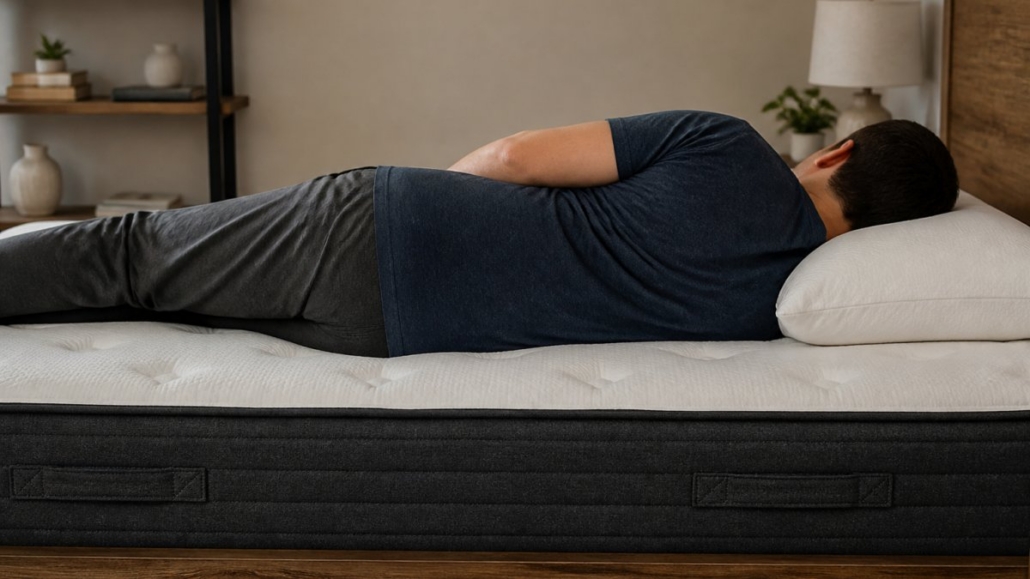
Finding the best mattress for heavy side sleepers in 2026 means solving a problem most mattress guides ignore: your body needs both deep pressure relief and serious structural support at the same time.
Side sleeping concentrates your full body weight onto a few square inches of shoulder and hip. Add more weight, and those pressure points sink deeper.
Mattress Firmness for Side Sleepers: Finding the Right Balance
Mattress firmness for side sleepers is a balancing act, and body weight shifts where that balance sits. The conventional “medium-firm is best” advice is a starting point, not a rule.
This is the gap most guides miss: they rate firmness for an average-weight sleeper and then tell heavier side sleepers to “size up.” That skips the real problem, which is that the shoulder and the hip need different things from the same mattress.
How weight changes perceived firmness
Firmness is not a fixed property of a mattress. It is the mattress’s response to a specific load. The same bed that measures medium-firm under a 150-pound tester can measure medium-soft under a 250-pound sleeper, because the comfort layer compresses further and the support core engages later. That is why a bed that feels perfect in a showroom for two minutes can feel like a hammock by 3 a.m.
A useful way to think about it:
- Under 200 pounds: medium or medium-firm usually delivers enough contouring without hammocking. The comfort layer does most of the work.
- 200 to 250 pounds: medium-firm with a reinforced support core tends to hold alignment best. The comfort layer still needs to be thick enough to cushion the shoulder.
- Over 250 pounds: firm or medium-firm with zoned support, so the hip and shoulder zones stay cushioned while the midsection stays lifted. At this weight, the support core is doing the heavy lifting and the comfort layer is a thin cushion, not the main event.
The shoulder-versus-hip trade-off
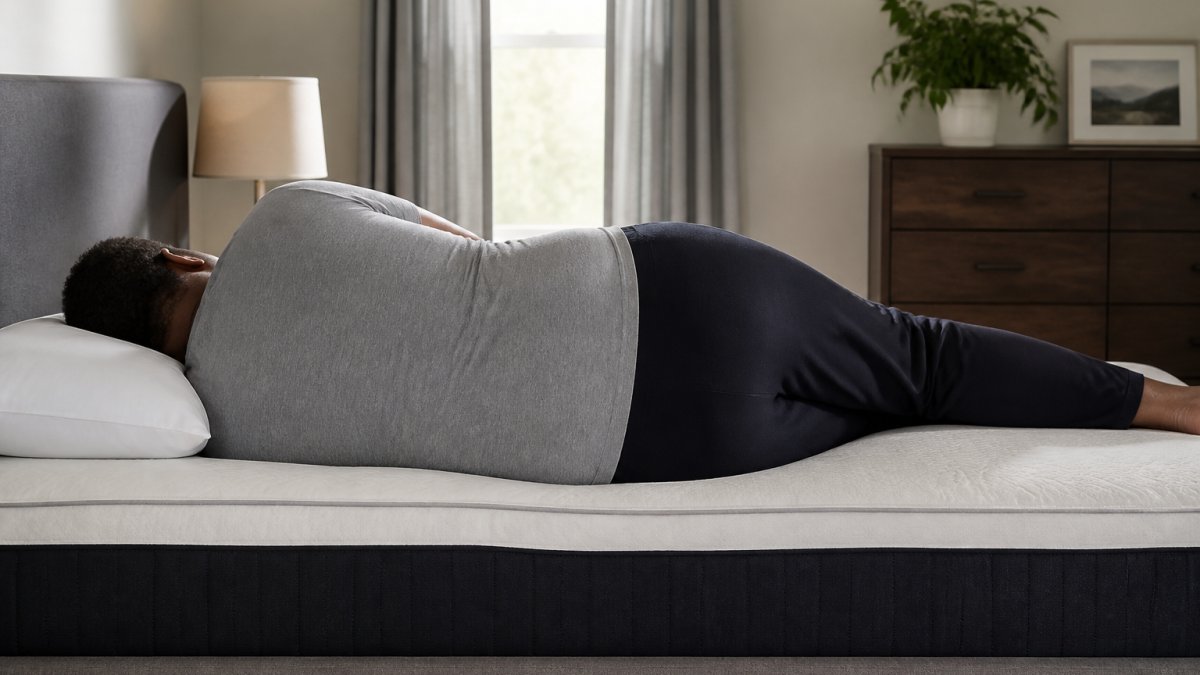
Here is the mechanism that matters most for heavier side sleepers. When you lie on your side, your shoulder and hip press into the mattress at different depths. If the mattress is too firm, the shoulder can’t sink in, so it pushes back and the upper spine twists.
Zoned support puts firmer materials or coils under the midsection and hips, and softer materials under the shoulders. For a heavier side sleeper, this is often the difference between waking up with a stiff lower back and waking up neutral.
How to test firmness for your own body
Because firmness is load-dependent, the only reliable test is your own body weight on the bed. A few practical checks:
- Lie on your side for a full 10 minutes, not two. Pressure problems show up after the first few minutes, not immediately.
- Have someone look at your spine from behind. It should form a straight line from the base of your neck to your tailbone, not a curve at the waist or a twist at the shoulders.
- Slide a hand under your waist. If there’s a large gap, the hip is sinking too far and the bed is too soft for you. If your hand is pinched, the bed is too firm and your shoulder is likely taking the load.
- Test the shoulder separately. If your shoulder feels jammed or your arm goes numb, the comfort layer isn’t letting it sink in enough.
A note on pillow height
Firmness and pillow height work together. A heavier side sleeper on a firm mattress often needs a thicker pillow to fill the gap between the head and the mattress, while a softer mattress may need a thinner one. If you change mattresses and your neck still hurts, the pillow is the next variable to adjust.
The mistake we see most is choosing by label instead of by how the bed reacts to your weight. A “medium-firm” tag tells you almost nothing until you know how deep your shoulder and hip sink into it.
If you can’t test in person, look for a mattress with a sleep trial long enough to cover at least two weeks of real nights. Pressure and alignment problems often take several nights to surface, and a two-minute showroom test won’t reveal them.
Best Mattress for Heavy People: Construction That Holds Up
The best mattress for heavy people is built around a strong support core, not a thick comfort layer. Construction decides whether a bed holds up under higher loads. Look at what’s under the foam.
- Support core: denser foam or a higher coil gauge with more coils per unit area resists sagging.
- Comfort layer: memory foam contours well but can run hot; latex is more responsive and sleeps cooler.
- Zoned support: firmer zones under the midsection keep the hips from sinking out of line.
- Edge support: reinforced edges matter if you sit on the side of the bed or sleep near the edge.
A hybrid mattress with pocketed coils and a quality comfort layer often strikes the best balance for heavier side sleepers.
Mattress for a 300-Pound Person: What to Look For
A mattress for a 300-pound person needs to prioritize durability and support over plushness. At this weight, the support core does the heavy lifting, and a soft comfort layer alone won’t keep your spine neutral. We tell shoppers in this range to look for:
- A high-density support core rated for higher weights
- Reinforced or zoned support under the hips and lower back
- A firmness that still allows shoulder and hip cushioning
- A generous sleep trial, because fit matters more than any spec sheet
The most expensive mistake here is buying a pillow-top or plush bed because it feels good in the showroom for two minutes. Under sustained body weight, that plush layer compresses and the support disappears, which is exactly when back pain shows up.
Mattress Durability for Heavier People: Signs It’s Time to Replace
Mattress durability for heavier people comes down to how the core holds its shape over time. Higher weight accelerates compression, so a bed that lasts a decade for a lighter sleeper may soften noticeably faster under more load. This is the part of the buying decision most guides skip entirely, they tell you what to buy, not how long it will actually last for your body weight.
What actually determines durability under load
Durability isn’t a single spec. It’s the interaction of three things:
- Support core density and gauge. In an all-foam bed, the support core’s density is the main durability driver. Higher-density foam resists compression better than lower-density foam. In a hybrid or innerspring, coil gauge and coil count matter: thicker-gauge coils and more coils per unit area generally resist sagging better under heavier loads.
- Comfort layer thickness and quality. A thick, low-density comfort layer feels plush at first but compresses and loses loft faster under a heavier sleeper. A thinner, higher-quality comfort layer over a strong core tends to hold up longer.
- Edge support construction. Foam-encased edges and reinforced perimeter coils hold their shape better than unsupported foam edges, which matter if you sit on the side of the bed or sleep near the edge.
A common pattern is that heavier sleepers get the most life out of a hybrid with a dense support core and a moderate comfort layer, because the coils do the structural work and the foam is a cushion rather than the foundation.
How long should it last?
There’s no universal number, but a useful frame is that heavier sleepers should expect a shorter useful life than lighter sleepers from the same mattress. A bed that a 150-pound sleeper gets 8 to 10 years from may show meaningful softening for a 250-pound sleeper in 5 to 7 years, and sooner for a 300-pound sleeper on a bed not built for that load. The variable isn’t the calendar, it’s how much the core has compressed.
Signs the support core has given out
Watch for these signals, and treat two or more together as a strong indicator:
- Visible body impressions or a dip where you sleep, especially if it’s deeper than about an inch and a half
- Waking with shoulder or hip pain that wasn’t there before
- A sagging middle that no longer keeps your hips level
- Visible sagging at the edges where you sit
- A feeling of rolling toward the center of the bed
- The mattress feels firmer in the morning than when you first lay down, which can indicate the comfort layer has compressed and stopped recovering
If two or more show up, the support core has likely given out, and no topper will fix a collapsed foundation. A topper can add cushioning, but it can’t restore structural support that’s already gone.
Protecting durability from day one
A few habits extend the useful life of a mattress under heavier loads:
- Use a supportive foundation or adjustable base rated for the mattress and your weight. A weak box spring or slatted frame can cause sagging even in a good mattress.
- Rotate the mattress head-to-foot every few months if it isn’t a no-turn model. This spreads compression across the surface.
- Use a waterproof, breathable protector to keep moisture and body oils out of the foam, which can accelerate breakdown.
- Give the mattress a few hours to recover after getting up before judging whether it has sagged.
For heavier side sleepers, durability and pressure relief are the same conversation. A bed that loses its support core stops cushioning your shoulder and hip correctly, so the first sign of a worn-out mattress is often pain, not a visible dip.
Top Mattress Types for Heavy Side Sleepers in 2026
The top mattress types for heavy side sleepers split into three practical categories. Here’s how we’d compare them:
| Type | Support | Pressure Relief | Best For |
|---|---|---|---|
| Hybrid | Strong | High | Most heavier side sleepers |
| Memory foam | Medium | High | Those who want contouring and sleep cool |
| Latex | Strong | Medium-high | Hot sleepers wanting responsiveness |
| Innerspring | Strong | Low | Those who prefer a bouncy, traditional feel |
Hybrid and latex tend to win for this group because both offer a supportive core with a responsive comfort layer. Memory foam works if you run cool; innerspring often falls short on pressure relief at the shoulder.
For unbiased, video-based comparisons of specific models, our team at Real Mattress Reviews reviews these mattresses in detail and pairs them with exclusive coupon codes, so you can weigh real-world performance before you buy.
Bring your own pillow to a showroom test and lie on your side for a full 10 minutes per bed. Two minutes tells you nothing about how a mattress handles hip and shoulder pressure over a night.
Frequently Asked Questions
What mattress is best for overweight side sleepers?
Heavier side sleepers need a mattress that combines pressure relief with support. Look for a hybrid or latex mattress with a medium-firm feel, zoned support, and a durable support core. Pocketed coils and dense foam layers help prevent sagging while cushioning shoulders and hips. Avoid soft memory foam that lets you sink too deep, which can misalign your spine.
How firm should a mattress be for a heavy side sleeper?
A medium-firm to firm mattress (around 6 to 7 on a 10-point firmness scale) works best for heavy side sleepers. It should be soft enough to cushion pressure points at the shoulder and hip, but firm enough to keep your spine aligned. If you weigh over 250 pounds, lean toward the firmer end of that range for better support.
What’s a good mattress for a 300-pound person?
For a 300-pound side sleeper, prioritize a mattress with reinforced edge support, a high-density foam base, and thick gauge pocketed coils. Hybrid and latex mattresses tend to hold up better under higher weight. Check the warranty and weight limits; some brands offer specific models for heavier sleepers. Durability is key, so avoid low-density foams that sag quickly.
How often should a mattress be replaced if you weigh more?
Heavier sleepers may need to replace a mattress every 5 to 7 years, compared to 7 to 10 years for average-weight sleepers. Watch for visible sagging, waking up with pain, or feeling the coils through the surface. A mattress with high-density foams and a strong coil system will last longer. Rotating it regularly can also extend its life.
Heavier side sleepers face a real challenge: getting deep pressure relief and lasting support from the same bed. Real Mattress Reviews exists to make that decision easier, with nearly a decade of mattress store experience, over 300 video reviews, and exclusive coupon codes that save you money. Sign up for our newsletter to get new reviews and deals before you buy.


Leave a Reply
Want to join the discussion?Feel free to contribute!