
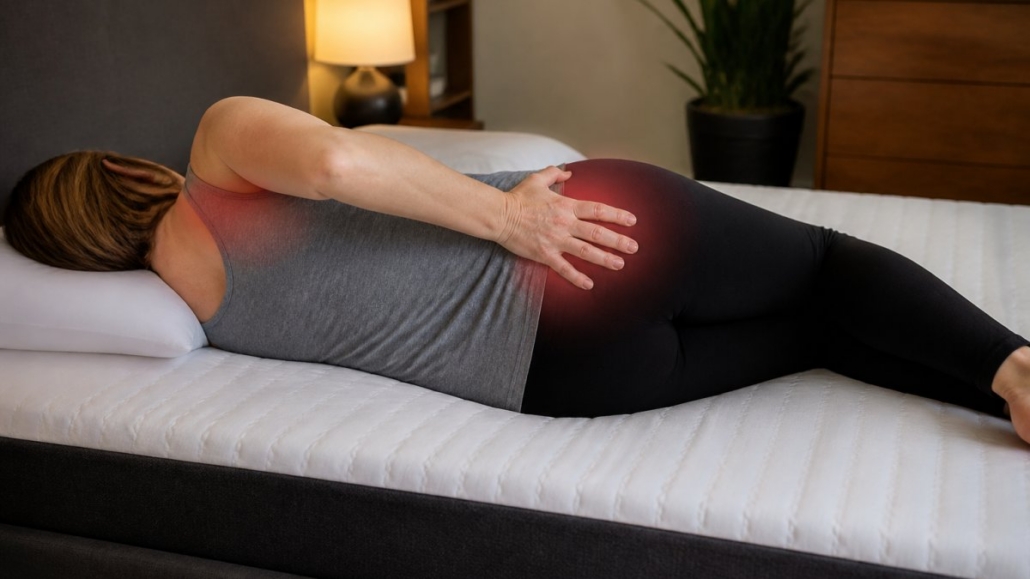
Best Mattress for Hip and Shoulder Pain in 2026
Table of Contents
- Why Your Mattress Matters for Hip and Shoulder Pain
- How Hip and Shoulder Pain Differ (And Why It Changes Your Pick)
- Mattress Firmness for Hip Pain: Finding Your Number
- Best Mattress for Side Sleepers With Joint Pain
- Mattress Topper for Hip and Shoulder Pain: A Cheaper Fix
- Materials, Durability, and Body Weight: What Holds Up Over Time
- Trials, Returns, and Total Cost: Protecting Your Purchase
- Conclusion
- Frequently Asked Questions
Last Updated: October 16, 2026
Why Your Mattress Matters for Hip and Shoulder Pain
The best mattress for hip and shoulder pain is firm enough to keep your spine neutral but soft enough to cushion the joints you sleep on. That balance matters more than any brand name. At Real Mattress Reviews, we have spent nearly a decade selling mattresses and reviewing more than 300 on video, and the pattern is consistent: people with hip and shoulder pain usually buy either too soft or too firm, then blame the mattress.
A mattress cannot cure joint pain, but it can reduce the pressure that builds up overnight, which often improves how you feel in the morning.
What Actually Causes Hip and Shoulder Pain
Hip and shoulder pain come from different mechanics, so the fix is different for each. Your hips carry the heaviest part of your body and need support that keeps the pelvis level.
Common causes include:
- Hip pain: bursitis, arthritis, muscle strain, or referred pain from the lower back. Sleeping on a too-firm surface can aggravate an inflamed bursa because the joint takes the full load.
- Shoulder pain: rotator cuff issues, impingement, arthritis, or pressure on the shoulder from side sleeping. A mattress that will not let the shoulder sink pushes it up into the socket.
- Both at once: often a sign that the mattress is too firm in the top layer, or that a medical issue is affecting more than one joint.
According to information on pressure ulcers and prolonged pressure, sustained pressure on the same points reduces blood flow and causes discomfort, which is why pressure relief matters more than plushness.
The Limits of a Mattress Change
A mattress change is a comfort intervention, not a treatment. If your pain comes from inflammation, a torn rotator cuff, or arthritis, a new mattress may reduce how much it wakes you up but will not resolve the underlying condition. People often spend $1,500 on a new bed, feel better for a few weeks, then find the pain returns because the mattress was never the root cause.
Treat the mattress as one variable among several, alongside pillows, sleep position, activity level, and medical care.
When to See a Clinician Instead of Shopping
See a healthcare provider before you buy a mattress if:
- The pain is sharp, shooting, or radiates down your arm or leg
- You have numbness, tingling, or weakness
- The pain persists during the day, not just after sleeping
- You have swelling, redness, or warmth at the joint
- The pain started after an injury
For everyday morning stiffness that fades once you move, a mattress change is a reasonable first step. For anything on the list above, a mattress is not the answer.
The most common mistake we see is buying a mattress that feels great in a store for five minutes. Pressure pain shows up after 30 to 60 minutes of lying down, so a short showroom test tells you almost nothing about how your hips and shoulders will feel at 3 a.m.
For pain in both areas, prioritize the shoulder. You can often fix hip pressure with a pillow or a topper, but a shoulder that cannot sink into the surface is much harder to correct after purchase.
How Hip and Shoulder Pain Differ (And Why It Changes Your Pick)
According to information on pressure ulcers and prolonged pressure, sustained pressure on the same points reduces blood flow and causes discomfort, which is why pressure relief matters more than plushness.
- Hip pain usually points to a mattress that is too firm. The pelvis cannot sink, so the joint takes the load.
- Shoulder pain usually points to a mattress that is too firm in the top layer. The shoulder cannot compress, so it pushes back into the socket.
- Both at once is the hardest case. It calls for a mattress with a soft, conforming top layer over a supportive core.
If you sleep on your side and wake with both, the same firmness that helps one joint can aggravate the other.
Mattress Firmness for Hip Pain: Finding Your Number
Mattress firmness for hip pain should land around a 5 to 6 on a 10-point scale for most side sleepers, and closer to a 6 to 7 for back and stomach sleepers. That range lets the hip sink slightly while the core holds the spine straight.
Firmness is not a fixed property: the same mattress feels different depending on your weight, sleep position, and how much weight concentrates on the hip.
| Sleep Position | Suggested Firmness | Why It Helps |
|---|---|---|
| Side sleeper | 5-6 (medium) | Lets the hip and shoulder sink in |
| Back sleeper | 6-7 (medium-firm) | Keeps the lower back supported |
| Stomach sleeper | 7 (firm) | Prevents the hips from dropping |
| Combination sleeper | 5-6 (medium) | Balances cushioning and support |
A Step-by-Step Method to Compare Firmness and Pressure Relief
Instead of guessing from a chart, use this method to compare mattresses in a store or at home.
- Lie in your normal sleep position for at least 15 minutes. Pressure pain shows up after 30 to 60 minutes, so a short test is misleading.
- Check your spine line. Have someone photograph you from behind at hip level. On your side, your spine should form a straight line from neck to tailbone. If your hip dips below it, the mattress is too soft; if your hip rides high, it is too firm.
- Slide a hand under your waist. On your back, there should be a small gap you can feel but not easily slide a whole hand through. A large gap means the lumbar is unsupported; no gap means it is too soft.
- Press your hip and shoulder into the surface. You should feel the comfort layer give, then meet resistance from the support core. Sinking to a hard stop means the top layer is too thin; never feeling the core means it is too soft for your weight.
- Test the edge. Sit on the side of the bed. If the edge collapses more than an inch or two, the perimeter support is weak.
- Note the temperature. Memory foam that feels perfect at minute five can feel hot and mushy at minute 30. If you run warm, a responsive foam or hybrid will hold its feel longer.
Adjust With a Topper Before You Replace the Mattress
If a mattress is close but not quite right, a two- to three-inch topper is a cheaper adjustment than a new bed. Hip pain calls for a medium topper that adds give without turning the bed mushy; shoulder pain calls for a softer, thicker topper that lets the shoulder sink.
Heavier sleepers often need to go one step firmer than the chart suggests, because more weight compresses the comfort layer faster. Lighter sleepers may never break in a firm mattress enough to get pressure relief.
Put the topper on and give it a full week before judging it. Pressure pain often improves gradually as your body adjusts, so a single night is not a fair test.
Best Mattress for Side Sleepers With Joint Pain
The best mattress for side sleepers is a medium-feel model with a responsive comfort layer and a supportive base, because side sleeping concentrates all your weight on the hip and shoulder.
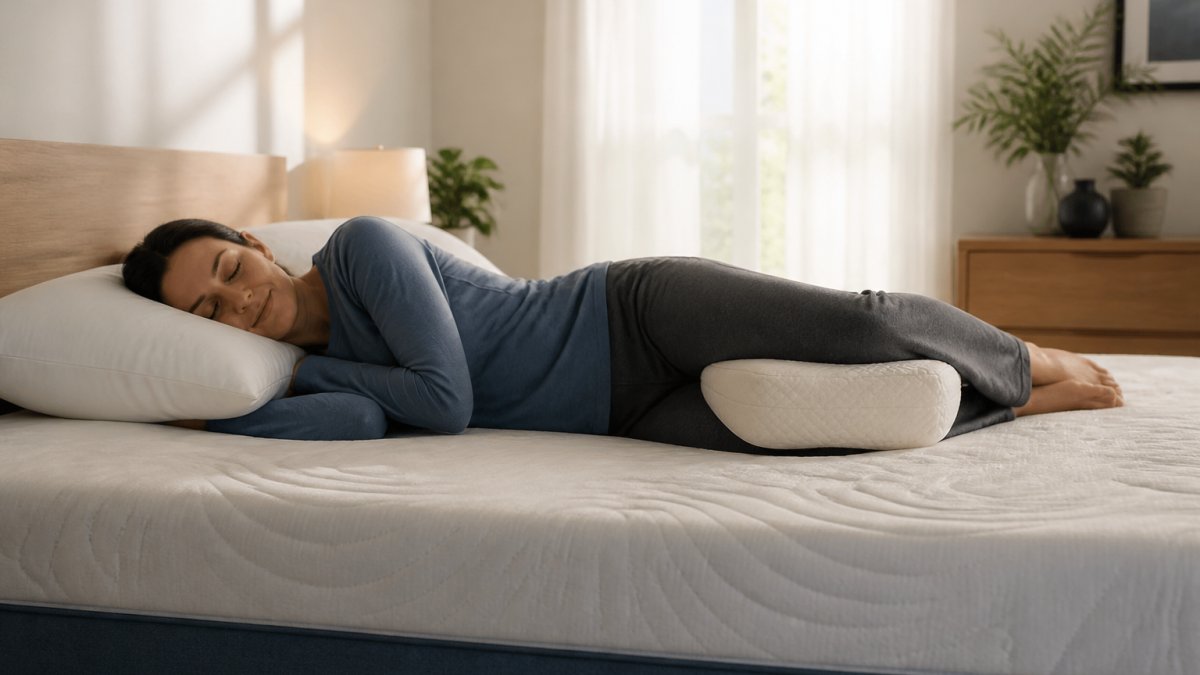
Memory foam conforms closely but can sleep hot and let you sink too far. Responsive foams and latex bounce back faster and keep you closer to the surface, which many side sleepers find more supportive. If you run hot, look for a breathable cover and an open-cell foam.
- Memory foam: best contouring, but can trap heat and cause sinkage
- Responsive foam: good pressure relief with less heat buildup
- Latex: durable and buoyant, often firmer than expected
- Hybrid: foam comfort layer over coils, a strong all-rounder for side sleepers
Mattress Topper for Hip and Shoulder Pain: A Cheaper Fix
A mattress topper for hip and shoulder pain is the fastest way to test whether your current mattress is the problem before buying a new one, and it costs far less than a replacement.
This is the step most shoppers skip, and the one we recommend first. If a topper solves the pressure, you saved a full purchase. If not, the issue is support, not surface softness, which points to the mattress core.
Materials, Durability, and Body Weight: What Holds Up Over Time
Durability depends on density and construction, and body weight is the biggest factor in how fast a mattress breaks down. A mattress that feels supportive in year one can develop a dip by year three if foam density is low.
Heavier sleepers compress the comfort layer more with every night, so they need higher-density foams and stronger coil systems.
- Higher-density foams hold their shape longer than low-density foams
- Coil count and gauge affect how well the core supports the hips
- Edge support matters if you sit on the side of the bed or sleep near the edge
- Motion isolation helps couples, but it does not fix pressure pain
Check the warranty for what counts as a defect. Most cover visible sagging beyond a set depth, not the gradual softening that causes pain.
Trials, Returns, and Total Cost: Protecting Your Purchase
A sleep trial is the only reliable way to know if a mattress works for hip and shoulder pain, so treat the terms as seriously as the mattress itself. A 100-night trial means little if returns cost a fee or require original packaging.
Read these before you buy:
- Trial length: longer is better, but confirm the countdown start date
- Return fees: some brands charge a processing or pickup fee
- Warranty terms: what qualifies as a defect, and for how long
- Total cost: base, foundation, and old-mattress removal add up
- Break-in period: most mattresses need a few weeks to settle
At Real Mattress Reviews, we publish coupon codes so you are not paying full price while you test these terms, and our video library covers specific models, sleep positions, and temperatures so you can compare before you commit.
Shoppers who want to test a mattress risk-free and compare real return terms before spending, rather than trusting a five-minute showroom feel.
Conclusion
Finding relief for hip and shoulder pain comes down to matching firmness and materials to your body, then protecting that choice with a fair trial and return policy, not chasing the most expensive bed on the market.
Real Mattress Reviews was built for exactly this problem, bringing nearly a decade of mattress store ownership, more than 300 video reviews, and exclusive coupon codes to help you find a surface suited to pain relief and sleeping temperature.
Frequently Asked Questions
Is a softer or firmer mattress better for hip pain?
It depends on your sleep position. Side sleepers with hip pain usually do better on a medium or medium-firm mattress because a softer surface lets the hip sink in and relieves pressure points. Back and stomach sleepers typically need firmer support to keep the spine neutral. There is no single firmness that works for everyone, so test a mattress in your normal sleep position before committing.
Can a mattress actually cause hip and shoulder pain?
Yes. A mattress that is too firm creates pressure points at the hip and shoulder, which can cause joint stiffness and pain over time. A mattress that is too soft lets the hips sink out of alignment, straining the lower back and shoulders. If your pain started or got worse after a mattress change, the surface is a likely factor worth addressing before assuming the issue is purely medical.
Are memory foam mattresses good for hip and shoulder pain?
Memory foam contours to the body and can relieve pressure at the hips and shoulders, which helps many side sleepers. The trade-off is heat retention and a slower response feel. Responsive foams and hybrid designs offer similar pressure relief with more bounce and better airflow. If you sleep hot, a hybrid or a foam with cooling materials may work better than traditional memory foam.
What mattress firmness is best for side sleepers with hip and shoulder pain?
Most side sleepers with hip and shoulder pain do best on a medium to medium-firm mattress, roughly a 5 to 7 on a 10-point firmness scale. This range lets the shoulder and hip sink in enough to relieve pressure while still supporting the spine. Lighter sleepers may prefer the softer end of that range, and heavier sleepers often need the firmer end for proper support.


Leave a Reply
Want to join the discussion?Feel free to contribute!