Posts

7 Best Cooling Hybrid Mattresses for Back Pain in 2026

Last Updated: October 26, 2026

Quick Summary

The best cooling hybrid mattress for back pain pairs a coil core with breathable materials and medium-firm support, since airflow through the coils and a breathable cover do more to regulate temperature than any gel foam additive. Match firmness to your sleep position and body weight, and judge the whole build rather than the cooling label.

  • Medium-firm is the safest firmness starting point for most back-pain sleepers.
  • Lighter sleepers under roughly 130 lb usually do better with medium to medium-soft hybrids.
  • Heavier sleepers over roughly 230 lb need firmer hybrids with denser support foam and stronger coils.
  • Zoned pocketed coils place firmer support under the lower back and softer support under shoulders.
  • A cooling cover over dense memory foam still traps heat underneath.

Table of Contents

Why a Cooling Hybrid Mattress Helps Back Pain and Night Sweats

A cooling hybrid mattress addresses two problems at once: it supports the spine while moving heat away from your body. That combination matters because pain and overheating rarely show up alone. At Real Mattress Reviews, we’ve spent nearly a decade selling mattresses and built a library of over 300 video reviews, and the same pattern keeps surfacing: people with back pain often sleep hot too.

The reason is simple. Pain disrupts sleep, poor sleep raises stress and inflammation, and a hot mattress makes both worse. A hybrid design pairs a coil core with foam or latex comfort layers, so you get stable support without the heat trap of an all-foam bed.

Below, we break down the best cooling hybrid mattress for back pain by firmness, materials, and sleep position, and show you how to judge one before you buy.

Our Top Picks: Best Cooling Hybrid Mattress for Back Pain

The best cooling hybrid mattress for back pain balances firm support with genuine airflow. We rank options by spinal alignment, pressure relief, cooling performance, and durability, not marketing claims. Here’s how the leading designs compare on the factors that decide whether your back and your temperature cooperate.

Quick Comparison Table

Design Firmness Cooling Approach Best For Watch Out For
Zoned coil hybrid Medium-firm Breathable cover, gel foam Back sleepers, average weight Can feel firm to light side sleepers
Latex hybrid Medium Natural latex, open-cell Hot sleepers wanting bounce Higher cost, heavier to move
Plush hybrid Medium-soft Airflow coil core Side sleepers, pressure points Less lumbar support if too soft
Firm hybrid Firm Pocketed coils, thin foam Stomach and back sleepers Limited contouring for hips

How We Evaluated These Mattresses

We judge every mattress on four things: support, pressure relief, cooling, and durability. Our team’s store background means we’ve watched how beds hold up over years, not just on day one.

  • Spinal alignment: Does the surface keep a neutral spine position across sleep positions?
  • Pressure relief: Do shoulders and hips sink without bottoming out?
  • Cooling performance: Does airflow through the coil core reduce heat retention?

A common mistake is choosing a bed by firmness label alone. Two medium-firm hybrids can feel completely different.

Mattress Firmness for Back Pain: Finding Your Sweet Spot

Medium-firm is the safest starting point for most back-pain sleepers, but your body weight and sleep position shift that target. Heavier sleepers usually need firmer support to avoid sinking into the foam. Lighter sleepers often find medium-firm too stiff and do better with a touch more plushness.

Firmness is where shoppers get stuck, so here’s a practical framework:

  • Back sleepers: Medium-firm to firm for lumbar support.
  • Side sleepers: Medium to medium-soft to relieve shoulder and hip pressure.
  • Stomach sleepers: Firm to keep the hips from dropping.

The real test is whether your spine stays neutral, not what number the label says.

Fit by body weight and sleep position

Firmness labels are not absolute. The same medium-firm hybrid can feel supportive to a lighter back sleeper and too soft to a heavier side sleeper. Use this as a starting point, then adjust for your build:

  • Lighter sleepers (roughly under 130 lb): Medium to medium-soft hybrids usually give enough pressure relief without feeling like a board. Firm beds often create pressure at the shoulders and hips.
  • Average-weight sleepers (roughly 130-230 lb): Medium-firm is the broadest fit. Back and stomach sleepers lean firmer; side sleepers lean medium.
  • Heavier sleepers (roughly over 230 lb): Firmer hybrids with denser support foam and stronger coil gauges resist sinking better. A soft bed can let the hips drop and pull the lower back out of alignment.

These ranges are general guidance, not medical thresholds. Your own comfort in the trial period is the deciding evidence.

Match firmness to your back-pain pattern

Back pain is not one thing, and the right firmness depends on what you feel:

  • Lower-back discomfort that eases when you lie flat: A firmer, well-supported hybrid that keeps the hips from sinking is often the better fit.
  • Pressure sensitivity at the shoulders or hips: A medium or medium-soft hybrid with zoned support relieves pressure points without losing lumbar support.
  • Pain that changes with sleep position: Match firmness to the position you spend most of the night in, not the one you fall asleep in.
Pro Tip
If you wake with stiffness that fades within an hour of getting up, your mattress may be too soft for your build. If you wake with pressure or numbness at the shoulders or hips, it may be too firm.

Zoned support and coil quality

Zoned pocketed coils put firmer support under the lower back and softer support under the shoulders, which helps side sleepers keep a neutral spine. Coil gauge and count matter too: a stronger coil system resists sagging longer, which protects support over the life of the bed. A firmness label tells you how the bed feels on day one; coil quality tells you how it will feel in year three.

Cooling Mattress Materials That Actually Regulate Temperature

Cooling claims are everywhere, and most of them are thin. What actually regulates temperature is airflow plus materials that resist trapping heat. Gel-infused memory foam helps a little, but the coil layer and a breathable cover do more heavy lifting than any single foam additive.
Newsletter Sign Up →

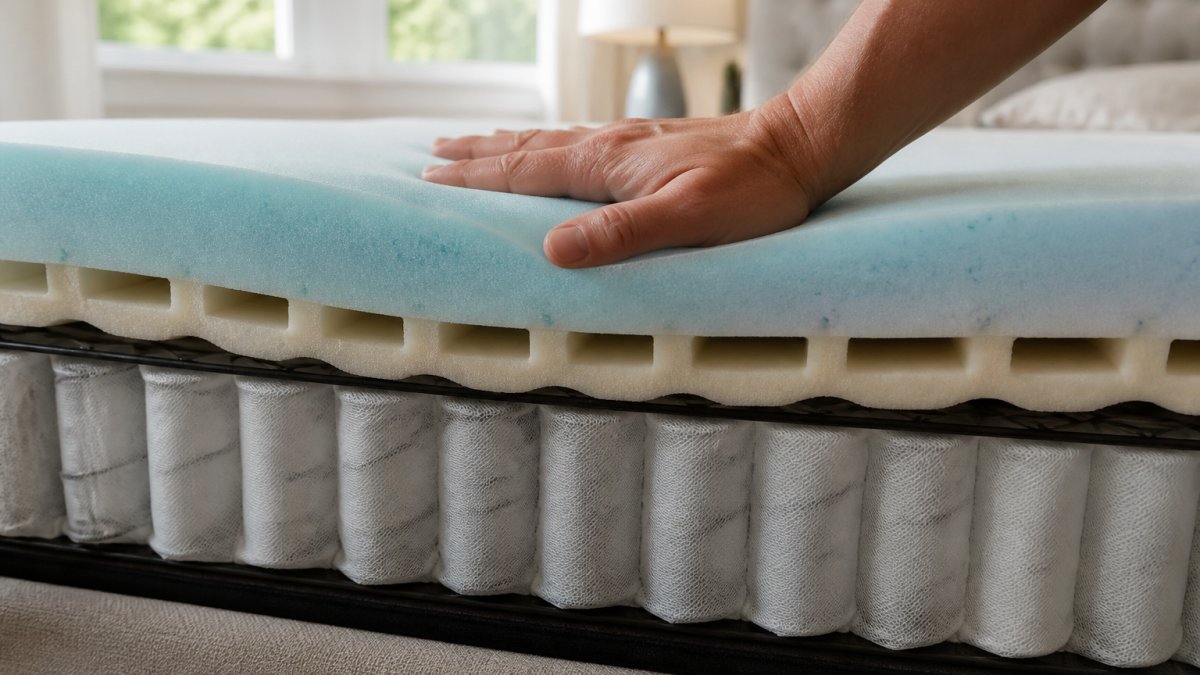
Close-up of a person's hand pressing into a breathable gel-infused foam layer on a hybrid mattress, showing the coil core and airflow channels underneath in a bright bedroom setting
Close-up of a person’s hand pressing into a breathable gel-infused foam layer on a hybrid mattress, showing the coil core and airflow channels underneath in a bright bedroom setting

How we test cooling performance

Most reviews repeat the manufacturer’s cooling language. We do not. Our cooling check uses a consistent method so you can compare designs on the same terms:

  • Baseline temperature: We record surface temperature at the center of the mattress after the bedroom has sat at a steady thermostat setting.
  • Heat retention: A standardized heat source is placed on the surface for a set interval, then we measure how much the surface temperature rises and how quickly it falls back toward baseline.
  • Airflow: We assess how much air moves through the coil layer by checking whether the cover and comfort layers block or channel air, and we note whether the design uses a breathable side panel or a sealed border.

This is not a laboratory-grade thermal test, and we do not present it as one. It is a repeatable side-by-side method that lets us say which designs shed heat faster under the same conditions instead of repeating a claim from a spec sheet.

What the materials actually do

  • Pocketed coils: Open space between coils lets air move. A coil core with a breathable side panel is the single biggest airflow advantage a hybrid has over an all-foam bed.
  • Latex: Naturally breathable and cooler than dense memory foam, with more bounce and less heat buildup.
  • Gel-infused foam: Helps a little at the surface, but a thin gel layer over dense foam still traps heat underneath.
  • Transition foam: Thinner layers reduce heat buildup; thick, dense transition foam is where hybrids lose their cooling edge.
Watch Out
A “cooling” cover on top of dense memory foam still traps heat underneath. Judge the whole build, coil airflow, foam density, and cover, not the label on the cover.

Cooling trade-offs and bedroom conditions

Breathable construction can help with heat retention, but it cannot control room temperature, bedding, or your own heat sensitivity. A hybrid with strong airflow will feel cooler than a sealed all-foam bed in the same room, but if the bedroom runs warm or you sleep under heavy bedding, no mattress will fully compensate.

For a deeper comparison of temperature-regulating options, see our guide to the best cooling mattresses for hot sleepers.

Best Mattress for Side Sleepers with Back Pain

Side sleepers with back pain need pressure relief at the shoulder and hip without losing lumbar support. That’s a narrow window. Too soft and the hips sink, twisting the lower back.

A medium hybrid with zoned coil support tends to hit this balance. If you’re a side sleeper comparing options, our picks for the best mattresses for side sleepers break down pressure relief and support side by side.

If you’re also dealing with ongoing back pain beyond sleep position, our hub on the best mattress for back pain covers the full range of designs.

How to Choose a Mattress for Back Pain: A Step-by-Step Framework

Choosing a mattress for back pain comes down to matching support to your sleep position, body weight, and cooling needs. Work through these steps in order:

  1. Identify your sleep position. Back, side, and stomach sleepers need different firmness.
  2. Weigh body type against firmness. Heavier sleepers lean firmer; lighter sleepers lean softer.
  3. Check the coil core. Zoned pocketed coils support the lumbar region better than uniform coils.
  4. Confirm cooling. Look for airflow through the coil layer and a breathable cover.
  5. Review trial and warranty terms. A generous sleep trial lets you test real support.
  6. Compare total cost. Factor in returns and warranty length, not just sticker price.

For a fuller walkthrough, read our step-by-step guide on how to choose a mattress for back pain.

Check Current Prices and Find Your Best Fit

Pricing shifts with sales, so check current prices before you commit rather than trusting an old review. A mattress that fit your needs last year may have a new model, and the deal you saw may have expired.

Our advice: shortlist two or three designs, confirm the trial period, and buy when the price and policy both work for you. If you’re timing a purchase around promotions, our Memorial Day mattress sales page tracks current offers.

Frequently Asked Questions

What should you look for in a cooling hybrid mattress for back pain?

Focus on three things: a supportive coil core with zoned lumbar support, breathable cooling materials like gel-infused foam or latex, and a firmness that keeps your spine in a neutral position. Medium-firm is a safe starting point for most back-pain sleepers. Also check for a trial period of at least 100 nights and a warranty of 10 years or more so you can test the cooling hybrid mattress at home.

Do cooling mattresses actually sleep cooler?

Cooling mattress materials like phase-change covers, gel foams, and breathable latex can help reduce heat retention, but they do not create a refrigerated surface. The biggest gains come from airflow through the coil core and a breathable cover. If your bedroom runs warm, pair the mattress with breathable sheets and a fan. Cooling performance varies by construction, so read tester feedback on temperature regulation before buying.

Can a hybrid mattress help with back pain?

A hybrid mattress can help with back pain because the pocketed coils provide stable support and spinal alignment while the foam layers add pressure relief at the shoulders and hips. That combination works well for back sleepers and side sleepers who need both support and cushioning. Firmness matters more than the category itself, so match the mattress to your sleep position and body weight before deciding.

What mattress firmness is best for back pain?

Medium-firm is the most common recommendation for back pain because it supports the lumbar spine without creating pressure points. Back sleepers often do well on medium-firm to firm, while side sleepers usually need medium to medium-soft for shoulder and hip pressure relief. Stomach sleepers need firmer support to keep the hips from sinking. Test your mattress firmness for back pain during a trial period before committing.


Back pain and overheating are a rough combination, and the wrong mattress makes both worse. Real Mattress Reviews helps you cut through the noise with nearly a decade of store experience and over 300 video reviews, plus exclusive coupon codes that save you real money. Compare cooling performance, check firmness against your sleep position, and use our reviews to buy with confidence. Get started with Real Mattress Reviews and find the cooling hybrid mattress that finally supports your back.

Best Hybrid Mattress for Back Support in 2026?

Last Updated: October 25, 2026

Quick Summary

The best hybrid mattress for back support combines a foam comfort layer with pocketed coils that keep your spine in neutral alignment, usually at a medium-firm rating of 6 or 7 out of 10. Choose zoned support with firmer coils under the lumbar area, and match the firmness to your body weight and sleep position.

  • Medium-firm, roughly 6 or 7 out of 10, is the usual firmness target for back sleepers.
  • Above roughly 230 pounds, look for firm (7-8) with a support core of at least 8 inches.
  • Lie on the bed for at least 15 minutes and check the gap under your lower back.
  • Most mattresses need replacing every seven to ten years, and back support goes first.
  • Most hybrid warranties run 10 years and require sagging beyond about 1 to 1.5 inches.

Table of Contents

Why a Hybrid Mattress for Back Support Makes Sense in 2026

A hybrid mattress combines a foam comfort layer with a pocketed coil support core, and that combination is why it has become the default recommendation for back support.

The American Academy of Orthopaedic Surgeons notes that sleep position and surface support both affect how the spine is loaded overnight, which is why the coil layer matters so much for anyone shopping for the best hybrid mattress for back support.

How Coils and Foam Work Together to Support Your Spine

The foam top layer contours to your curves and eases pressure at the hips and shoulders. The pocketed coils underneath do the structural work: each coil responds independently, pushing back where you need it most. That responsive support keeps your midsection from sinking out of line. Foam alone gives you cushioning. Coils alone give you pushback. Together they deliver both, which is exactly what lumbar support requires.

The Best Hybrid Mattress for Back Pain: What Actually Matters

The best hybrid mattress for back pain is not the firmest one you can find. It is the one that keeps your spine in neutral alignment while still cushioning pressure points.

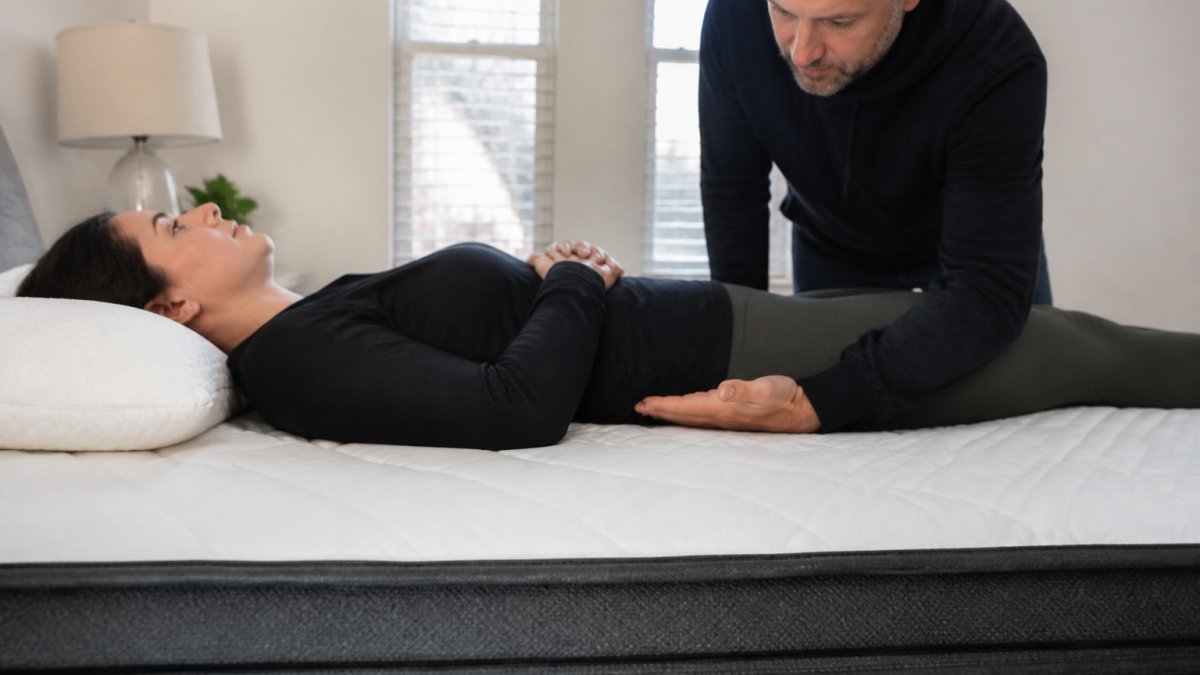
Reviewer checking spinal alignment for a person lying on a hybrid mattress

What most guides miss is that back support is not the same as back-pain treatment. If your pain is persistent, the MedlinePlus overview of low back pain is a sensible starting point before you blame your bed.

Three things decide whether a hybrid works for you:

  • Support core: pocketed coils that stay firm under the midsection
  • Comfort layer: enough foam to cushion without swallowing your hips
  • Zoned support: firmer coils under the lumbar area, softer near the shoulders

Mattress Firmness for Back Pain: Finding Your Number

Mattress firmness for back pain usually lands at medium-firm, roughly a 6 or 7 out of 10 on the industry’s 1-to-10 scale, where 1 is softest and 10 is hardest. That range gives back sleepers enough pushback to keep the pelvis level while still relieving pressure at the shoulders and hips. But “medium-firm” is a label, not a measurement, and two beds rated 6 can feel completely different once a body is on them. The number that actually matters is how far your hips sink relative to your shoulders, because that difference is what tilts the pelvis and loads the lower back.

Why Body Weight Changes the Firmness You Need

Firmness is a response, not a property. A hybrid’s comfort layer compresses in proportion to the load placed on it, so the same bed that feels supportive to a 150-pound sleeper can feel like a hammock to someone at 250 pounds.

  • Under roughly 130 pounds: a medium (5-6) hybrid usually provides enough contouring; firmer beds can create pressure at the hips and shoulders because the body does not generate enough load to compress the comfort layer.
  • Roughly 130-230 pounds: medium-firm (6-7) is the common sweet spot for back sleepers, with enough give at the shoulders and enough pushback under the lumbar curve.
  • Above roughly 230 pounds: firm (7-8) with a thicker coil unit, look for a support core of at least 8 inches and a higher coil count or heavier gauge, reduces the risk of sinkage that pulls the spine out of line.

These are starting ranges, not prescriptions. The only reliable test is to lie on the bed in your normal sleep position for at least 15 minutes and slide a hand under your lower back: if you can push your hand through easily, the bed is too soft for your weight; if there is no gap at all and your shoulders or hips ache, it is too firm.

Body Shape Matters as Much as Body Weight

Two people at the same weight can need different firmness because weight distribution differs. A person who carries weight in the hips and thighs puts more load on the lower half of the bed and tends to sink at the pelvis first, the exact failure mode that arches the lower back. A person with a broader shoulder-to-hip ratio needs more give in the upper comfort layer so the shoulders can sink without levering the spine.

That is why zoned support earns its place in a hybrid: firmer coils under the lumbar area and softer coils near the shoulders compensate for shape differences that a uniform firmness rating cannot. If you are still narrowing it down, our guide on how to choose a mattress for back pain walks through the decision step by step.

Sleeper Type Firmness Target What to Watch
Back sleeper, average weight Medium-firm (6-7) Midsection sinkage
Side sleeper Medium (5-6) Shoulder pressure
Stomach sleeper Firm (7-8) Hip arching
Higher body weight Firm (7-8) Support core thickness and coil gauge
Lower body weight Medium (5-6) Excess pushback
Hip-weighted shape Medium-firm with zoned lumbar support Pelvis sinkage
Broad shoulders Medium with a soft upper comfort layer Shoulder pressure and spinal twist
Pro Tip
Shop by your body, not by the label. Bring your own weight and sleep position to the store, lie on the bed for 15 minutes in that position, and judge the gap under your lower back, not how the bed feels under your hand.

Hybrid Mattress Pros and Cons: An Honest Breakdown

The honest case for hybrids is durability and airflow. The honest case against is price and motion transfer. Coils keep air moving, so hot sleepers tend to run cooler than on all-foam. The coil core also resists the body impressions that plague soft foam over time.

The trade-offs are real. Once you have weighed those points, our mattress shopping tips for back pain relief help you apply them in the store.

Newsletter Sign Up →

How Often to Replace a Mattress for Back Support

Most mattresses need replacing every seven to ten years, and back support is usually the first thing to go. Sagging under the lumbar area shows up before the surface looks worn. If you wake with stiffness that fades an hour after getting up, the support core is likely the culprit. Rotate the mattress on schedule, use a protective cover, and check the warranty terms before you assume a replacement is covered.

Durability, Adjustable Bases, and the Details That Decide

Durability is where a hybrid’s back support is won or lost, and it comes down to three measurable things: coil gauge, foam density, and how well the comfort layer resists compression. Coil gauge is the thickness of the wire, a lower number means thicker wire and firmer, more durable support. Foam density is measured in pounds per cubic foot (PCF); a comfort layer under about 2.5 PCF is likely to soften and develop body impressions faster than a denser foam. A thicker support core holds up better for heavier sleepers, which is why a bed that feels supportive in month one can feel hollow under the lumbar area by year four.

What Actually Happens to Support Over Time

Support retention is the part of durability that matters most for back pain, and it is the part most product pages ignore. The common failure pattern is not a collapsed coil, it is the comfort foam above the coils compressing permanently, which lets the hips sink closer to the coil layer and removes the cushioning that kept the pelvis level.

A few practical checks before you buy:

  • Coil count and gauge: more coils at a heavier gauge generally mean more consistent pushback under the midsection; ask for the coil count in the queen size, since counts are often quoted for a king.
  • Foam density: ask for the PCF of the comfort layers, not just the support core. Denser foam resists compression longer.
  • Edge support: a reinforced perimeter keeps the sleep surface from rolling off at the edges, which matters if you sit on the edge or sleep near it.

A warranty is not a durability guarantee. Read the body-impression threshold and the foundation requirements before you buy, because a bed used on the wrong base can void coverage even if the coils fail.

Adjustable Bases and Alignment

Adjustable bases are worth considering if you want to raise the head for reflux or reading, but confirm the bed is compatible first.

Base choice also affects alignment even when you never adjust it. A slatted foundation with gaps wider than about 3 inches, or a box spring that flexes, can let the mattress sag between supports and undermine the coil layer’s pushback.

Break-In, Rotation, and Troubleshooting Uneven Support

New hybrids need a break-in period, typically a few weeks, during which the comfort foam softens slightly and the bed reaches its settled feel. Rotate the mattress on the schedule the manufacturer specifies, many hybrids are not designed to be flipped, only rotated head-to-foot, and use a protective cover to keep the warranty intact. If you notice uneven support, check the foundation first: a sagging or flexing base is a more common culprit than a defective mattress, and it is the first thing a warranty claim will ask about.

How We Test Hybrid Mattresses for Back Support

We test for spinal alignment, pressure distribution, and how the bed holds up over time. Our process is repeatable: lie in each sleep position, check for gap under the lower back, note sinkage at the hips, and rate edge support and motion isolation. You can browse the tested beds in our hybrid and innerspring reviews to see the evidence behind each pick.

Compare Hybrid Mattresses and Claim Your Coupon Code

Comparing hybrids side by side is the fastest way to choose. Match the support core to your body weight, the comfort layer to your sleep position, and the warranty to how long you plan to keep the bed. Ready to act? Our top picks page and coupon codes let you compare current models and save on the one that fits.

Frequently Asked Questions

What kind of hybrid mattress is best for someone with back problems?

Look for a hybrid with a medium-firm feel and a support core of pocketed coils under a comfort layer of memory foam or latex. Coils provide responsive support and keep your hips from sinking too deep, while foam cushions pressure points. Zoned support, where the middle third of the mattress is firmer, helps keep your midsection lifted. Body weight matters: lighter sleepers often do better on the softer end of medium-firm, while heavier sleepers need more coil support to prevent sagging.

What mattress firmness is best for back support?

Medium-firm, roughly a 6 to 7 out of 10, is the most common recommendation for back support. It keeps your spine in a neutral line without creating pressure at the shoulders and hips. Back sleepers usually do well at a 6 to 7, side sleepers often prefer a 5 to 6 for shoulder and hip cushioning, and stomach sleepers need a firmer 7 to 8 to keep the midsection from dipping. Your body weight shifts the effective firmness, so test in person when you can.

How often should you replace a hybrid mattress?

Most hybrid mattresses last seven to ten years, though coil quality and foam density affect that range. Replace sooner if you notice visible sagging, waking with back stiffness that fades during the day, or a mattress that feels less supportive than it did a year ago. Higher-density foams and thicker coil gauges retain support longer. Rotating the mattress every six months helps distribute wear and extends usable life.

What are the downsides of a hybrid mattress?

Hybrids typically cost more than all-foam models, weigh more, and may need a sturdier foundation or adjustable base. Some coil systems transfer motion more than dense foam, which matters for couples. Edge support varies widely by model, so check reviews if you sit on the edge. Foam layers can still trap heat unless the design includes breathable covers or gel infusions. None of these are dealbreakers, but they are worth weighing against the support benefits.


Finding a bed that supports your back without wrecking your budget takes legwork, and that is where we come in. Real Mattress Reviews pairs nearly a decade of store ownership with over 300 video reviews, exclusive coupon codes, and plain answers to the questions shoppers actually ask. Get started with Real Mattress Reviews and find the hybrid that supports your back and your wallet.

Mattress Shopping Tips for Back Pain Relief

Table of Contents

Last Updated: October 19, 2026

Start With Your Sleep Position, Not the Label

Most people walk into a showroom and ask for “medium-firm.” That is the wrong first question, and it is why so many shoppers end up with a mattress that fights their body instead of supporting it.

Your sleep position determines where your spine needs support. Back sleepers need a surface that keeps the lumbar curve supported without letting the hips sink. The sleep position guidance from the Cleveland Clinic is a useful starting reference for how posture affects spinal load overnight.

At Real Mattress Reviews, we have spent nearly a decade watching customers test mattresses in stores, and the pattern is consistent: people who buy for a label rather than a position come back unhappy.

Pro Tip
Lie on a candidate mattress in your dominant sleep position for at least ten minutes. Most shoppers test on their back for thirty seconds, which tells you almost nothing about how the bed performs at 2 a.m.

Mattress Firmness for Back Pain: Finding Your Range

Mattress firmness for back pain is not a single number. For most back sleepers, a medium-firm surface works because it supports the lumbar region without creating pressure points. Side sleepers usually need something softer to prevent shoulder and hip pain.

The mistake is treating firmness as a virtue. A mattress that is too firm creates pressure points and muscle strain; too soft and the lower back sags into extension, which many people describe as morning stiffness.

Sleep Position Firmness Range What to Watch For
Back Medium-firm Lumbar support without hip pressure
Side Medium to medium-soft Shoulder and hip cushioning
Stomach Firm Lower-back sagging
Combination Medium Motion isolation and edge support

Why a Hybrid Mattress for Back Pain Often Balances Support and Pressure Relief

A hybrid mattress for back pain pairs a coil support core with foam or latex comfort layers. That combination matters because it solves the tension most shoppers feel: coils give pushback and durability, while the comfort layer delivers pressure relief.

What most guides miss is that hybrid construction varies enormously. Coil count, gauge, and the transition layer determine whether the bed actually supports your lower back or just feels springy.

Watch Out
Do not judge a hybrid by the first five minutes. Coil-and-foam beds need a break-in period, and a mattress that feels stiff on day one often settles into the right feel after a few weeks.

Signs of a Bad Mattress You Should Not Ignore

The signs of a bad mattress show up in your body before they show up in the showroom. Waking with lower-back pain that eases within an hour of getting up is a classic signal.

Pain that persists all day, radiates down a leg, or comes with weakness or tingling is a different category. That warrants a conversation with a clinician, not a shopping trip.

A Practical Mattress Testing Checklist for Store and Online

Testing a mattress properly takes more than a bounce with your hand. Use the same routine in a store and, as far as possible, with an online trial.

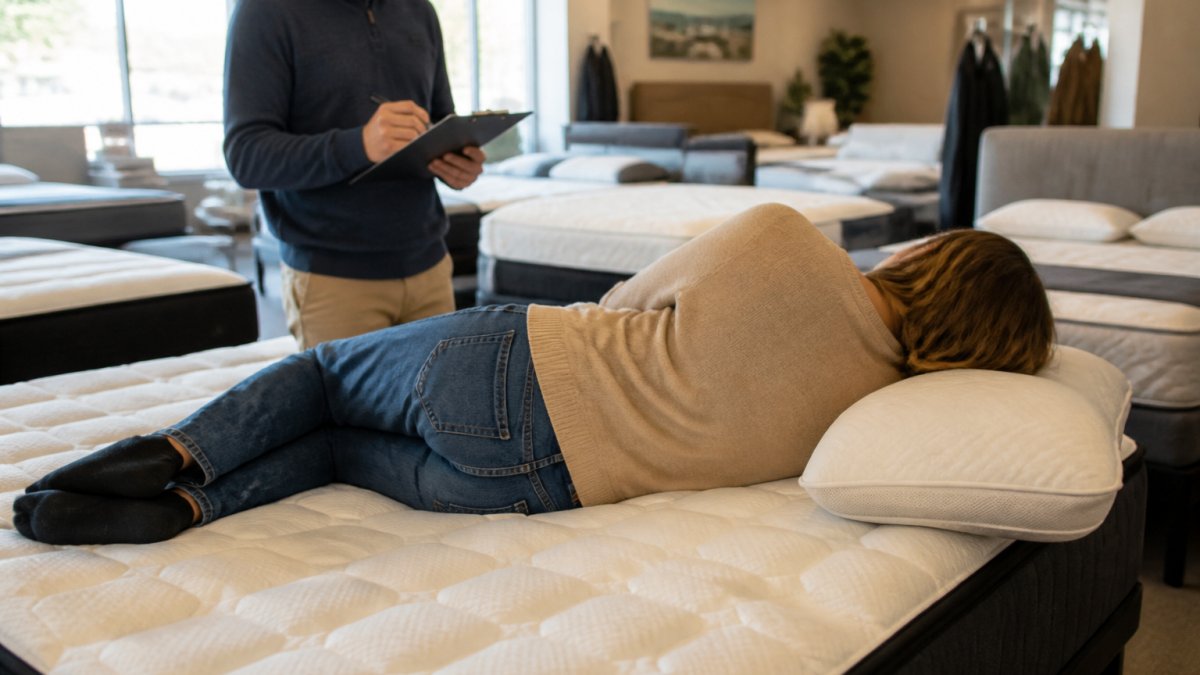
A person lying on their side on a mattress in a brightly lit mattress store, with a salesperson nearby holding a clipboard, showing a realistic testing scene

The 20-minute in-store routine

Block out at least 20 minutes per candidate bed. Most shoppers give a mattress 30 seconds on their back, which tells you almost nothing about how it performs at 2 a.m. Run this sequence in order:

  1. Lie in your dominant sleep position for 10-15 minutes. Set a phone timer. Discomfort that appears at minute eight is the signal you came for.
  2. Roll from back to side and back again. Note whether your spine stays straight or bows. A partner can sight down your spine from behind; a straight line from ear to shoulder to hip is the target.
  3. Slide a flat hand under your lower back while on your back. A small gap that your hand fills is fine. A deep gap means the lumbar region is unsupported; a hand you cannot slide in at all means the bed is too soft and your hips are sinking.
  4. Check shoulder and hip pressure on your side. Pressure should feel spread across the shoulder and hip, not concentrated in a hot spot. Numbness or tingling in the arm is a fail.
  5. Sit on the edge. Edge support matters for getting in and out and for couples who sleep near the perimeter. A collapsing edge signals weak perimeter construction.
  6. Have a partner move while you lie still. This gauges motion isolation, which matters more for couples and combination sleepers.
  7. Note temperature. Lie still for a few minutes and notice whether the surface traps heat. Memory foam and some hybrid comfort layers sleep warmer than latex or coil-forward designs.
  8. Ask the questions below before you leave the store.

Questions to ask before purchase

  • What is the trial period, and does it start on delivery or on the first night of sleep?
  • Is there a minimum break-in period before I can return?
  • Who pays return shipping, and is there a restocking fee?
  • Is the refund a full refund or an exchange credit?

Adapting the routine for online purchases

Online, you cannot lie down, so lean on the trial period and the return policy as your test drive. Before you order:

  • Confirm the trial length and the return-fee structure in writing, not just on the product page.
  • Check whether the trial applies to the mattress only or also to a foundation, base, or bundle.
  • Read the warranty exclusions for sagging thresholds and normal softening.
  • Keep the original packaging if the return policy requires it.
  • Photograph the mattress and foundation on delivery day in case of a damage claim.
Pro Tip
Bring a friend or partner to the store. A second set of eyes on your spinal alignment and a second opinion on pressure points catches what you cannot feel yourself.

Read the Mattress Trial Period, Warranty, and Return Costs Before You Pay

A mattress trial period is only as good as its fine print. Two beds can both advertise a “100-night trial” and offer very different protection. The details that decide whether you are actually covered are the same across brands, so compare every candidate on these points before you pay.

Newsletter Sign Up →

Compare trials on these terms

  • Trial length and start date. Confirm whether the clock starts on the order date, the delivery date, or the first night of sleep. A trial that starts at order can lose a week or more to shipping.
  • Minimum break-in period. Many trials require you to sleep on the bed for a set number of nights before you can return it. That is reasonable for foam and hybrid beds that need to settle, but it means you cannot bail on night two.
  • Return shipping and restocking fees. Some brands cover return shipping; others deduct it from your refund. Restocking fees, when they apply, reduce the refund further. Ask for the exact dollar amount before you buy.
  • Refund versus exchange. A full refund and an exchange credit are not the same thing. If you want the option to walk away, prioritize a refund policy.
  • What the trial covers. Confirm whether the trial applies to the mattress only or also to a foundation, adjustable base, or bundle. Returning the mattress but keeping a non-returnable base can leave you with a sunk cost.

Read the warranty for what it actually covers

The FTC’s guidance on warranties and guarantees is worth reading before you rely on a “lifetime warranty” claim. Warranties typically cover manufacturing defects like sagging beyond a stated threshold, not normal softening or a change in comfort preference. Look for:

  • The sagging threshold. A warranty that covers sagging beyond three-quarters of an inch is stronger than one that requires a full inch or more.
  • What voids coverage. Stains, improper foundation use, and removing the law tag are common voiding conditions. A mattress protector is cheap insurance.
  • Prorated versus full coverage. Some warranties replace the mattress outright for a set period, then prorate the credit. Know which years are which.
  • Who pays shipping on a warranty claim. A “free replacement” that costs a few hundred dollars to ship is not free.

Account for delivery, setup, and hidden costs

The sticker price is not the out-the-door price. Add up delivery fees, old-mattress removal, setup, and foundation or base costs before you compare beds. A bed that is a little more expensive but includes free delivery and removal can be the cheaper choice. Ask whether delivery is threshold, room-of-choice, or white-glove setup, because the difference affects both cost and convenience.

Key Takeaway
The trial period, return costs, and warranty terms matter as much as the mattress itself. A bed you can actually return beats a bed you are stuck with. Write down the trial length, return fee, and sagging threshold for every candidate before you decide.

Mattress Shopping Tips for Back Pain Relief: Body Weight, Couples, and Sleep System Adjustments

Body weight and body shape change what “supportive” means.

The sleep system matters too. An adjustable base can raise the head or feet to reduce pressure and support the lower back.

This is where our video library helps. Real Mattress Reviews has built over 300 video reviews so you can compare how different beds handle back pain, hot sleeping, and couples with different preferences before you commit.

Conclusion

Finding a mattress that actually helps your back takes more than chasing a firmness label. It takes matching the bed to your sleep position, testing it properly, and reading the trial and warranty terms before you pay.

At Real Mattress Reviews, we built our library of over 300 video reviews and our decade of store ownership experience to make that decision easier.

Frequently Asked Questions

Is a hybrid mattress good for back pain?

A hybrid mattress for back pain can work well because it pairs a coil support core with a foam or latex comfort layer. The coils push back against the lower back while the top layer cushions pressure points at the hips and shoulders. That combination suits side sleepers and people who want support without a rock-hard surface. It is not automatically better than other types, so test one in person or use a trial period before committing.

What are the signs of a bad mattress?

Common signs of a bad mattress include visible sagging in the middle, waking with morning stiffness that fades during the day, rolling toward the center, and springs you can feel through the surface. A mattress that is more than seven to ten years old and no longer holds its shape is a strong candidate for replacement. If pain patterns follow the mattress rather than your activity, that is another signal to shop.

What mattress firmness is best for back pain?

Medium-firm is the most common starting point for mattress firmness for back pain, because it keeps the spine close to neutral while still cushioning the hips and shoulders. Back sleepers usually do well at medium-firm, side sleepers often prefer slightly softer, and stomach sleepers need firmer support to keep the lower back from dipping. Use medium-firm as a starting range, then adjust based on your body weight and sleep position.

How long should I try a new mattress before deciding if it helps?

Plan on at least 30 nights. Most mattress trial period policies run 90 to 120 nights, and your body needs several weeks to adjust to a new sleep surface. Keep a simple log of morning stiffness and pain levels for the first month. If pain is getting worse rather than better after three to four weeks, contact the retailer about a return or exchange before the window closes.

How do I know if my mattress is causing back pain?

Track when the pain appears. If lower-back pain is worst in the morning and eases after you get up and move, the mattress is a likely contributor. Pain that follows a new mattress purchase, or that started when the mattress began sagging, points the same way. Pain that worsens through the day or comes with numbness, weakness, or radiating leg pain deserves a medical evaluation rather than a shopping trip.

Which mattress should I buy for back pain?

There is no single answer, but the practical path is to match the mattress type to your sleep position and body weight. Hybrids and latex models suit people who want support plus pressure relief, while all-foam models can work for lighter side sleepers. Test for neutral spinal alignment, check the trial period and return costs, and avoid buying on firmness labels alone. A mattress that keeps your spine neutral is the one to buy.

Best Mattress for Chronic Lower Back Pain 2026

Table of Contents

Last Updated: October 7, 2026

What Makes a Mattress Work for Chronic Lower Back Pain

The best mattress for chronic lower back pain 2026 is a medium-firm surface that keeps your spine in neutral alignment while cushioning pressure points. At Real Mattress Reviews, we have spent nearly a decade owning a mattress store and producing over 300 video reviews, and one pattern holds true: support where you need it matters more than softness where you want it.

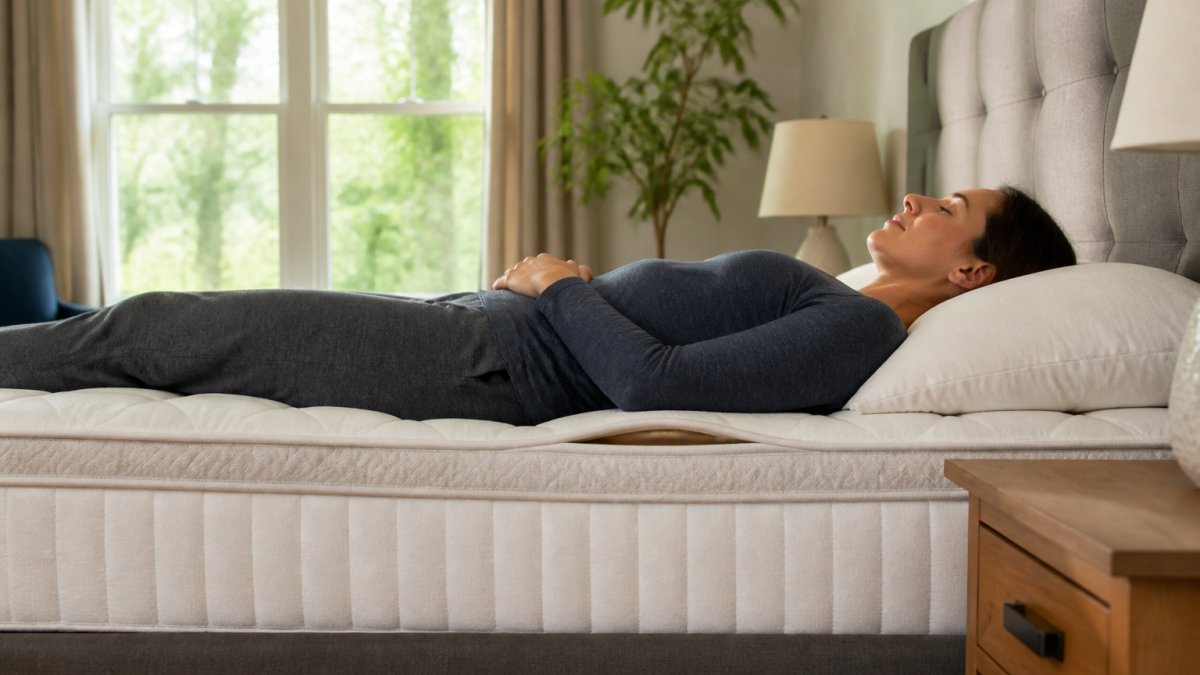
Chronic lower back pain is persistent discomfort in the lumbar region lasting twelve weeks or longer, and it changes how you sleep, move, and recover. A mattress helps only when it holds your hips and shoulders in line with your spine. Too soft, and your midsection sinks. Too firm, and your lower back arches. Both positions load the same joints all night.

Diagram showing neutral spinal alignment on the best mattress for chronic lower back pain 2026.

Three factors decide whether a mattress works for you:

  • Support: keeps the lumbar curve neutral, not flattened or exaggerated
  • Pressure relief: cushions the hips and shoulders so you stop shifting
  • Durability: holds its shape so support does not fade within a year
Key TakeawayFor chronic lower back pain, alignment beats plushness every time. If your hips sink below your shoulders, the mattress is too soft regardless of how comfortable it feels in the store.

Brands we recommend:

Helix Midnight Luxe: Shop Here

Winkbeds: Shop Here

Durable 2-Sided: Shop Here

Novosbed: Shop Here

Mattress Firmness for Back Pain: Why Medium-Firm Wins

Medium-firm, roughly a 6 to 7 on the standard 1-to-10 firmness scale, is the sweet spot for most people with lower back pain. It supports the lumbar curve without creating pressure at the hips and shoulders.

The reason is simple mechanics. A soft mattress lets your pelvis drop, which pulls the lower back out of line. A very firm mattress pushes your shoulders and hips up, leaving a gap under your lumbar spine. Medium-firm splits the difference.

Your body weight shifts the target. Sleepers under roughly 150 pounds often find a 6 comfortable, while heavier sleepers may need a 7 to keep from sinking. This is where personal testing matters.

Best Mattress for Back Sleepers With Lower Back Pain

Back sleepers with lower back pain do best on a medium-firm mattress with even support from head to hip. Back sleeping is the easiest position for spinal alignment, so the mattress mainly needs to fill the gap under your lumbar curve.

Side sleepers need more cushioning at the shoulder and hip, which usually means a slightly softer medium-firm. Stomach sleepers should avoid soft surfaces entirely, since a sinking midsection twists the lower back.

  • Back sleepers: medium-firm, 6 to 7, even support
  • Side sleepers: medium, 5 to 6, pressure relief at hips and shoulders
  • Stomach sleepers: firm, 7 to 8, flat and supportive

Couples with different positions should look for a mattress that isolates motion and offers zoned support, so one partner’s firm side does not force the other into a bad position.

Mattress Types Compared: Memory Foam, Hybrid, Latex, Innerspring

Every mattress type handles the two jobs that matter for chronic lower back pain, holding your lumbar curve neutral and cushioning pressure points, in a different way. The right pick depends on your sleep position, your body weight, and how much heat you generate overnight.

Type

Feel

Pressure Relief

Support Style

Best For

Watch Out For

Memory foam

Contouring, slow sink

High

Even, no zones

Side sleepers, motion isolation

Heat retention, softening over time

Hybrid

Bouncy, responsive

High

Zoned coil support

Most chronic lower back pain sleepers

Higher price, heavier to move

Latex

Buoyant, springy

Medium-high

Consistent, firm

Hot sleepers, heavier builds

Cost, less contouring

Innerspring

Firm, traditional

Low-medium

Coil-driven, edge-stiff

Stomach sleepers, firm preference

Thin comfort layers, pressure points

Memory foam conforms to your body and relieves pressure at the hips and shoulders, which helps side sleepers with lower back pain. The trade-off is heat: traditional memory foam traps body heat, and lower-density foams soften faster under a heavier sleeper, which can let the pelvis drop out of alignment within a year or two.

Hybrids pair a coil support core with foam or latex comfort layers. The coils do the alignment work, the comfort layer does the pressure work, and many hybrids add zoned support, firmer coils under the lumbar region, softer under the shoulders. That zoning is why hybrids are the most common recommendation for chronic lower back pain across body types.

Latex is buoyant and responsive rather than contouring. It sleeps cooler than memory foam, holds its shape longer, and suits heavier sleepers who sink through softer foams. The catch is price and feel: latex pushes back instead of cradling, which some side sleepers find too firm at the shoulder.

Innerspring mattresses run firm and breathe well, but a thin comfort layer can concentrate pressure at the hips and shoulders. They work for stomach sleepers who need a flat, unyielding surface, and they are the wrong choice for side sleepers with lower back pain.

Key TakeawayMatch the type to the job. Hybrids cover the widest range of chronic lower back pain sleepers; memory foam favors side sleepers who run cool; latex favors heavier builds and hot sleepers; innerspring favors stomach sleepers who want firm.

A common mistake is buying a soft memory foam mattress because it feels great in a five-minute showroom test. Five minutes on your back is not the same as eight hours, and the sink that feels luxurious at first is often what pulls your lumbar spine out of line by morning.

Can a Mattress Cause Sciatica? What the Evidence Shows

A mattress does not cause sciatica, which comes from compression or irritation of the sciatic nerve, but a poorly supportive mattress can aggravate the symptoms. The evidence on mattresses and pain is limited, and most studies are small and short-term.

Newsletter Sign Up →

What we can say with confidence: a mattress that throws your spine out of alignment can worsen existing nerve irritation. If you wake with pain radiating down one leg, the surface is likely too soft or too worn.

Watch OutIf your sciatica symptoms are new, severe, or include numbness or weakness, see a medical provider before blaming your mattress. A mattress change will not fix a nerve problem that needs diagnosis.

How to Choose a Mattress for Back Pain: A Step-by-Step Plan

Choosing the best mattress for chronic lower back pain 2026 is a testing problem, not a shopping problem. The goal is to find the surface that keeps your spine neutral for eight hours, and the only reliable way to know is to test it against your own body over time. Here is a plan to consider.

Total Time: 3-6 weeks of testing and evaluation Difficulty: Beginner

What You’ll Need

  • Your current sleep position and pain pattern
  • A store or trial period that allows returns
  • A partner’s preferences, if you share the bed

Step 1: Confirm Your Firmness Target [Time: 10 minutes]

Start at medium-firm, 6 to 7, and adjust for body weight. Heavier sleepers go firmer, lighter sleepers go slightly softer.

Step 2: Test in Your Sleep Position [Time: 20 minutes]

Lie in your normal position for at least 15 minutes. Check whether your hips and shoulders stay level with your spine.

Step 3: Use the Trial Period [Time: 2-4 weeks]

Sleep on it for the full trial window before deciding. Most mattresses need a break-in period, and your body needs time to adjust.

Expected Result: You wake with less stiffness and no new pressure points.

Pro TipKeep your old mattress for the first two weeks of a trial if you can. If the new one clearly fails, you avoid a painful gap with nothing to sleep on.

What the Research Can and Cannot Tell You

Mattress research is thinner than most buyers realize. Studies on firmness and back pain exist, but they are small, short, and rarely isolate one variable. The National Institute of Neurological Disorders and Stroke overview of back pain is a better starting point for understanding causes than any single mattress study.

What research cannot do is tell you which mattress fits your body. Body weight, build, and sleep position change the answer, and no study covers every combination. Treat firmness ratings as a starting point, then rely on a trial period.

The Consumer Product Safety Commission guidance on mattress safety and labeling helps you verify what you are buying, and the U.S. Department of Health and Human Services sleep health resources covers the non-mattress factors, like weight, activity, and sleep habits, that shape lower back pain.

That is why we built Real Mattress Reviews around video walkthroughs and a decade of store experience. We answer your questions before you buy, and our coupon codes help you save on the mattresses we cover.

Frequently Asked Questions

What mattress firmness is best for chronic lower back pain?

Medium-firm is the most commonly recommended firmness for chronic lower back pain. It keeps the spine in neutral alignment while still cushioning pressure points at the hips and shoulders. A mattress that is too firm creates pressure buildup; one that is too soft lets the hips sink and the lower back arch. Side sleepers often do better slightly softer, back sleepers slightly firmer. The right mattress for back pain depends on your sleep position, body weight, and how you feel after a full night.

Can a bad mattress cause sciatica?

A mattress does not cause sciatica, but it can aggravate it. Sciatica usually comes from compression or irritation of the sciatic nerve, often from a herniated disc or spinal narrowing. A sagging or overly soft mattress can push the spine out of alignment and increase pressure on that nerve, making symptoms worse. If you wake with sharp leg pain, numbness, or tingling that does not ease during the day, see a doctor. A supportive mattress may help comfort but will not treat the underlying cause.

How long should you try a new mattress before deciding if it helps?

Give a new mattress at least 30 nights before judging it. Your body needs time to adjust to a different sleep surface, and early discomfort is common. Most mattresses come with a sleep trial of 90 to 100 nights, so you have room to test. If pain gets worse rather than better after two to three weeks, contact the retailer. Use the trial period to track how you feel each morning, not just the first night.

What mattresses should you avoid if you have lower back pain?

Avoid mattresses that are too soft or show visible sagging. A soft mattress lets the hips sink, which arches the lower back and strains muscles overnight. Very firm mattresses can also backfire by creating pressure at the shoulders and hips. Skip any mattress with worn-out support, a visible body impression, or one that is more than eight to ten years old. If a mattress feels like a hammock or a board, it is probably not right for chronic lower back pain.


Chronic lower back pain is stubborn, and no mattress fixes it alone. But the right surface removes one nightly source of strain, and that is worth getting right. At Real Mattress Reviews, we compare mattresses by firmness, type, and sleep position, with over 300 video reviews and nearly ten years of store experience behind every recommendation. Sign up for our newsletter to get new reviews and exclusive coupon codes before you buy.