How to Decide if a Hybrid Mattress Is Worth It
Last Updated: November 22, 2026
Quick Summary
A hybrid mattress is worth it if you value what the extra money buys: a pocketed coil support core under foam comfort layers, giving you pressure relief plus bounce and airflow. It is not worth it for strict budget shoppers, anyone wanting maximum motion isolation, or people who cannot handle a heavy bed.
- Memory foam wins on motion isolation and contouring, but retains heat and can feel stuck when you roll over.
- Comfort-layer foam density is the single biggest factor in how long a hybrid holds its shape.
- Many warranties only cover visible sagging beyond roughly 1 to 1.5 inches.
- Sleep Like The Dead reports about 72% satisfaction for low-priced hybrids versus 78% for mid-priced ones.
- Divide the delivered price by realistic lifespan to compare cost per year of comfortable use.
Table of Contents
- What You Actually Pay For in a Hybrid Mattress
- Hybrid Mattress vs Memory Foam: Pressure Relief, Bounce, and Heat
- Is a Hybrid Mattress Good for Back Pain?
- How Long Does a Hybrid Mattress Last?
- Hybrid Mattress Cost and Total Cost of Ownership
- Pros, Cons, and Who Should Skip a Hybrid
- Check the Trial, Warranty, and Reviews Before You Buy
- Frequently Asked Questions
What You Actually Pay For in a Hybrid Mattress
Is a hybrid mattress worth it? The answer depends on whether you value what the extra money buys: a coil support core under foam comfort layers. That combination is the entire premise of the category, and it is what separates a hybrid from a plain foam block.
At Real Mattress Reviews, we have spent close to a decade selling mattresses and building a library of more than 300 video reviews, so we have watched this category grow from a novelty into the most recommended mattress type by sleep experts, according to Brooklyn Bedding’s 2026 category analysis.
Coil Support Core and Foam Comfort Layers
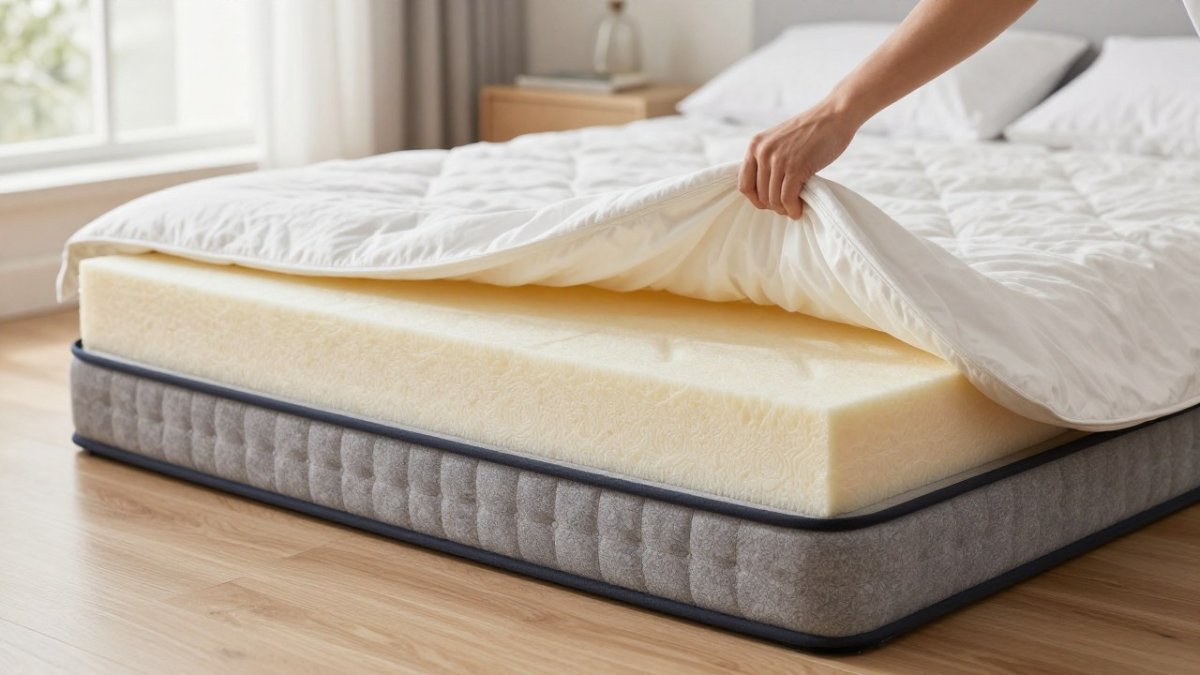
A hybrid mattress is a bed built with a pocketed coil support core topped by one or more foam comfort layers (What Is a Hybrid Mattress?).
That division of labor is the value proposition. You are not paying for more material. You are paying for two materials doing separate jobs well.
Construction Differences Within the Hybrid Category
Not every hybrid is built the same way, and this is where most buying guides go quiet. Coil gauge, coil count, foam density, and whether the comfort layer uses memory foam or latex foam all change how the bed feels and how long it holds up.
If you want to compare builds layer by layer, our guide on how to compare mattress construction materials walks through what to look for in each component.
Hybrid Mattress vs Memory Foam: Pressure Relief, Bounce, and Heat
The hybrid mattress vs memory foam comparison comes down to three things: bounce, heat, and how the bed handles your body.
Memory foam wins on body contouring and motion isolation. It absorbs movement, so a restless partner disturbs you less.
A hybrid keeps the foam comfort on top but adds coil responsiveness underneath. You get pressure relief at the shoulders and hips plus easier movement.
Is a Hybrid Mattress Good for Back Pain?
For many back-pain sleepers, yes. A hybrid mattress supports spinal alignment because the coils provide firmer support while the foam relieves pressure points. That balance suits side sleepers and back sleepers who need both cushioning and pushback.
The catch: firmness has to match your sleep position and body weight. If back pain is your main concern, our picks for the best hybrid mattress for back support and our broader mattress guide for back pain go deeper on matching firmness to your situation.
How Long Does a Hybrid Mattress Last?
Hybrid mattress lifespan varies widely, and the construction details matter more than any category average. Two hybrids at the same price can age very differently, and the difference comes down to a handful of construction details you can check before you buy.
What Actually Drives Hybrid Durability
Four components determine how long a hybrid holds its shape:
- Comfort-layer foam density. This is the single biggest factor. Low-density polyfoam and low-density memory foam soften and develop body impressions faster than high-density foams. When a spec sheet lists foam density in pounds per cubic foot (lb/ft³), higher is generally more durable. If a brand does not publish density, treat that as a warning sign rather than a neutral omission.
- Coil gauge and coil count. Thicker-gauge wire and a higher coil count per unit of surface area generally resist compression better. Very low coil counts in a queen-size bed can concentrate load on fewer springs, which accelerates wear in the spots you sleep on most.
- Zoning and edge reinforcement. Zoned coils and reinforced perimeter coils reduce the sagging and edge collapse that often show up first on a hybrid.
Individual results vary with body weight, foundation, and rotation habits, so judge a specific model on its construction details.
How to Read a Hybrid Warranty
Warranty length is often treated as a durability signal, and it can be, but only if you read the terms. Hybrid warranty lengths vary by brand, so read the terms before you buy. What matters is what is covered and when:
- Sagging thresholds. Many warranties only cover visible sagging beyond a stated depth, commonly around 1 to 1.5 inches. A bed can feel worn well before it crosses that line.
- Prorated coverage. Some warranties are full-coverage for the first several years and then prorated, meaning you pay a percentage of the replacement cost as the bed ages.
- Exclusions. Stains, improper foundations, and use without a supportive base are common reasons claims are denied. Read the foundation requirement before you set the bed up.
- Shipping and handling. Even an approved claim can come with shipping costs, so check who pays.
Watch out: A long warranty is not the same as a durable bed. A 15-year warranty on a mattress with low-density foam can still leave you replacing it in year five, because the warranty covers defects, not normal softening.
Judging Long-Term Ownership Evidence
Early reviews are dominated by unboxing impressions and first-month comfort. To judge durability, look for reviews written after one year and after three years, and search owner forums for the specific model name plus words like “sag,” “impression,” and “warranty claim.” Independent durability testing that simulates years of use is more useful than marketing claims, but it is not available for every model, so weigh published construction specs heavily.
Hybrid Mattress Cost and Total Cost of Ownership
Hybrid mattresses are often priced above all-foam alternatives and can be heavier, depending on the model. That upfront premium is real, and so is the weight, which makes moving and rotating one harder. But sticker price is the wrong number to compare. The right number is cost per year of comfortable use, and that calculation pulls in lifespan, trial terms, delivery, returns, and warranty coverage.
The Cost-Per-Year Calculation
Here is the framework to run before you buy:
- Start with the delivered price. Add the mattress price, any delivery fee, and the cost of a foundation or adjustable base if you need one. A “free” foundation is not free if it is bundled into the price.
- Estimate realistic lifespan. Use the construction details, not the warranty length. A well-built hybrid with dense comfort foam and quality pocketed coils is more likely to reach the top of the seven-to-ten-year range; a budget hybrid with low-density foam may not.
- Divide price by expected years. Running the numbers for two or three specific models often shows that a cheaper bed is not always the lower cost per year of use.
- Subtract what you would recover or avoid. Factor in return fees you might pay if the trial fails, and any warranty shipping costs if a claim is approved later.
Run that math on two or three specific models rather than on category averages. The gap between a budget hybrid and a mid-priced hybrid often narrows or reverses once lifespan is in the denominator.
Trial Periods, Return Fees, and Delivery
Sleep trial terms vary by brand, and the details can change the real cost:
- Return fees. Some brands offer free returns; others charge a flat fee or a percentage of the purchase price. A $99 return fee on a $900 mattress is more than 10% of the price.
- Trial conditions. Some trials require a minimum break-in period before you can return, so check the terms. Some require the original packaging or a donation receipt.
- Delivery and setup. Curbside delivery is often included; in-home setup and old-mattress removal may cost extra. If you cannot move a heavy hybrid yourself, budget for that service.
- Break-in time. Judge comfort after the break-in period, not on night one.
Watch out: A generous trial does not protect you from a restocking fee, a return-shipping charge, or a requirement that you donate the mattress and provide proof. Read the return policy before the trial clock starts, not after.
Warranty Coverage as Part of the Value Case
Warranty terms belong in the cost calculation because they affect what you pay later. Check the sagging threshold, whether coverage is prorated, which foundation is required, and who pays shipping on an approved claim. A warranty that covers a replacement but requires you to pay shipping and disposal still leaves you with real out-of-pocket costs.
Owner Satisfaction and What It Does and Does Not Tell You
Owner satisfaction data can help set expectations. Sleep Like The Dead’s owner research reports about 72% satisfaction for low-priced hybrids versus 78% for mid-priced ones, which suggests spending a little more tends to buy a better experience. Treat that as a directional signal, not a prediction about any single model, and weigh it alongside construction specs and long-term reviews. For a value-focused breakdown, see our guide to the best mattress for the money.
Pros, Cons, and Who Should Skip a Hybrid
Here is the honest scorecard.
| Factor | Hybrid Mattress | Memory Foam | Innerspring |
|---|---|---|---|
| Pressure relief | Strong | Strongest | Weakest |
| Bounce and responsiveness | High | Low | High |
| Motion isolation | Good | Best | Poor |
| Airflow and cooling | Good | Weak | Strong |
| Edge support | Good | Fair | Good |
| Upfront cost | Higher | Lower | Lowest |
| Weight | Heaviest | Moderate | Moderate |
Who should skip a hybrid: strict budget shoppers, anyone who wants maximum motion isolation, and people who cannot handle a heavy bed. If you want pure contouring and the lowest price, an all-foam mattress is the smarter buy.
Check the Trial, Warranty, and Reviews Before You Buy
Before you spend on a hybrid, protect yourself with three checks: a sleep trial long enough to test it, a warranty that covers sagging, and reviews from owners past the honeymoon phase.
Read the trial terms carefully, including the fine print on return shipping and fees. If a trial goes wrong, our guide on how to handle a failed mattress trial and get a refund explains your options.
Deciding whether a hybrid is worth it takes more than a spec sheet, and that is exactly where we help.
Frequently Asked Questions
Are hybrid mattresses worth the extra money?
It depends on what you need from a bed. Owner satisfaction data varies by source and model, so weigh any figures you find alongside construction specs and long-term reviews. If you want coil support with foam pressure relief, the premium is easier to justify. If you sleep fine on an all-foam bed and want to spend less, a hybrid mattress is not automatically the better buy.
Do hybrid mattresses sleep cooler than memory foam mattresses?
Generally yes, because the coil core moves air that a solid foam block traps. Hybrid designs with airflow can feel cooler than solid foam, though results vary by model and sleeper. That does not mean every hybrid runs cool. Thick foam comfort layers and memory foam tops can still hold heat, so check the construction and look for airflow-focused designs if you overheat at night.
Who should avoid a hybrid mattress?
Shoppers on a tight budget and anyone who struggles to move a heavy bed should think twice. Hybrids cost more and weigh more than all-foam alternatives, which matters at delivery, during setup, and on rotation day. People who want a slow, sink-in memory foam feel may also prefer all-foam. If you need a very firm, thin, or low-cost mattress for a guest room, a hybrid rarely earns its price.
Is a hybrid mattress better than a traditional innerspring mattress?
For most sleepers, a hybrid improves on traditional innerspring by adding foam comfort layers over pocketed coils. That combination gives pressure relief and body contouring that a bare coil bed does not, while keeping the bounce and airflow people like about springs. Traditional innerspring still wins on price. If budget is the deciding factor and you sleep comfortably on a basic spring mattress, the upgrade is optional rather than necessary.