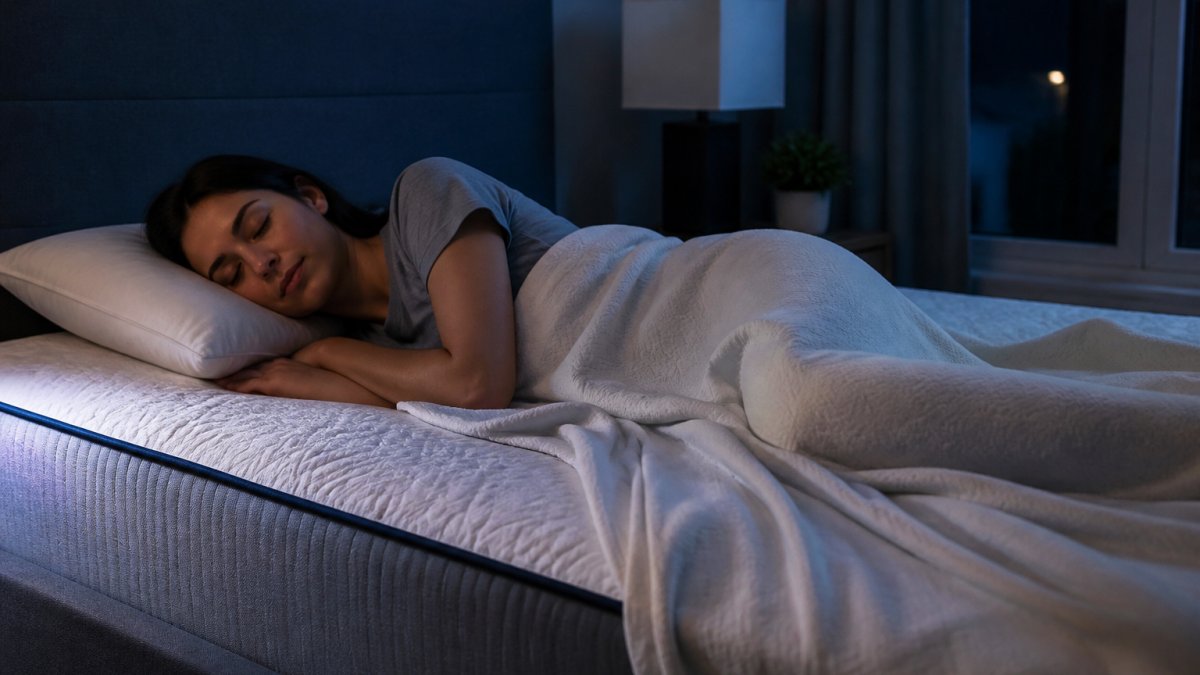
7 Best Cooling Hybrid Mattresses for Back Pain in 2026
Last Updated: October 26, 2026
Quick Summary
The best cooling hybrid mattress for back pain pairs a coil core with breathable materials and medium-firm support, since airflow through the coils and a breathable cover do more to regulate temperature than any gel foam additive. Match firmness to your sleep position and body weight, and judge the whole build rather than the cooling label.
- Medium-firm is the safest firmness starting point for most back-pain sleepers.
- Lighter sleepers under roughly 130 lb usually do better with medium to medium-soft hybrids.
- Heavier sleepers over roughly 230 lb need firmer hybrids with denser support foam and stronger coils.
- Zoned pocketed coils place firmer support under the lower back and softer support under shoulders.
- A cooling cover over dense memory foam still traps heat underneath.
Table of Contents
- Why a Cooling Hybrid Mattress Helps Back Pain and Night Sweats
- Our Top Picks: Best Cooling Hybrid Mattress for Back Pain
- Mattress Firmness for Back Pain: Finding Your Sweet Spot
- Cooling Mattress Materials That Actually Regulate Temperature
- Best Mattress for Side Sleepers with Back Pain
- How to Choose a Mattress for Back Pain: A Step-by-Step Framework
- Check Current Prices and Find Your Best Fit
- Frequently Asked Questions
Why a Cooling Hybrid Mattress Helps Back Pain and Night Sweats
A cooling hybrid mattress addresses two problems at once: it supports the spine while moving heat away from your body. That combination matters because pain and overheating rarely show up alone. At Real Mattress Reviews, we’ve spent nearly a decade selling mattresses and built a library of over 300 video reviews, and the same pattern keeps surfacing: people with back pain often sleep hot too.
The reason is simple. Pain disrupts sleep, poor sleep raises stress and inflammation, and a hot mattress makes both worse. A hybrid design pairs a coil core with foam or latex comfort layers, so you get stable support without the heat trap of an all-foam bed.
Below, we break down the best cooling hybrid mattress for back pain by firmness, materials, and sleep position, and show you how to judge one before you buy.
Our Top Picks: Best Cooling Hybrid Mattress for Back Pain
The best cooling hybrid mattress for back pain balances firm support with genuine airflow. We rank options by spinal alignment, pressure relief, cooling performance, and durability, not marketing claims. Here’s how the leading designs compare on the factors that decide whether your back and your temperature cooperate.
Quick Comparison Table
| Design | Firmness | Cooling Approach | Best For | Watch Out For |
|---|---|---|---|---|
| Zoned coil hybrid | Medium-firm | Breathable cover, gel foam | Back sleepers, average weight | Can feel firm to light side sleepers |
| Latex hybrid | Medium | Natural latex, open-cell | Hot sleepers wanting bounce | Higher cost, heavier to move |
| Plush hybrid | Medium-soft | Airflow coil core | Side sleepers, pressure points | Less lumbar support if too soft |
| Firm hybrid | Firm | Pocketed coils, thin foam | Stomach and back sleepers | Limited contouring for hips |
How We Evaluated These Mattresses
We judge every mattress on four things: support, pressure relief, cooling, and durability. Our team’s store background means we’ve watched how beds hold up over years, not just on day one.
- Spinal alignment: Does the surface keep a neutral spine position across sleep positions?
- Pressure relief: Do shoulders and hips sink without bottoming out?
- Cooling performance: Does airflow through the coil core reduce heat retention?
A common mistake is choosing a bed by firmness label alone. Two medium-firm hybrids can feel completely different.
Mattress Firmness for Back Pain: Finding Your Sweet Spot
Medium-firm is the safest starting point for most back-pain sleepers, but your body weight and sleep position shift that target. Heavier sleepers usually need firmer support to avoid sinking into the foam. Lighter sleepers often find medium-firm too stiff and do better with a touch more plushness.
Firmness is where shoppers get stuck, so here’s a practical framework:
- Back sleepers: Medium-firm to firm for lumbar support.
- Side sleepers: Medium to medium-soft to relieve shoulder and hip pressure.
- Stomach sleepers: Firm to keep the hips from dropping.
The real test is whether your spine stays neutral, not what number the label says.
Fit by body weight and sleep position
Firmness labels are not absolute. The same medium-firm hybrid can feel supportive to a lighter back sleeper and too soft to a heavier side sleeper. Use this as a starting point, then adjust for your build:
- Lighter sleepers (roughly under 130 lb): Medium to medium-soft hybrids usually give enough pressure relief without feeling like a board. Firm beds often create pressure at the shoulders and hips.
- Average-weight sleepers (roughly 130-230 lb): Medium-firm is the broadest fit. Back and stomach sleepers lean firmer; side sleepers lean medium.
- Heavier sleepers (roughly over 230 lb): Firmer hybrids with denser support foam and stronger coil gauges resist sinking better. A soft bed can let the hips drop and pull the lower back out of alignment.
These ranges are general guidance, not medical thresholds. Your own comfort in the trial period is the deciding evidence.
Match firmness to your back-pain pattern
Back pain is not one thing, and the right firmness depends on what you feel:
- Lower-back discomfort that eases when you lie flat: A firmer, well-supported hybrid that keeps the hips from sinking is often the better fit.
- Pressure sensitivity at the shoulders or hips: A medium or medium-soft hybrid with zoned support relieves pressure points without losing lumbar support.
- Pain that changes with sleep position: Match firmness to the position you spend most of the night in, not the one you fall asleep in.
If you wake with stiffness that fades within an hour of getting up, your mattress may be too soft for your build. If you wake with pressure or numbness at the shoulders or hips, it may be too firm.
Zoned support and coil quality
Zoned pocketed coils put firmer support under the lower back and softer support under the shoulders, which helps side sleepers keep a neutral spine. Coil gauge and count matter too: a stronger coil system resists sagging longer, which protects support over the life of the bed. A firmness label tells you how the bed feels on day one; coil quality tells you how it will feel in year three.
Cooling Mattress Materials That Actually Regulate Temperature
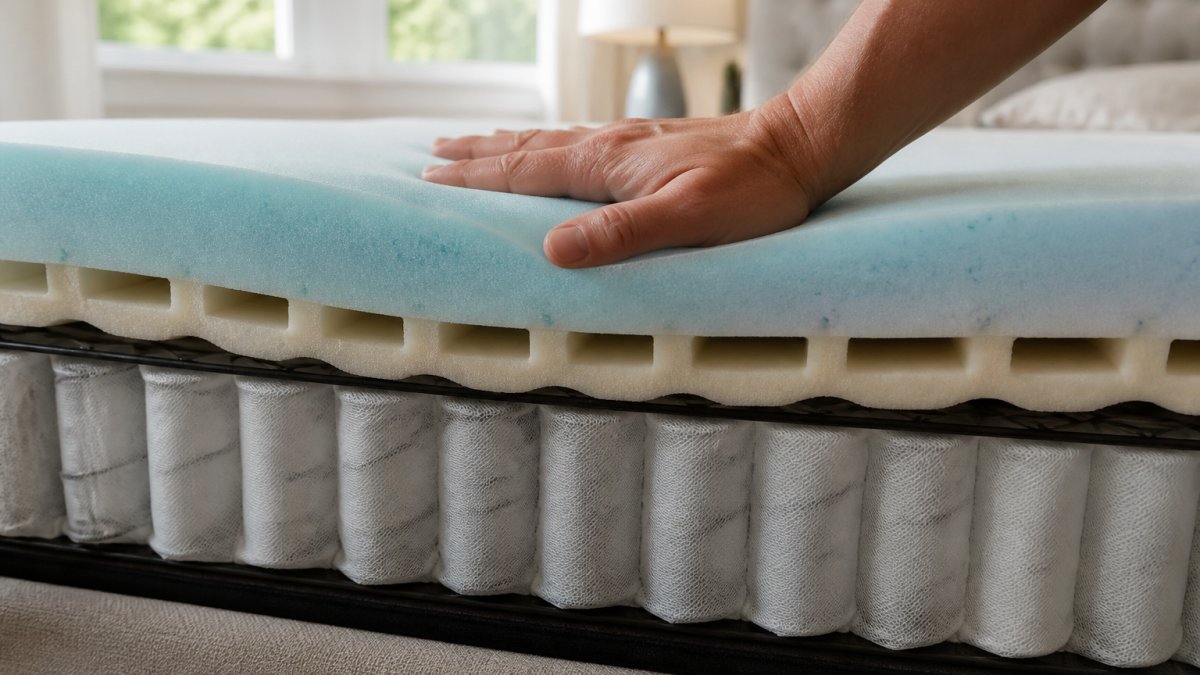
Cooling claims are everywhere, and most of them are thin. What actually regulates temperature is airflow plus materials that resist trapping heat. Gel-infused memory foam helps a little, but the coil layer and a breathable cover do more heavy lifting than any single foam additive.
How we test cooling performance
Most reviews repeat the manufacturer’s cooling language. We do not. Our cooling check uses a consistent method so you can compare designs on the same terms:
- Baseline temperature: We record surface temperature at the center of the mattress after the bedroom has sat at a steady thermostat setting.
- Heat retention: A standardized heat source is placed on the surface for a set interval, then we measure how much the surface temperature rises and how quickly it falls back toward baseline.
- Airflow: We assess how much air moves through the coil layer by checking whether the cover and comfort layers block or channel air, and we note whether the design uses a breathable side panel or a sealed border.
This is not a laboratory-grade thermal test, and we do not present it as one. It is a repeatable side-by-side method that lets us say which designs shed heat faster under the same conditions instead of repeating a claim from a spec sheet.
What the materials actually do
- Pocketed coils: Open space between coils lets air move. A coil core with a breathable side panel is the single biggest airflow advantage a hybrid has over an all-foam bed.
- Latex: Naturally breathable and cooler than dense memory foam, with more bounce and less heat buildup.
- Gel-infused foam: Helps a little at the surface, but a thin gel layer over dense foam still traps heat underneath.
- Transition foam: Thinner layers reduce heat buildup; thick, dense transition foam is where hybrids lose their cooling edge.
A “cooling” cover on top of dense memory foam still traps heat underneath. Judge the whole build, coil airflow, foam density, and cover, not the label on the cover.
Cooling trade-offs and bedroom conditions
Breathable construction can help with heat retention, but it cannot control room temperature, bedding, or your own heat sensitivity. A hybrid with strong airflow will feel cooler than a sealed all-foam bed in the same room, but if the bedroom runs warm or you sleep under heavy bedding, no mattress will fully compensate.
For a deeper comparison of temperature-regulating options, see our guide to the best cooling mattresses for hot sleepers.
Best Mattress for Side Sleepers with Back Pain
Side sleepers with back pain need pressure relief at the shoulder and hip without losing lumbar support. That’s a narrow window. Too soft and the hips sink, twisting the lower back.
A medium hybrid with zoned coil support tends to hit this balance. If you’re a side sleeper comparing options, our picks for the best mattresses for side sleepers break down pressure relief and support side by side.
If you’re also dealing with ongoing back pain beyond sleep position, our hub on the best mattress for back pain covers the full range of designs.
How to Choose a Mattress for Back Pain: A Step-by-Step Framework
Choosing a mattress for back pain comes down to matching support to your sleep position, body weight, and cooling needs. Work through these steps in order:
- Identify your sleep position. Back, side, and stomach sleepers need different firmness.
- Weigh body type against firmness. Heavier sleepers lean firmer; lighter sleepers lean softer.
- Check the coil core. Zoned pocketed coils support the lumbar region better than uniform coils.
- Confirm cooling. Look for airflow through the coil layer and a breathable cover.
- Review trial and warranty terms. A generous sleep trial lets you test real support.
- Compare total cost. Factor in returns and warranty length, not just sticker price.
For a fuller walkthrough, read our step-by-step guide on how to choose a mattress for back pain.
Check Current Prices and Find Your Best Fit
Pricing shifts with sales, so check current prices before you commit rather than trusting an old review. A mattress that fit your needs last year may have a new model, and the deal you saw may have expired.
Our advice: shortlist two or three designs, confirm the trial period, and buy when the price and policy both work for you. If you’re timing a purchase around promotions, our Memorial Day mattress sales page tracks current offers.
Frequently Asked Questions
What should you look for in a cooling hybrid mattress for back pain?
Focus on three things: a supportive coil core with zoned lumbar support, breathable cooling materials like gel-infused foam or latex, and a firmness that keeps your spine in a neutral position. Medium-firm is a safe starting point for most back-pain sleepers. Also check for a trial period of at least 100 nights and a warranty of 10 years or more so you can test the cooling hybrid mattress at home.
Do cooling mattresses actually sleep cooler?
Cooling mattress materials like phase-change covers, gel foams, and breathable latex can help reduce heat retention, but they do not create a refrigerated surface. The biggest gains come from airflow through the coil core and a breathable cover. If your bedroom runs warm, pair the mattress with breathable sheets and a fan. Cooling performance varies by construction, so read tester feedback on temperature regulation before buying.
Can a hybrid mattress help with back pain?
A hybrid mattress can help with back pain because the pocketed coils provide stable support and spinal alignment while the foam layers add pressure relief at the shoulders and hips. That combination works well for back sleepers and side sleepers who need both support and cushioning. Firmness matters more than the category itself, so match the mattress to your sleep position and body weight before deciding.
What mattress firmness is best for back pain?
Medium-firm is the most common recommendation for back pain because it supports the lumbar spine without creating pressure points. Back sleepers often do well on medium-firm to firm, while side sleepers usually need medium to medium-soft for shoulder and hip pressure relief. Stomach sleepers need firmer support to keep the hips from sinking. Test your mattress firmness for back pain during a trial period before committing.
Back pain and overheating are a rough combination, and the wrong mattress makes both worse. Real Mattress Reviews helps you cut through the noise with nearly a decade of store experience and over 300 video reviews, plus exclusive coupon codes that save you real money. Compare cooling performance, check firmness against your sleep position, and use our reviews to buy with confidence. Get started with Real Mattress Reviews and find the cooling hybrid mattress that finally supports your back.