
Best Mattress for the Money 2026: What Actually Pays Off?
Last Updated: November 4, 2026
Quick Summary
The best mattress for the money is the one that delivers the most performance per dollar over its full life, not the lowest sticker price. We judge value by support, pressure relief, cooling, and durability divided by total cost, so a mid-tier bed with solid durability often wins on lifetime cost.
- Entry-tier mattresses under $500 typically last roughly 3 to 5 years.
- Mid-tier beds from $500 to $1,200 typically last roughly 6 to 8 years.
- Upper-mid hybrids from $1,200 to $2,000 typically last roughly 8 to 10 years.
- Divide total cost by expected years to compare beds on true cost per year.
- A steep return fee can outweigh a generous trial period, so price the return first.
Table of Contents
- What Best Mattress for the Money Actually Means in 2026
- Budget Tiers: Realistic Price Thresholds by Mattress Type
- Best Mattress by Sleeper Type and Need
- How to Choose a Mattress for Back Pain
- Mattress Durability and Lifespan: What You Get for the Price
- Mattress Trial Periods and Return Policies: The Hidden Value
- Total Cost of Ownership: The Math Most Shoppers Skip
- Compare Value Picks Before You Buy
- Frequently Asked Questions
What Best Mattress for the Money Actually Means in 2026
A “best mattress for the money” list that only ranks by sticker price is doing you a disservice. The mattress that costs the least on day one can be the most expensive purchase you make if it sags in three years or fails your back.
Value in a mattress is the performance you get per dollar over the full life of the bed, not the number on the sale tag. That means support, pressure relief, cooling, and durability all count toward the numerator.
Price-to-Performance Scoring: How We Define Value
- Support and spinal alignment: does the mattress hold your hips and shoulders in line?
- Pressure relief: does it cushion the spots that take your body weight?
- Temperature regulation: does it sleep hot or neutral?
- Durability: how long before comfort layers break down?
A bed that scores well on all four and costs a little more usually beats a cheap bed that fails two of them. That’s the core of how we judge the best mattress for the money in 2026.
Budget Tiers: Realistic Price Thresholds by Mattress Type
A price band is only useful if it tells you what you’re actually buying. Pricing depends on size, materials, retailer, and timing, so we describe general spending bands and the construction you should expect within each. For current prices, check Real Mattress Reviews’ website or the retailer before you buy.
| Tier | Typical Queen Price Band | What You Typically Get | Expected Lifespan | Best For | What You Give Up |
|---|---|---|---|---|---|
| Entry | Under $500 | Basic foam or bonnell innerspring, 1.5-2 inch comfort layers, low-density foam | Roughly 3-5 years | Guest rooms, first apartments, short-term use | Cooling, motion isolation, long-term support |
| Mid | $500-$1,200 | Hybrid or quality all-foam, 2-3 inch comfort layers, denser support core | Roughly 6-8 years | Everyday sleepers, most couples | Premium cooling features, luxury quilting |
| Upper-Mid | $1,200-$2,000 | Pocketed-coil hybrids, higher-density foams, phase-change or gel cooling | Roughly 8-10 years | Back pain, hot sleepers, heavier sleepers | The very top of the cooling and customization market |
| Premium | $2,000+ | Dense foams, advanced coil systems, zoned support, premium cooling | Roughly 10+ years | Long-term ownership, specific pain needs | You may pay for features you won’t use |
What Each Tier Actually Buys You
The upper-mid tier is where cooling and zoned support become real rather than marketing. Pocketed coils, higher-density foams, and phase-change or gel-infused layers cost more to build, and that cost shows up in temperature regulation and motion isolation. Premium beds add refinement and longevity, but the returns diminish once your needs are met.
Mattress Type Changes the Math
- All-foam: Cheapest to produce, so entry and mid tiers are common. Watch for low-density comfort layers that soften early.
- Hybrid: Coils plus foam. The mid and upper-mid tiers are where hybrids make sense, because cheap hybrids often skimp on coil count or foam density.
- Innerspring: Traditional bonnell coils dominate entry pricing; pocketed coils push into mid and above.
- Latex: Rarely an entry-tier option; expect upper-mid and premium pricing for natural latex.
Watch out: A sale price can move a bed down a tier temporarily. Judge the tier by construction and warranty, not by the discount, or you may buy a premium-priced bed with entry-level layers.
Match the spending level to how you sleep and how long you plan to keep the bed, then use the price-to-performance framework above to compare within it.
Best Mattress by Sleeper Type and Need
Your sleep position changes what “value” means. A bed that’s perfect for a back sleeper can wreck a side sleeper’s shoulders. This is where generic roundups fall short, and it’s the first thing we check in every review.
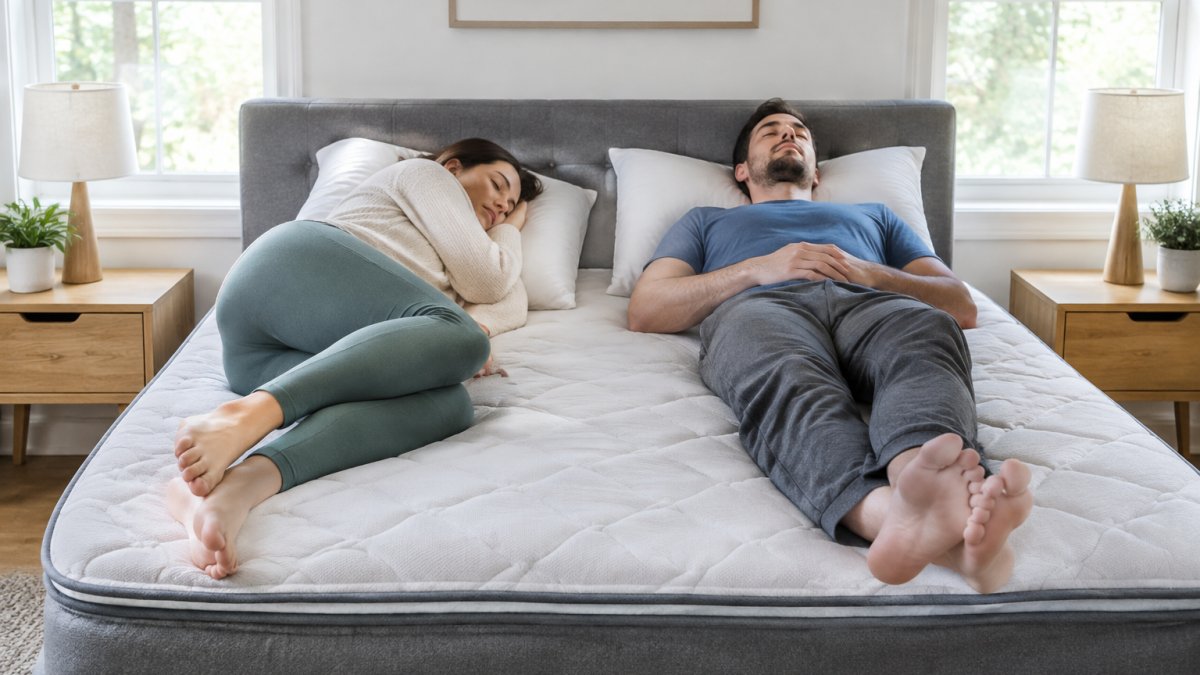
Side Sleepers, Back Sleepers, and Stomach Sleepers
Side sleepers need pressure relief at the shoulders and hips, which usually means a softer, contouring surface. Proper spinal alignment for these positions also depends on the loft and firmness of your head support, which makes choosing the best side sleeper pillows a critical final step in optimizing your nightly rest.
If you’re shopping by position, start with our curated picks: best mattresses for side sleepers and best mattresses for back sleepers both compare support and firmness so you can match the bed to how you actually sleep.
Couples, Hot Sleepers, and Pressure Relief
Couples add two variables: motion isolation and differing firmness preferences. Hot sleepers add a third: temperature regulation. A bed that sleeps cool and isolates motion can be worth more than a cheaper one that wakes both partners every time someone rolls over.
For shared beds with different needs, our guide to the best mattress for couples with different needs breaks down how to satisfy both sleepers. If you run hot, the best cooling mattresses for hot sleepers covers the materials that actually move heat away.
How to Choose a Mattress for Back Pain
Back pain is the reason most people start shopping, and it’s also where the most money gets wasted on the wrong bed. The fix is a method, not a guess.
A mattress for back pain should keep your spine in neutral alignment while relieving pressure at the hips and shoulders. Medium-firm is the most common starting point, but your body weight and sleeping position shift that.
- Match firmness to your position: softer for side sleepers, firmer for stomach sleepers
- Prioritize support layers over plush top layers
- Check the return policy before you buy, since back pain relief is personal
- Give a new bed a fair trial before deciding it doesn’t work
For a step-by-step walkthrough, read our guide on how to choose a mattress for back pain. It turns this into a checklist you can take to the store.
Mattress Durability and Lifespan: What You Get for the Price
Durability is the hidden half of value. A cheaper bed that needs replacing in a few years can cost more over time than a better-built one that lasts.
Higher-density foams and well-built coil systems generally hold up longer than thin, low-density layers. Heavier sleepers put more stress on a mattress and tend to wear through comfort layers faster, so body weight should factor into how much you’re willing to spend.
Mattress Trial Periods and Return Policies: The Hidden Value
A generous trial period is worth real money, because it’s your safety net if the bed doesn’t suit you. Mattress trial periods and return policies vary widely, and the details matter more than the headline number.
- Trial length: how long you have to sleep on it before deciding
- Return costs: who pays shipping or a return fee
- Break-in requirements: some policies require a minimum number of nights
- Refund vs. exchange: whether you get money back or store credit
A bed with a strong trial and clear return terms is lower-risk, and lower risk is part of value. Always read the fine print before you buy, because a great price with a rigid return policy can trap you with a mattress you can’t use.
Total Cost of Ownership: The Math Most Shoppers Skip
Here’s the angle most roundups ignore. Total cost of ownership spreads everything you’ll spend across the years you’ll actually sleep on the bed, then divides by those years to get a true cost per year. That single number is the fairest way to compare a cheap bed against a better-built one.
The Full Cost Stack
Most shoppers count only the sticker price. The real cost includes:
A Worked Example
The math flips if you move frequently, expect your needs to change, or buy for a guest room. In those cases the cheaper bed’s lower commitment can be the better value even at a higher cost per year.
Warranty Coverage Is Part of the Math
A warranty only counts toward value if it covers the failure you actually experience. Most mattress warranties cover manufacturing defects like sagging beyond a stated threshold, but not normal softening, stains, or damage from an unsupported foundation. Read the exclusions before you treat a long warranty as a durability guarantee.
Watch out: A generous trial period with a steep return fee can cost more than a shorter trial with free returns. Price the return before you buy, not after.
How to Run the Math Yourself
- Write down the sale price plus shipping, setup, removal, and foundation costs.
- Estimate realistic lifespan from construction quality and warranty terms, not marketing claims.
- Divide total cost by expected years.
- Compare that per-year figure across your shortlist, then weigh it against the performance scores above.
A bed you keep for many years costs far less per year than a cheap one you replace quickly. That’s why a mid-tier mattress with solid durability often wins on lifetime cost even when it loses on sticker price. Answer the lifespan, shipping, and return questions before you buy, and the “cheap” option often stops looking cheap.
Compare Value Picks Before You Buy
The best mattress for the money in 2026 is the one that matches your sleep position, relieves your pressure points, sleeps at the right temperature, and holds up over time, at a price you can justify per year of use.
That’s the standard we hold every review to at Real Mattress Reviews. We don’t just quote specs; we help you weigh performance against cost so the bed you buy actually works for your body.
Frequently Asked Questions
What’s the best mattress for the least amount of money in 2026?
There is no single cheapest winner, because the best mattress for the money depends on your sleep position, body weight, and how long you plan to keep it. A lower-priced foam or hybrid mattress can be good value if it has the firmness and support your body needs and comes with a real sleep trial. Compare price against durability, warranty length, and return terms rather than sticker price alone. A cheap mattress you replace in three years often costs more than a mid-priced one that lasts eight.
How much should I spend on a mattress in 2026?
Spending depends on size, materials, and your needs. Set a budget tier first, then compare mattresses within it on support, cooling, and durability rather than stretching to the most expensive option. A mattress priced in the middle of its category usually delivers most of the comfort and lifespan of premium models. Factor in delivery fees, old-mattress removal, and whether a foundation is included, since those can add real cost to an otherwise affordable pick.
Are budget-friendly mattresses worth it in 2026?
Many are, provided you check the construction and the trial terms. Budget mattresses often use thinner foam layers or lighter coil counts, which can shorten mattress durability and lifespan. Look for a warranty that covers sagging, a trial period long enough to test it for at least 30 nights, and a return policy that states who pays shipping. If those terms are solid, a budget mattress can be genuinely good value for a guest room or a first apartment.
How do I know if a mattress is a good value?
Compare what you pay against what you get over time. Divide the price by the expected years of use, then weigh in warranty coverage, trial length, and return costs. A mattress with strong edge support, good motion isolation for couples, and cooling features may cost more upfront but need replacing less often. Check whether the sale price is a real discount or a permanent markdown, and confirm the trial period and return policy before you order.
The challenge is simple: most shoppers compare price tags, not performance per year. Real Mattress Reviews gives you the video reviews, back-pain guidance, and coupon codes to judge value the right way. Get started with Real Mattress Reviews and choose a mattress you’ll still be glad you bought years from now.
